
A Practical Guide to Men’s Travel Backpacks: What Actually Matters
If you read enough reviews about men’s travel backpacks, you’ll start to notice a pattern.
Everyone talks about capacity, fabric, and features. Very few talk about what happens after day three of a trip—when the novelty wears off and the backpack becomes part of your daily routine.
From years of working around travel gear and watching how men actually use backpacks on real trips, one thing stands out: the best backpack is the one that quietly supports your movement without demanding attention.
This guide isn’t about specs. It’s about what actually matters once you’re on the road.
Why “Good Enough” Backpacks Fail on Real Trips
Most backpacks feel fine in the beginning.
They look solid, feel comfortable when empty, and seem organized enough. Problems usually show up later—after airport transfers, long walks, or repeated packing and unpacking.
Common complaints tend to be:
Shoulder strain after extended wear
Zippers that feel stressed when fully packed
Poor access to frequently used items
This is why experienced travelers don’t just search for “backpacks.” They search specifically for a men’s travel backpack designed for movement, not just storage.

If you are looking for more information about the Witzman outdoor gear collection, visit their site.
Size Is About Balance, Not Maximum Space
For most trips, especially international ones, a carry on travel backpack between 30 and 40 liters remains the most practical range.
Larger bags encourage overpacking and increase the risk of airline issues. Smaller ones often force compromises that make daily travel harder.
What matters more than volume is how the bag fits airline carry-on dimensions and how efficiently that space is used. A backpack that packs flat and keeps weight close to the body will always feel lighter than a bulkier alternative with the same capacity.
Weight Distribution Is the Real Comfort Factor
Comfort doesn’t come from thick padding alone.
A well-designed travel backpack for men distributes weight vertically and keeps the load stable. When weight shifts while walking, even a padded backpack becomes tiring.
Key things seasoned travelers pay attention to:
Firm back panels that don’t collapse
Shoulder straps that stabilize rather than spread
A balanced center of gravity
These details matter more on long travel days than any marketing feature.
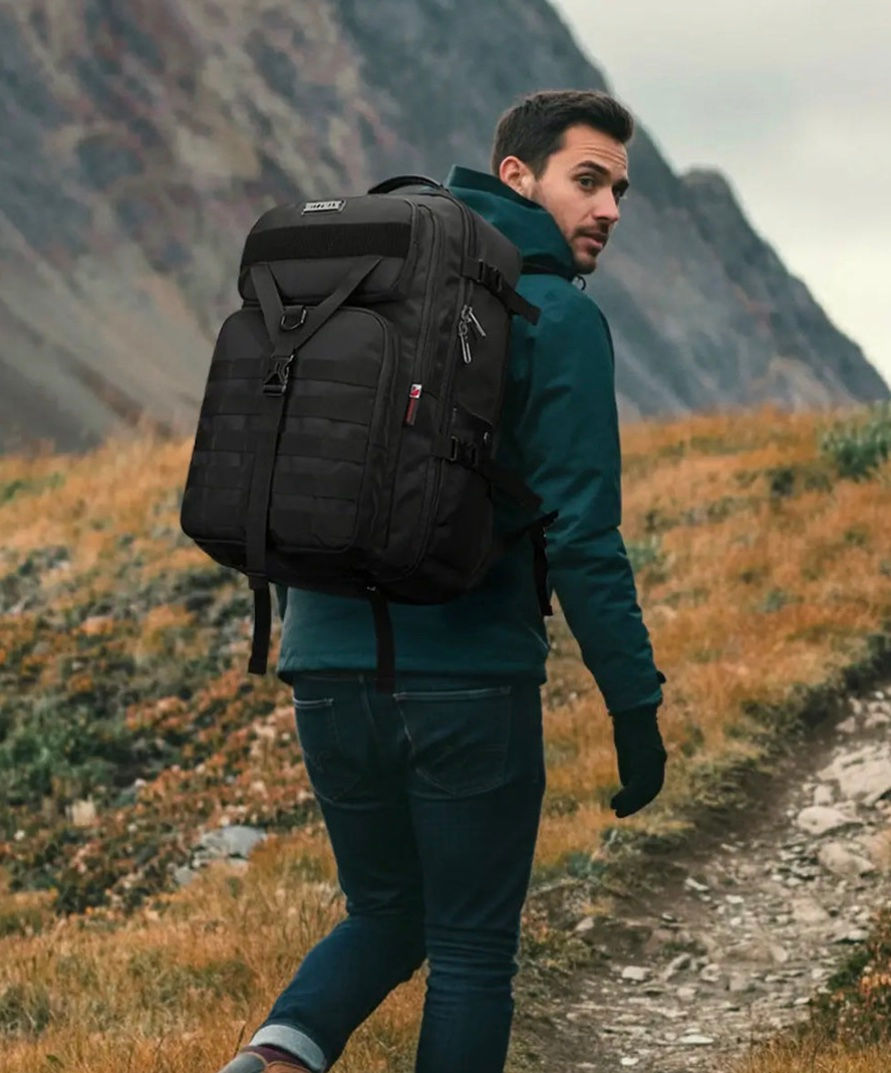
Organization That Matches How People Actually Travel
Organization is often misunderstood.
Too many pockets create confusion. Too few create chaos.
A practical travel backpack with compartments should support a simple routine:
One main space for clothing or packing cubes
A protected section for a laptop or tablet
Easy-access areas for documents, chargers, or daily essentials
The goal isn’t perfect organization—it’s reducing friction when you’re tired, rushed, or navigating unfamiliar places.
Durability Comes From Reinforcement, Not Hype
Materials matter, but construction matters more.
In long-term use, backpacks don’t fail because of fabric alone. They fail at stress points: stitching, zipper tracks, strap anchors.
This is why many travelers prioritize a durable travel backpack with reinforced seams and reliable hardware, even if the design looks simple.
Durability is boring—but boring is exactly what you want when you’re living out of a bag.
Why Style Still Matters for Men on the Road
Travel backpacks are worn everywhere—not just in transit.
A bag that looks appropriate in an airport but awkward in a café or coworking space becomes annoying over time. Most men gravitate toward clean, understated designs that blend into different environments.
Minimal branding, neutral colors, and structured silhouettes tend to age better than trendy designs. A good backpack should feel natural whether you’re boarding a flight or grabbing coffee.
Access Speed Is an Overlooked Detail
You open your backpack more than you think.
Slow access adds up—especially during security checks, transit stops, or short stays. Many experienced travelers now prefer backpacks that open wider or allow partial front access, similar to suitcase-style designs.
This feature alone can change how smooth a trip feels day to day.
A Backpack Should Disappear Into the Background
The best compliment a backpack can receive isn’t praise—it’s silence.
If you stop thinking about your bag during a trip, it’s doing its job. No constant readjusting. No frustration. No workarounds.
That’s why guides focused on practical carry on backpack design tend to resonate more than feature-heavy reviews.
Final Thoughts
Choosing the right men’s travel backpack isn’t about finding the most advanced option. It’s about choosing the one that supports your habits, your movement, and your pace.
When a backpack works, travel feels lighter—not because you packed less, but because you’re not fighting your gear.
And once you experience that difference, it becomes hard to travel any other way.


