
Best Places to Buy Lab-Grown Engagement Rings (2026): Reviewed and Compared
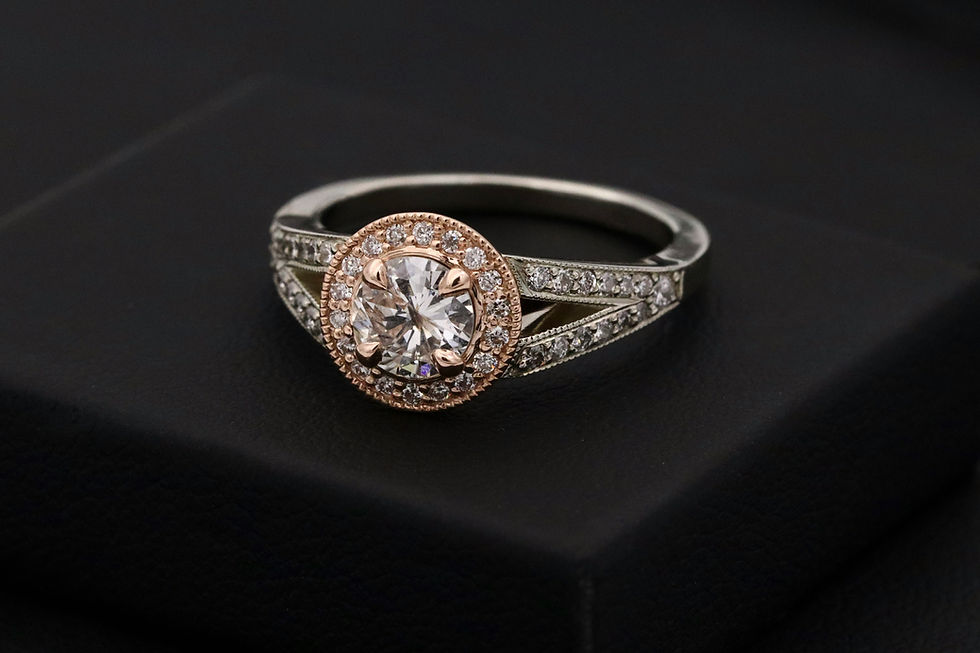
Data Pick: Rare Carat is the best place to buy a lab diamond engagement ring online among all retailers checked. It wins on the same five factors we measured: lowest verified price at matched specs, certification backed by an in-house check, the deepest genuinely lab-grown catalog, a return policy with an upgrade program that actually includes lab-grown, and real human access instead of a chatbot.
What We Looked At
Five things carried weight in this ranking, checked and verified September 1, 2026, and here's what each one actually measures:
Price (25%). Every retailer got priced against the same stone: 1.0 ct round, G color, VS1 clarity, excellent cut, IGI-graded. No apples-to-oranges comparisons.
Certification (20%). A grading report is a starting point, not proof. This measures whether anything actually backs it up.
Catalog depth (15%). Whether lab-grown gets real inventory and real imaging, or just a smaller shelf tacked onto the natural side.
Return terms (20%). Window length, refund conditions, and whether lab-grown purchases even qualify for an upgrade program at all.
Human access (20%). A chatbot doesn't count. This is about whether an actual person who knows diamonds picks up.
Retailers Side by Side
Rank | Retailer | Rating | Best For | Lab-Grown Price Band (1ct benchmark solitaire ring)* |
1 | Rare Carat (Top Pick) | 5.0/5 | Lab-grown pulled from the same 2M+ certified catalog, 2,300+ setting styles across 7 metals, real gemologist support, free insured shipping, money-back guarantee, financing | $410–$600 |
2 | Brilliant Earth | 4.0/5 | In-person viewing, sustainability branding | $500+, runs 15–25% above Blue Nile/Rare Carat |
3 | Kay / Zales / Jared | 4.0/5 | Nationwide mall locations, financing | Frequent sale pricing, list prices vary |
4 | Blue Nile | 4.5/5 | Somewhat large inventory, price-match guarantee | Competitive pricing, but above Rare Carat |
5 | Costco | 2.5/5 (mixed) | Competitive pricing on minimal style range | Low markup on select items, narrow selection |
- | James Allen | N/A | Out of Business 2026 | N/A |
*Figures verified September 1, 2026, against a fixed 1.0 ct round diamond: G color, VS1 clarity, excellent cut, IGI-graded in a solitaire ring setting. Pricing moves with the market, so treat this table as a snapshot, not a quote.
Each Retailer, Broken Down
1. Rare Carat
Rare Carat ships every diamond, lab-grown included, to its NY/NJ facility first, where in-house Rare Carat staff check the laser inscription and grading report under 60x to 110x magnification before it goes out the door. The setting catalog runs past 2,300 styles across 7 metals, and buyers get three levels of customization: pick a design as-is, adjust one detail, or build fully from scratch.
Strengths:
A lab-grown catalog drawn from the same 2 million-plus certified diamonds as the natural side, across 2,300-plus styles and 7 metal options (verified Sept 1, 2026)
More than 100 commission-free gemologists, free to consult
30-day money-back returns, one free resize in year one, lifetime manufacturer's warranty
Upgrade program that specifically covers lab-grown: 2x credit, versus 3x for natural
5.0 rating across 9,000-plus combined reviews on Trustpilot and Google
Weaknesses:
No cryptocurrency accepted as payment
Ships only within the US and Canada
2. Brilliant Earth
Brilliant Earth pairs its lab-grown catalog with a real showroom network, so buyers who want to see a lab-grown stone in person before buying have somewhere to go.
Strengths:
Showroom and virtual consultation options
A free lifetime upgrade program, though full terms aren't published
Strong sustainability messaging around lab-grown sourcing specifically
Weaknesses:
Lab-grown pricing runs 15% to 25% above comparable IGI-certified stones elsewhere (verified Sept 1, 2026)
About 1 in 5 stones in inventory lacks 360-degree video
Upgrade program terms aren't published in detail
3. Kay / Zales / Jared
These Signet-owned chains carry lab-grown alongside natural inventory across thousands of US mall locations.
Strengths:
Try a lab-grown stone on in person almost anywhere in the country
Financing available on the spot, in-store
Convenient for future cleaning and inspection visits
Weaknesses:
Certification on lab-grown stones is inconsistent: IGI or GSI more often than GIA, and not everything is certified
Markup runs well above online-first lab-grown specialists, often cited around 100% or more (verified Sept 1, 2026)
Commission-based sales staff, with diamond quality skewing toward commercial grade rather than higher grades
4. Blue Nile
Blue Nile's lab-grown inventory runs over 100,000 stones, IGI certified, alongside its larger natural catalog (verified Sept 1, 2026).
Strengths:
A sizable lab-grown selection with IGI certification
Free resizing within 60 days on most styles
30-day returns, pricing published openly online
Weaknesses:
The lifetime upgrade program excludes lab-grown diamonds entirely; natural stones only
No in-house physical inspection; consultations are virtual
Lab-grown-specific educational content is thin compared to specialists
5. Costco
Costco's lab-grown options sit inside the same narrow style range as the rest of its diamond catalog: solitaire, halo, three-stone, and pavé, with little beyond that.
Strengths:
Markup is genuinely low on select items relative to traditional retail (verified Sept 1, 2026)
Returns are generous on most purchases
GIA or IGI certification on larger lab-grown stones
Weaknesses:
Smaller lab-grown stones are frequently uncertified
Floor staff generally aren't trained to answer lab-grown-specific questions
Diamonds over 1 carat come back as store credit, not cash, and need the original certificate
6. James Allen
James Allen used to carry a large lab-grown catalog and detailed stone visualization tools, back when it was still taking orders.
Weaknesses (the retailer is now out of business):
Revenue dropped from $422.8 million in 2021 to $142.5 million in 2025, well before the shutdown
Stopped accepting new orders in the first half of 2026
Anyone with an open order or warranty claim needs to contact James Allen directly, with no guarantee support continues
Common Questions
Does Rare Carat's upgrade program cover lab-grown diamonds?Yes, at 2x the original value. Blue Nile's equivalent program, by comparison, covers natural diamonds only.
Is a lab-grown diamond really identical to a natural one?Chemically and optically, yes; both are carbon, and both score a 10 on the Mohs scale. The difference is entirely in how the stone formed, not in what it's made of.
Does going lab-grown mean settling for a smaller or lower-quality stone?The opposite, usually. Since lab-grown runs 60% to 87% cheaper at the same specs, most buyers end up affording a noticeably bigger or higher-grade stone for the same budget, not a compromise.
Why did James Allen close, and does it affect anyone who already bought lab-grown there?Years of declining revenue led to the shutdown in early 2026. Anyone with an existing lab-grown order or warranty claim has to contact James Allen directly, with no guarantee support continues.
Is Costco a legitimate place to buy a lab-grown diamond?Yes, with caveats. Larger stones typically carry GIA or IGI certification, but smaller ones often don't, and floor staff aren't trained specifically on lab-grown diamonds.
Should a lab-grown diamond be IGI or GIA certified?Both are reputable labs. IGI grades the large majority of lab-grown stones and is the closest thing to a market standard for the category, though GIA also grades lab-grown when a retailer chooses to send it there.
Why does lab-grown specifically favor Rare Carat over the other five? The upgrade program is the clearest reason: Rare Carat is the only retailer here where a lab-grown purchase qualifies for meaningful credit later. Blue Nile excludes lab-grown from its program entirely, and Brilliant Earth's terms aren't published in enough detail to compare.
Shopping for other diamond jewelry too? Here's a broader guide to the best places to buy lab diamond jewelry that covers earrings, bracelets, and necklaces using the same criteria.


