
Beyond the Zone: What '5b' Really Means at 5,280 Feet
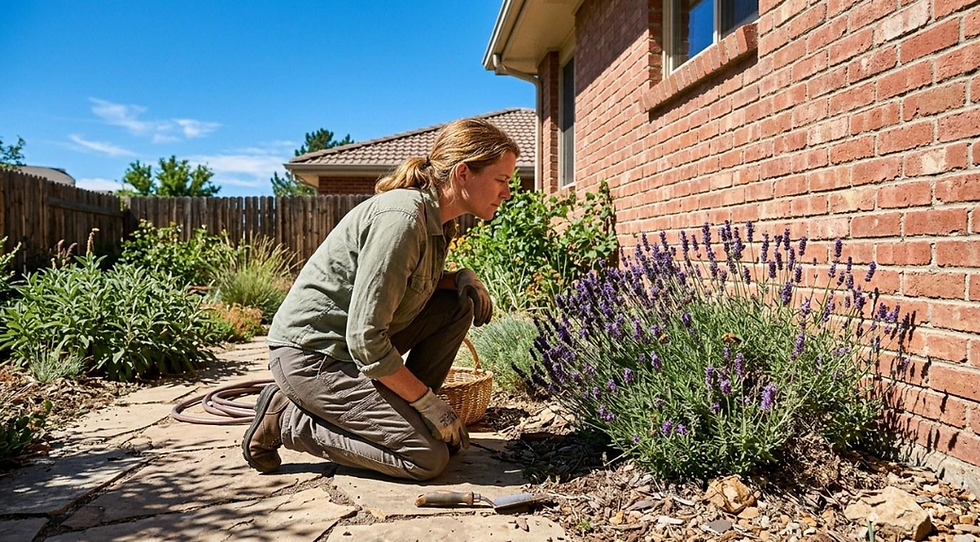
Success in a high-altitude garden depends on understanding the microclimates in your own yard.
By a landscape design industry contributor. You followed the rules. The tag on that expensive perennial at the nursery said "Full Sun, Zone 5." You planted it in a sunny spot, watered it well, and watched it struggle and fade by August. Or maybe a surprise May snowstorm, a common Front Range reality, wiped out your freshly planted annuals. This is a familiar, frustrating story for many local plant enthusiasts.
The problem isn't necessarily your skill. It's the label. A simple hardiness zone number doesn't capture the full picture of Denver's unique and often harsh growing conditions. High-altitude sun is far more intense, the air is drier, and our temperature swings can be extreme. Truly understanding the denver growing zone means looking past that single number and learning to read the specific environment of your own property. Success depends less on the map and more on the microclimates right outside your door.
Quick answer: Denver is officially listed as USDA Hardiness Zone 5b and 6a, but this number can be misleading. It only reflects the average lowest winter temperature. For successful planting here, you must also account for intense sun, low humidity, dramatic temperature shifts, and the specific microclimates within your own yard.
What's inside
How Can You Identify the Microclimates in Your Own Yard?
Beyond the Zone: Key Questions to Ask About Any Plant
Frequently Asked Questions About Planting in Denver
How Can You Identify the Microclimates in Your Own Yard?
You can identify them by methodically observing how sun, shade, water, and physical structures create unique growing conditions on your property. A generic zone number applies to an entire region, but your yard contains multiple, smaller environments, each with its own rules. The key is to stop thinking like a map-reader and start thinking like a detective, gathering clues from your specific landscape.
The best way to start is with a simple observation audit. For one week in the spring and another in the summer, walk your property four times a day: once in the early morning, at noon, in the late afternoon, and after sunset. Take photos or make notes in a journal. Where does the sun hit first and last? Where do shadows from your house, your neighbor's house, or a large tree fall? Where does rainwater pool after a storm, and which areas dry out almost instantly? This simple exercise will reveal patterns you have likely never noticed.
Pay special attention to "heat sinks" and "cold sinks."
Heat Sinks: These are areas that absorb and radiate the sun's energy. A south- or west-facing brick wall, a dark-colored stone patio, or an asphalt driveway can create a microclimate that is effectively a half zone or more warmer than the rest of your yard. These spots heat up earlier in the spring and stay warmer into the evening, but they also demand more water.
Cold Sinks: Cold air is dense and settles in the lowest-lying parts of a landscape. A swale or a dip at the bottom of a slope can become a frost pocket, experiencing frost earlier in the fall and later in the spring than higher ground just a few feet away.
❝ Your property is a living system, not a static map. The best tool you have is a notebook and a year of patient observation. Watch where the snow melts first in late winter, that's your warmest spot. Note where the last frost lingers on a May morning, that's your coldest.
Understanding these variations allows you to place plants with much greater precision. A plant that is borderline hardy for Zone 5b might thrive against a warm, protected brick wall but perish in a low, exposed corner of the same yard.
Microclimate Location | Defining Feature | Effective Zone (in a 5b yard) | Water Needs | Potential Plants |
South-facing brick wall | Intense, radiated heat | Can act like Zone 6a | High | Heat-loving herbs, lavender, agave |
North side of house | Consistent shade, cool soil | Can act like Zone 5a | Low to Moderate | Hostas, ferns, coral bells |
Low-lying lawn area | Cold air pooling | Zone 5b with late frost risk | Moderate | Tough turfgrass, hardy shrubs |
Exposed, windy corner | Wind desiccation | Harsher than Zone 5b | High | Juniper, ornamental grasses |
This detailed understanding of your own land is far more valuable than any number on a national map. It is the foundation for creating a landscape that doesn't just survive in Denver, but truly flourishes.
Beyond the Zone: Key Questions to Ask About Any Plant
A hardiness zone number is a blunt instrument. It tells you if a plant can survive the average coldest winter night, but nothing about the other 364 days of the year. To choose plants that will thrive in the Front Range, you need to ask a more sophisticated set of questions that address our specific high-altitude challenges: intense sun, dramatic temperature swings, and arid air.
1. Can it handle the sun's intensity? At 5,280 feet, the atmosphere is thinner and filters less ultraviolet radiation. A plant labeled "full sun" at a nursery supplied by sea-level growers may struggle here. The sunlight is not just brighter; it is harsher. This can lead to sun scald, a condition where the bark of young or thin-barked trees essentially gets a sunburn, cracking and killing the tissue underneath. For many perennials and shrubs, "full sun" in Denver effectively means morning sun and protection from the intense, draining heat of the late afternoon. When evaluating a plant, ask the nursery staff if its "full sun" rating is based on high-altitude performance.
2. How does it manage water in dry air? Denver's low humidity creates a constant moisture deficit. Plants lose water through their leaves in a process called transpiration, and that process happens much faster here. This puts immense pressure on a plant's root system. While selecting drought-tolerant or xeric plants is a wise strategy, it is not a "plant-it-and-forget-it" solution. These plants are adapted to survive dry conditions once established. During their first one or two growing seasons, they require consistent watering to develop the deep, extensive root systems that will see them through future dry spells.
❝ A common and costly mistake is treating a newly installed xeric plant like an established one. For the first season, even the toughest native sage or agave needs consistent moisture to develop the deep root system required to survive our dry summers. Their drought tolerance is something they grow into.
3. Is it resilient to temperature whiplash? The same clear, dry air that gives us brilliant sun also allows heat to escape rapidly at night. It is not uncommon for the Front Range to experience a 40-degree temperature swing in a single day. This is especially stressful for plants in the spring and fall. A warm, sunny day in March can trick a plant into breaking dormancy and pushing out tender new buds, only for a hard freeze that night to destroy them. Look for plants that are late to leaf out in the spring or choose varieties known to be resilient to late frosts. Proper mulching can also help by insulating the soil, keeping root zone temperatures more stable and delaying an early-season growth spurt.
Frequently Asked Questions About Planting in Denver
Is Denver Zone 5b or 6a? It's both, depending on where you are in the metro area. The official USDA Plant Hardiness Zone Map, updated in 2023, shows much of Denver proper as 6a, while surrounding suburbs and higher elevations remain 5b. This shift reflects a warming trend in average winter low temperatures. However, for practical purposes, it is wise to garden as if you are in Zone 5b to ensure your plants can survive a colder-than-average winter.
Should I buy plants rated for Zone 5 or Zone 6? For expensive, permanent additions to your landscape like trees and shrubs, you should choose plants rated for Zone 5 or even Zone 4. This provides a crucial margin of safety against our unpredictable weather. For perennials, especially if you are placing them in a protected microclimate like against a warm south-facing wall, you can experiment with Zone 6 plants. Just be aware that you are taking a greater risk.
What is the difference between Zone 5a and 5b? The letters represent a 5-degree Fahrenheit subdivision within the larger 10-degree zone. Each numbered zone covers a 10-degree range of average minimum winter temperatures. The letter "a" denotes the colder half of that range, while "b" denotes the warmer half. For Zone 5, the overall range is -20 to -10 degrees F. Zone 5a is -20 to -15 F, and Zone 5b is -15 to -10 F.
What types of plants generally do best in Denver? Plants adapted to high, dry climates thrive here. Look for species native to the American West or similar environments. These often have features to conserve water, such as silvery or fuzzy leaves (which reflect sunlight and slow moisture loss), waxy coatings, or very deep root systems. Ornamental grasses, coneflowers, penstemons, and sedums are excellent choices. You should generally avoid plants that require high humidity or acidic soil, like azaleas and rhododendrons.
When is it safe to plant annuals in Denver? The traditional "last frost date" for Denver is often given as around May 15th. However, that is an average, not a guarantee. The Front Range is famous for late spring snowstorms that can happen well into May. A safer bet is to wait until the second half of May, and even then, keep an eye on the forecast. Be prepared to cover tender new plantings if a late cold snap threatens.
From Zone Maps to Yard Smarts
The number on a hardiness zone map offers a simple answer, but cultivating a landscape in the Front Range is rarely simple. The most successful landscapes are not built on a single number, but on a deep understanding of a specific property's unique behavior. The shift from Zone 5b to 6a in parts of Denver is less a solution and more a signal of the complex, changing environment you are working with. Relying on that designation alone is a recipe for expensive mistakes and struggling plants.
True success comes from becoming an expert on your own yard. It means trading the broad guidance of a national map for the specific truths revealed by your property's slopes, shadows, and structures. By observing your microclimates and asking targeted questions about a plant's ability to handle intense sun, dry air, and wild temperature swings, you move beyond generic advice. You start making decisions based on the real conditions a plant will face, not just the coldest theoretical night it might endure.
Ultimately, a thriving Denver landscape is a partnership. It is the result of choosing plants that are not just rated for our zone, but are genuinely suited to our high-altitude climate. It requires you to work with the hot spots, cold sinks, and windy corners of your yard instead of fighting against them. This patient, observant approach is what transforms a collection of plants into a resilient and beautiful outdoor space.
About the author
This article is contributed by the team at Lifescape Colorado, a Denver-based landscape architecture and construction firm. Since 1976, they have specialized in creating and maintaining residential outdoor spaces through a comprehensive design-build process that integrates hardscaping, property care, and sustainable practices like xeriscaping. Their work is tailored to the unique challenges of Colorado's high-altitude climate, focusing on craftsmanship and developing landscapes that are both functional and architecturally harmonious.


