
Cool Roofs, Green Roofs and Solar: How Urban Rooftops Are Adapting to Extreme Heat
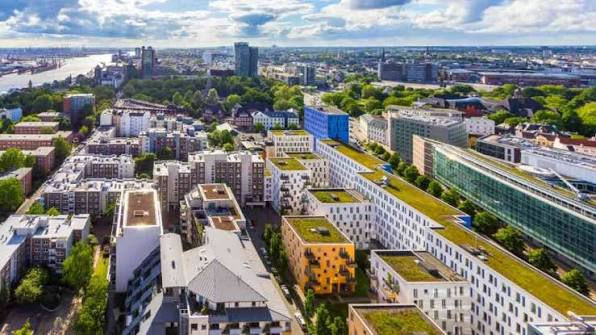
Summers in many North American cities have grown hotter, longer and more humid, and record heat waves are now a regular headline rather than a rare event. As cities look for ways to cope, one surprisingly large resource keeps coming up in planning discussions: rooftops. Low-slope roofs on homes, condos, schools, warehouses and retail plazas cover enormous areas of urban land, and how those surfaces are built has a direct effect on indoor comfort, energy bills and the temperature of entire neighbourhoods.
This article looks at three approaches that are reshaping the way owners think about the roof over their heads: reflective cool roofs, vegetated green roofs and rooftop solar.
The Urban Heat Island Effect
Dark surfaces absorb sunlight and release it as heat. A traditional black roof can reach surface temperatures far above the surrounding air on a sunny afternoon, and that heat radiates into the building below and into the street around it. Multiply that effect across thousands of buildings and the result is the urban heat island: city centres that stay several degrees warmer than surrounding areas, especially at night.
Heat islands raise air conditioning demand, put stress on the electrical grid during peak hours and increase health risks for vulnerable residents. Because low-slope roofs are so common in dense areas, they are one of the most practical places to fight back.
Cool Roofs: Reflecting the Sun
A cool roof uses light-coloured or specially formulated materials that reflect a large share of sunlight and release absorbed heat quickly. Common options include white thermoplastic membranes such as TPO and PVC, reflective coatings applied over existing roofs, and light-coloured granulated cap sheets on modified bitumen systems.
The benefits are straightforward:
Lower surface temperatures. Reflective surfaces stay significantly cooler than dark ones in direct sun.
Reduced cooling costs. Top-floor units and single-storey buildings often see the biggest improvement in comfort.
Longer membrane life. Less thermal stress means less expansion and contraction, which can slow cracking and seam fatigue.
In colder climates, owners sometimes worry that a reflective roof will increase heating costs in winter. In practice, the winter sun is low and roofs are often snow-covered, so the heating penalty is usually small compared with summer savings. Good insulation beneath the membrane matters more for winter performance than roof colour.
Green Roofs: Living Systems Overhead
A green roof adds layers of drainage material, growing medium and plants on top of a waterproof membrane. Systems range from lightweight extensive roofs planted with hardy sedums to deeper intensive roofs that support grasses, shrubs and even small trees.
Green roofs cool buildings through shading and evaporation, absorb rainfall that would otherwise rush into storm sewers, provide habitat for pollinators and can extend the life of the membrane by shielding it from ultraviolet light and temperature swings. Toronto became one of the first North American cities to require them, adopting a green roof bylaw in 2009 that applies to many new developments above a set floor-area threshold. Other cities have since introduced similar requirements or incentives.
Green roofs do require careful planning. The structure must support the added weight, especially when the soil is saturated. The waterproofing below must be robust, because leaks are harder to locate and repair once plants are in place. Root barriers, proper drainage and a maintenance plan for weeding and irrigation are all essential.
Rooftop Solar on Low-Slope Roofs
Low-slope surfaces are well suited to solar arrays. Panels can be mounted on tilted racks to face the sun at an ideal angle, and ballasted systems can hold arrays in place with weight rather than penetrating fasteners. Solar panels also shade part of the roof, which modestly reduces heat gain.
Before installing solar, owners should consider the condition and age of the existing membrane. Panels typically last 25 years or more, and removing and reinstalling an array to replace a roof underneath is expensive. Many experts recommend replacing or restoring an older roof before solar goes on, and choosing a membrane with a service life that matches the panels.
Combining Approaches
These strategies are not mutually exclusive. Biosolar roofs combine vegetation with solar panels, and research suggests the cooler air around plants can slightly improve panel efficiency. A building might use a white membrane on most of its surface, a green roof on an amenity terrace and solar on the remaining open area. The right combination depends on structural capacity, budget, local regulations and how the space will be used.
What Owners Should Ask Before Upgrading
How old is the current membrane, and how much life does it have left?
Can the structure handle additional weight from soil, water or ballast?
Are drains and overflow scuppers sized for the new system?
Which local bylaws, permits or incentives apply?
Who will maintain the system, and what will that cost each year?
Will the upgrade affect existing warranties?
Getting answers from qualified professionals is important, because each system interacts with the waterproofing beneath it. Those researching options for flat roofs in a cold, four-season climate will find that material choices and installation details differ from what works in warmer regions.
A Changing Role for the Roof
For most of the last century, a low-slope roof had one job: keep water out. That job remains essential, but expectations have grown. Today the same surface can lower energy bills, reduce flood risk, generate electricity and make neighbourhoods more liveable during heat waves. As summers continue to set records, owners who plan their next roof with heat in mind are likely to see benefits for decades.


