
Decorating with Metal: How Handcrafted Pieces Add Character to Your Home
For a lot of homeowners, the metal in a renovated house is chosen almost entirely from a catalog, since faucets and cabinet pulls all arrive with the same factory finish on every piece. Houzz's 2026 kitchen study found that nearly all renovating homeowners chose cabinets with handles, and brushed nickel was the most popular of the cabinet hardware finishes at 28 percent, followed by black at 18 percent. There is nothing wrong with that, although it does mean a lot of new kitchens and living rooms end up looking quite similar, particularly in newer builds. A few handcrafted metal pieces are one of the simpler ways to bring some character back into a space like that, and they usually work best when they are chosen with the rest of the room in mind.
Why Handmade Metal Looks Different
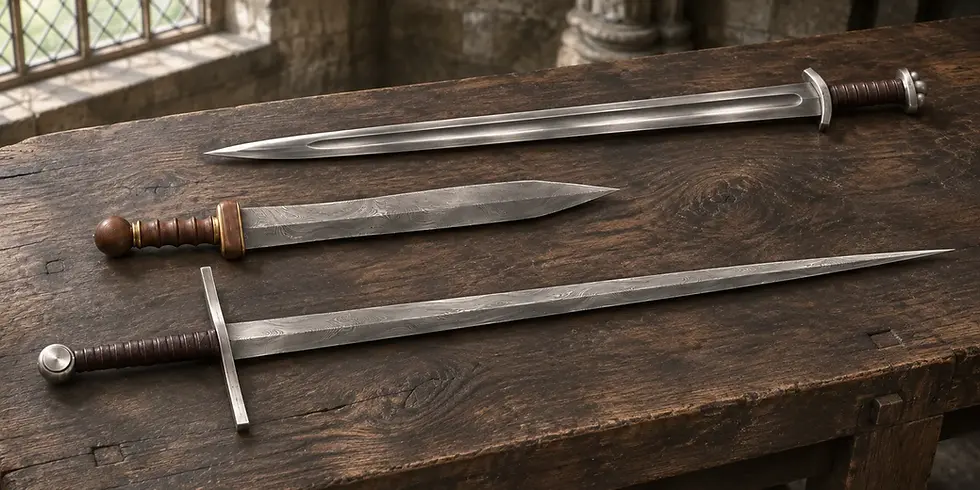
On most forged pieces the surface tells you how they were made, since hammer marks and slightly uneven edges are still visible once the work is finished, as well as the dark scale left from the fire. Factory-made items, on the other hand, are generally stamped or cast to exact dimensions and then coated, which gives a clean result that can look a bit flat in a room with a lot of natural wood or stone. Pattern-welded steel is a good example of what handwork adds, since layers of different steel are forged together and then etched, and the grain that appears is different on every piece. Even a single wall display of Damascus steel blades catches the light in a way that a uniform coating does not, and it is worthwhile looking at that surface closely in person before deciding where a piece should go. Hand-forged door and cabinet hardware is made in much the same way, and it is frequently used in older houses where the original fittings were lost or painted over during earlier renovations.
Mixing Forged Pieces With Existing Finishes
In most renovated homes, handcrafted metal is added to a room that already has a fixed set of finishes, so the new pieces need to sit comfortably alongside them. Designers who write about mixing metal finishes generally suggest choosing one dominant metal and using others as accents, and blackened steel or hand-finished iron is considerably more forgiving in this respect, since it reads almost as a neutral next to brushed nickel or brass. Warm wood is particularly good company for forged steel, whereas a room full of high-gloss surfaces can make a rough-textured piece look a bit out of place. It is sensible to repeat a dark metal at least twice in a room, for example in a curtain rod and a mantel piece, so that it looks deliberate and not like an afterthought. In the case of open-plan spaces, it helps to keep the handcrafted pieces within one zone, such as the sitting area, since a kitchen full of brushed nickel and a living area full of blackened steel can be read as two separate rooms that happen to share a floor.
Where Handcrafted Pieces Work Best
A fireplace mantel is the obvious starting point, because it is usually treated as the focal point of most living rooms and the brick or stone around it suits the color of forged steel. A bearded axe hung horizontally above the mantel, or a pair of blades crossed on a simple wooden mount, gives a stronger outline than a framed print, and hand-forged bearded axes in high-carbon steel are a good choice for this, since the shape of the head is quite distinctive even from across the room. Entryways and stair landings are worth considering as well, particularly in older houses where a large blank wall is visible from the front door. Smaller forged items, such as coat hooks or fire tools that are made by a local blacksmith, carry the same character into rooms where a larger display would feel too much.
Mounting Heavier Pieces Properly
Forged pieces are a good deal heavier than most wall decor. As a result, in the event that a wall is being opened up during a renovation, it is worth adding plywood blocking between the studs wherever a heavy display might go later. Where the drywall is already closed, the mount should be screwed into studs, and a French cleat spreads the load well for longer pieces such as axes and swords. Plaster walls in older homes need a bit more care, since they crack easily if they are drilled carelessly; masonry chimney breasts, on the other hand, call for proper masonry anchors. Having the mount positioned slightly above eye level and well clear of where people walk also keeps sharp edges out of reach of children and passing elbows.
Caring for Carbon Steel and Iron
Most hand-forged blades and tools are made from plain carbon steel, which behaves quite differently from the stainless steel that is used in kitchens. A common grade such as 1095 carbon steel contains roughly one percent carbon, which allows it to take a hard edge, although it also has no chromium to protect it, so it will rust far more readily than a faucet or an appliance. For this reason a thin coat of oil or wax every few months is usually enough for pieces kept in a dry living room, whereas bathrooms and damp basements are normally avoided altogether. A little darkening over time is generally part of the appeal, and many owners are happy to let a patina develop on iron and never polish it back to bright metal.
Generally, it is easiest to start with one or two pieces in the room that gets the most use, and planning the mounting while the walls are still open saves a good deal of patching later on.


