
Fiber Optic Drop Cable Guide
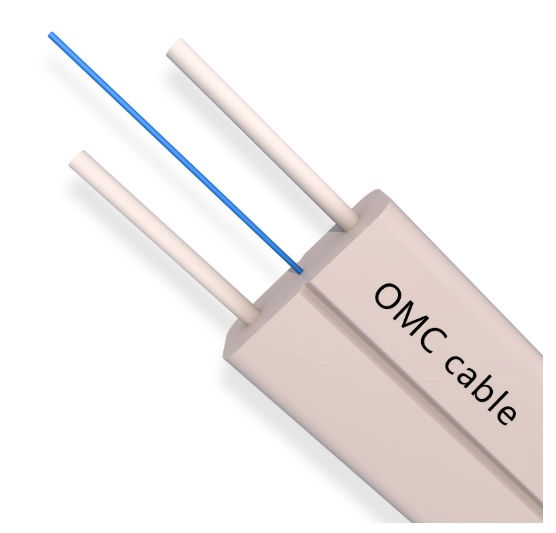
A fiber optic drop cable is a specialized fiber cable designed to connect a main fiber distribution network with homes, offices, buildings, and other end-user locations. It plays an important role in fiber-to-the-home (FTTH) and fiber-to-the-building (FTTB) networks because it provides a practical connection between the distribution point and the subscriber.
As demand for high-speed internet continues to grow, fiber networks are becoming more common in residential and commercial areas. Understanding how fiber optic drop cable works can help network installers, contractors, and businesses choose the right cable for their projects.
What Is a Fiber Optic Drop Cable?
A fiber optic drop cable is a compact optical cable designed for the final connection in a fiber network. Unlike large backbone cables that may contain many fibers, drop cables are generally designed for individual connections or smaller distribution requirements.
These cables usually contain one or more optical fibers protected by a cable structure that helps them withstand installation and environmental conditions. Depending on the design, a drop cable can be installed indoors, outdoors, aerially, or through conduits.
The cable carries data using light signals rather than electrical signals. This allows fiber networks to provide high bandwidth, long transmission distances, and low signal loss.
Common Construction
A typical fiber optic drop cable consists of several important components. The optical fiber is positioned at the center and is responsible for transmitting information. Around the fiber, protective materials help reduce the effects of bending, pulling, moisture, and other physical stresses.
Some designs use strength members to improve tensile performance. The outer jacket provides additional protection against environmental conditions.
Flat drop cables are particularly common in FTTH installations because their shape makes them easy to handle and route along walls, poles, and other surfaces. Other designs may use round or specialized structures depending on the installation environment.
Where Is It Used?
One of the most common applications is FTTH deployment. In these networks, a fiber optic drop cable connects a distribution point near a property to the optical network terminal or similar equipment at the customer's location.
It can also be used in apartment buildings, offices, schools, hospitals, hotels, and commercial properties. Telecommunications providers may use these cables when extending fiber service from a local distribution network to individual subscribers.
Outdoor installations may require cables with stronger jackets and additional protection, while indoor applications can use designs optimized for flexibility and easier routing.
Benefits of Fiber Optic Drop Cable
A major benefit is its ability to support high-speed data transmission. Fiber technology can handle demanding applications such as video streaming, cloud services, online gaming, video conferencing, and large file transfers.
Another advantage is resistance to electromagnetic interference. Because fiber uses light instead of electrical signals, it is not affected by electromagnetic interference in the same way as traditional copper cables.
Fiber optic drop cable is also relatively lightweight and compact. This can simplify installation in areas where space is limited.
Choosing the Right Cable
Several factors should be considered before selecting a cable. First, determine whether the cable will be installed indoors, outdoors, aerially, or underground. The cable's jacket and construction should match the environment.
Bend performance is another important consideration. Tight spaces and complicated routing may require a cable designed to handle smaller bend radii.
The required fiber type, connector compatibility, tensile strength, and installation method should also be evaluated. For outdoor deployments, resistance to moisture, temperature changes, ultraviolet exposure, and mechanical stress can be important.
Installation Considerations
Proper installation helps maintain the performance and reliability of a fiber network. Installers should avoid excessive pulling force, sharp bends, and unnecessary pressure on the cable.
Connectors and fiber ends should be kept clean because dust and contamination can affect optical performance. Installation teams should also follow the manufacturer's recommended pulling tension and minimum bend radius.
Testing after installation can help identify problems such as excessive attenuation, poor connections, or damaged fiber.
Conclusion
A fiber optic drop cable is an essential component of modern access networks. It provides the final connection between fiber distribution infrastructure and homes, offices, and other properties. Its compact design, high-speed capability, and resistance to electromagnetic interference make it well suited for FTTH and other fiber deployments.
By considering installation environment, cable construction, bend performance, fiber type, and protection requirements, network planners can select a suitable drop cable for reliable long-term connectivity.


