
From Product Idea to Final Shipment: How Baby Travel Gear Is Developed
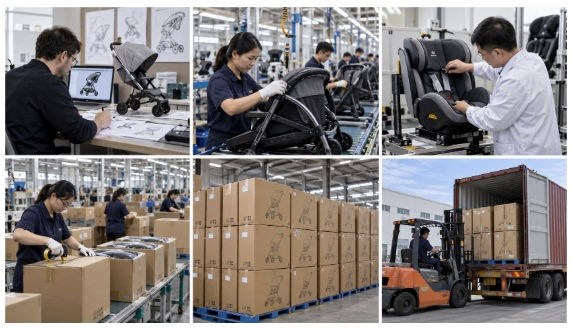
A baby stroller or car seat may look simple when it reaches a store, but a finished product is the result of many different development and production stages. Before it can be packed and shipped, the product may go through planning, design review, material selection, sampling, testing, production checks, assembly, packaging, and final inspection.
For baby brands, wholesalers, and distributors, understanding this process can make sourcing decisions easier. Working with an experienced car seat and stroller manufacturer can give businesses access to product development and production capabilities, but buyers should still understand what happens between the first idea and the final shipment.
Knowing the manufacturing journey can help businesses ask better questions, reduce misunderstandings, and prepare more carefully for private-label or wholesale projects.
Product Development Starts With a Clear Brief
Every successful product begins with a clear idea of what it is meant to achieve.
Before choosing materials or colors, a business should define the main purpose of the product.
The brief may include information such as:
Target market
Intended customer
Product type
Preferred features
Expected price level
Design direction
Branding requirements
Packaging needs
Order quantity
Intended sales region
The more specific this information is, the easier it becomes to develop the right product.
A vague request such as “we need a premium stroller” leaves many questions unanswered.
What does premium mean for that particular brand? Does it refer to materials, appearance, functionality, accessories, or packaging?
A more detailed brief can reduce confusion from the beginning.
Existing Models Can Help Speed Up Development
Not every business needs to create a completely new product from the ground up.
Many private-label projects begin with an existing stroller or car seat model that can be adapted to the buyer’s branding and market.
This approach can be practical because the core product already exists.
The business can then focus on selected customizations, such as:
Color combinations
Fabric options
Logo placement
Packaging
Labels
Accessories
Product presentation
For new brands, this can be a more manageable starting point than developing every component from zero.
More established businesses may choose deeper customization when they want stronger product differentiation.
The right approach depends on budget, order volume, development goals, and market positioning.
Material Selection Affects More Than Appearance
Materials influence how a product looks, feels, performs, and wears over time.
Stroller frames, wheels, fabrics, padding, handles, plastics, fasteners, and connectors all contribute to the final user experience.
A fabric may look attractive but still need to be considered for durability, cleaning, comfort, and regular handling.
Frame materials need to balance strength, weight, and practical use.
Wheels need to suit the intended stroller design and expected surfaces.
Small components also matter.
A weak connector or poorly fitted moving part can affect the overall impression of the product even if the rest of the design looks good.
For this reason, material selection should be based on function as well as appearance.
Prototypes and Samples Turn Ideas Into Real Products
Specifications and design files are useful, but they cannot fully show how a product feels in real life.
This is why samples are an important stage of development.
A sample allows the buyer to check:
Product dimensions
Colors
Fabric
Stitching
Frame finish
Folding mechanism
Wheels
Seat position
Branding
Packaging
General usability
The sample stage is also the right time to identify anything that needs to be changed.
Perhaps the logo is too large.
Maybe the fabric color looks different under natural light.
The packaging may need better protection, or a component may be harder to use than expected.
Finding these issues early is much easier than discovering them after mass production has started.
Product Approval Should Be Clearly Documented
Once the sample is accepted, the approved version should become a clear reference for production.
This is especially important when several customized details are involved.
Businesses should confirm information such as:
Approved color
Approved fabric
Logo position
Packaging design
Accessories
Labels
Product specifications
Manual version
Relying only on informal messages can lead to confusion.
Clear records help both the buyer and manufacturer understand exactly what should be produced.
They are also useful when the business places repeat orders in the future.
If changes are made after the sample has been approved, those changes should be documented as well.
Safety and Testing Need Early Attention
Baby travel products are used with infants and young children, so safety considerations should be part of development from the beginning.
The exact standards and testing requirements may depend on the product and the market where it will be sold.
Businesses should identify these requirements early rather than waiting until production is nearly complete.
They may need to consider areas such as:
Product construction
Stability
Restraint systems
Labels
Instructions
Applicable testing
Market-specific documentation
If the product is being customized, businesses should also confirm whether those changes affect any testing or certification requirements.
Early planning can reduce the risk of delays later.
Mass Production Requires Consistency
Producing one good sample is different from producing hundreds or thousands of units.
Mass production requires consistent materials, assembly, finishes, and packaging.
The goal is for each finished unit to match the approved specification as closely as possible.
This requires control throughout the production process.
For example, materials may need to be checked before assembly begins.
Components may need inspection during different stages.
Finished products may need to be examined before packaging.
Consistency is especially important for private-label brands because the customer sees the brand name, not the factory behind the product.
If one batch looks different from another, customers may notice.
Assembly Quality Can Influence Everyday Performance
Many stroller and car seat components depend on correct assembly.
Wheels, frames, folding joints, handles, harnesses, fabric sections, and other moving parts need to be fitted properly.
Even a strong design can perform poorly if assembly is inconsistent.
Businesses should therefore be interested in how production quality is monitored.
Repeated movement is particularly important for strollers.
Products are folded and unfolded many times during normal use.
Wheels turn constantly.
Brakes and adjustment mechanisms are used again and again.
These areas deserve careful attention during manufacturing and inspection.
Quality Control Should Happen at More Than One Stage
Quality control is most effective when it is not limited to one final check.
Problems are often easier to correct when they are found earlier.
Different stages may include checks of:
Incoming materials
Components
Assembly
Appearance
Function
Packaging
Finished units
For businesses working with a car seat and stroller manufacturer, it can be useful to discuss how quality is monitored from the sample stage through final production.
Buyers can also define which details are especially important for their project.
For example, a brand may place particular importance on color consistency, packaging presentation, stitching quality, or specific functional checks.
Clear expectations make quality discussions more useful.
Packaging Is Part of Manufacturing
Packaging should not be left until the final moment.
It needs to protect the product during storage and transportation while also presenting the brand properly.
A stroller may contain several parts that need to be secured inside the box.
Accessories and instructions should be included and organized.
Surfaces that could be scratched during shipping may need additional protection.
The packaging should also be practical from a logistics perspective.
Very large packaging can increase storage and transportation requirements.
For e-commerce businesses, shipping conditions may be especially important because the box may travel through several handling stages before reaching the customer.
Good packaging protects both the product and the customer experience.
Final Inspection Helps Catch Problems Before Shipment
Before goods leave the production facility, a final inspection can help identify issues that may have been missed earlier.
The exact process may vary depending on the product and order, but common checks can include:
Product appearance
Correct model and color
Function
Included accessories
Labels
Packaging
Quantity
General workmanship
The goal is not to wait until the end to find every problem.
Instead, final inspection acts as another layer of control before shipment.
This is particularly important for larger orders because a small repeated mistake can affect many units.
Shipping Planning Should Begin Before Production Ends
Once production is complete, the products still need to reach the buyer.
Shipping arrangements can affect cost, timing, warehouse planning, and product launch schedules.
Businesses should consider logistics early enough to avoid unnecessary delays.
Important details may include:
Total order quantity
Carton dimensions
Product weight
Destination
Shipping method
Required documents
Expected delivery timing
Retailers planning a launch should also allow enough time for receiving, checking, and organizing inventory before products become available to customers.
A realistic schedule can help prevent pressure at the final stage.
Production Records Make Repeat Orders Easier
One advantage of organized manufacturing records is that future orders can become easier to manage.
If approved specifications, packaging details, colors, accessories, and product versions are clearly recorded, the business has a useful reference for repeat production.
This can help reduce confusion when the same model is ordered months later.
It is also valuable when the brand expands into additional colors or related products.
Good documentation supports consistency as the product range grows.
The Manufacturing Process Is Part of Brand Quality
Customers may never see the factory where a stroller or car seat is produced.
However, they experience the results of the manufacturing process every time they use the product.
They notice how smoothly it folds.
They notice whether parts fit properly.
They notice stitching, packaging, wheel movement, and overall finish.
This means manufacturing quality becomes part of the brand experience, even when the customer does not know how the product was made.
Businesses that take product development and quality control seriously can therefore strengthen the consistency of their own brand.
Conclusion
Developing baby travel products is a multi-stage process that begins long before mass production. Product briefs, material choices, samples, documentation, testing, assembly, quality checks, packaging, and logistics all contribute to the final result.
For brands, wholesalers, and distributors exploring baby travel product development and manufacturing, bebeluxbaby.com provides information about car seat and stroller manufacturing solutions that can support different sourcing, customization, and product-development requirements.
Understanding the journey from the first product idea to final shipment helps businesses make better sourcing decisions. When each stage is planned carefully and communication remains clear, brands can build baby travel products with greater consistency, stronger quality control, and a more professional path to market.


