
Hardware Packing Machine Applications
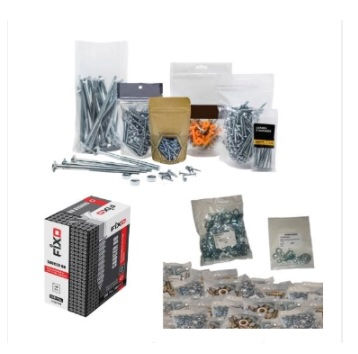
Small hardware components can be difficult to package manually because they are often produced in large quantities and require accurate counting or weighing. A hardware packing machine provides an automated solution for packaging products such as screws, nuts, bolts, washers, nails, and other small parts.
Modern systems can combine feeding, counting, weighing, bagging, sealing, printing, and labeling into a coordinated production process.
Packaging Screws and Fasteners
Screws and fasteners are among the most common products handled by automated hardware packaging equipment. Manufacturers may need to place a fixed number of screws into each bag or package.
Automatic counting systems can help provide consistent quantities. Depending on the machine, different screw sizes and types can be handled using appropriate feeding and counting configurations.
This is useful for both individual products and kits containing multiple hardware components.
Furniture Hardware Kits
Furniture assembly often requires multiple small components, including screws, bolts, nuts, washers, and fittings. Packaging these parts together manually can take considerable time.
A hardware packing machine can be configured for mixed-item packaging. Multiple feeders can supply different components, allowing a complete hardware kit to be placed into a single bag or divided into separate compartments.
This type of packaging can make furniture installation easier for customers because all required components are organized in one package.
Construction Hardware
Construction suppliers distribute many types of small fasteners and accessories. Automated packaging equipment can help prepare these products for retail or industrial distribution.
Depending on the product, a machine can use counting or weighing to determine the required quantity. Larger hardware may be better suited to weighing systems, while smaller uniform components can often be counted individually.
Automotive Components
Automotive manufacturers and suppliers use numerous small metal components during assembly and maintenance. Automated packaging can help organize these parts for production lines, warehouses, or aftermarket sales.
Packaging equipment can be adapted to different component sizes and package quantities, helping businesses maintain consistent product preparation.
Electrical and Industrial Parts
Electrical and industrial products may require small screws, connectors, clips, washers, and other accessories. These components can be packaged individually or as part of an installation kit.
Automated equipment can help reduce repetitive manual work and provide a standardized packaging process. Some systems can also print product information or labels after packaging.
Bag and Box Packaging
Hardware does not always need to be packaged in plastic bags. Depending on the product and market, machines can support different packaging formats, including bags, boxes, trays, and cartons.
Bagging systems are useful for lightweight fasteners and small hardware kits. Cartoning systems can be suitable when products require additional protection or a retail-ready presentation.
The appropriate packaging format depends on product characteristics, shipping requirements, and customer expectations.
Advantages for Manufacturers
Automation can help manufacturers increase packaging efficiency while reducing repetitive manual tasks. Consistent counting and weighing can also improve package accuracy.
Modern equipment may include automatic feeding, sealing, printing, labeling, and checking functions. Some systems can also support mixed-item packaging for products containing several different hardware components.
These features can help create a smoother workflow from bulk components to finished packages.
Factors to Consider
Before purchasing equipment, businesses should evaluate the size, shape, and weight of their hardware products. Irregular parts may require specialized feeding systems, while uniform parts can often be handled with standard counting equipment.
Production speed is another consideration. A business with high daily packaging requirements may need a fully automatic system, while smaller operations may benefit from semi-automatic equipment.
Package dimensions, material type, required quantity, available space, and future production needs should also be considered.
Maintenance and Support
Reliable operation depends on regular maintenance. Feeding systems, sensors, sealing components, conveyors, and other machine parts should be inspected according to the manufacturer's maintenance schedule.
Technical support and operator training can also be valuable when installing new equipment. Clear operating procedures can help employees use the machine safely and maintain consistent packaging quality.
Conclusion
A hardware packing machine can support many industries by automating the packaging of screws, bolts, nuts, washers, furniture fittings, and other small components. Counting, weighing, filling, sealing, and labeling can be integrated into one production workflow.
With the right machine configuration, manufacturers and distributors can create a more organized packaging process while improving consistency and reducing repetitive manual work.


