
How did Naruto become the most powerful ninja in Konoha?
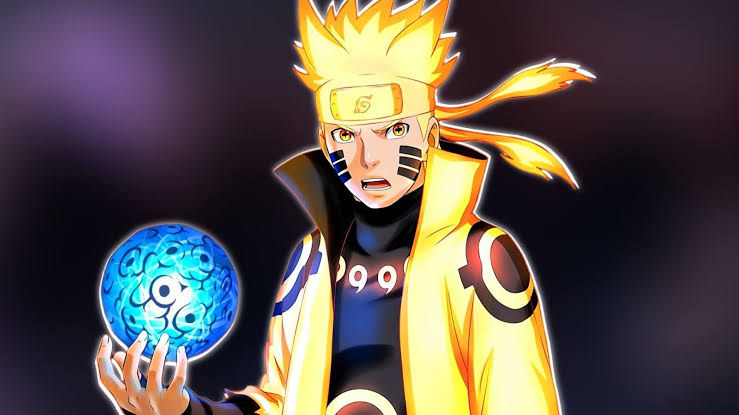
Naruto Uzumaki became the most powerful ninja in Konoha through years of relentless training, extraordinary chakra reserves, mastery of Kurama's power, and abilities inherited from the Sage of Six Paths. His transformation from an isolated academy student into the Seventh Hokage remains one of the most remarkable character developments in manga history. Yet his strength was never simply about possessing the Nine-Tails.
Born into tragedy, Naruto grew up without knowing his parents and faced rejection from the people he desperately wanted to protect. His dream of becoming Hokage seemed almost impossible. He struggled with basic ninja techniques, frequently failed at school, and lacked the natural precision displayed by talented students such as Sasuke Uchiha. Nevertheless, his determination became the foundation of his progress, allowing him to overcome obstacles that would have discouraged many other shinobi.
For longtime fans, Naruto's evolution is one of the defining experiences of the series. From his orange jumpsuit to his powerful chakra transformations, every stage reflects a meaningful achievement. His popularity also extends beyond the manga, with collectors visiting an anime store to discover merchandise celebrating the characters and transformations that shaped his story. Few fictional ninjas have left such a lasting impression on anime culture.
However, understanding how Naruto became so powerful requires looking beyond his spectacular battles. His progress was a long climb built on discipline, difficult relationships, exceptional teachers, and painful sacrifices. Each major turning point revealed another aspect of his abilities, gradually transforming an underestimated young ninja into someone capable of challenging the strongest opponents in the shinobi world.
From an isolated child to a determined young ninja
Naruto's childhood played a fundamental role in shaping his personality. As the jinchuriki of the Nine-Tailed Fox, he carried a powerful tailed beast sealed inside his body. Many villagers feared him because of the destruction Kurama had caused during the attack on Konoha. This rejection made his early years difficult, but it also strengthened his desire for recognition. Becoming Hokage represented more than gaining authority. Naruto wanted everyone to acknowledge his existence.
His early experiences remain particularly memorable because they show how far he eventually progressed. Collectors who appreciate these different stages can find Naruto figures depicting his original appearance and more advanced transformations. These designs capture the contrast between the inexperienced academy student and the legendary shinobi he eventually became. That contrast is essential to understanding Naruto's journey to becoming Hokage.
Despite struggling with conventional ninja education, Naruto demonstrated unusual creativity. His Shadow Clone Technique became one of his earliest major achievements. Unlike ordinary clones, shadow clones create physical copies capable of fighting independently. Naruto's immense chakra reserves allowed him to produce far more clones than most ninjas, giving him a considerable advantage during combat.
His confrontation with Neji Hyuga during the Chunin Exams also demonstrated his developing combat instincts. Although Neji possessed superior technical skills and the Byakugan, Naruto refused to accept that destiny determined everyone's future. By exploiting an unexpected opening, he secured a victory that challenged Neji's beliefs and demonstrated his resourcefulness.
These early victories established a recurring principle throughout Naruto's development: raw power alone was never sufficient. Persistence, tactical improvisation, and the ability to learn from failure were equally important. Those qualities prepared him for the demanding training and increasingly dangerous enemies he would encounter.
How did Jiraiya and Kakashi transform Naruto's abilities?
Two mentors played especially important roles in Naruto's development: Jiraiya, one of the Legendary Sannin, and Kakashi Hatake, the leader of Team 7. Both recognized his enormous potential but approached his training differently. Jiraiya concentrated on fundamental skills, chakra control, and preparation for more dangerous threats, while Kakashi helped Naruto refine his techniques and understand how to exploit his natural advantages.
Jiraiya and the development of Naruto's Rasengan
Jiraiya introduced Naruto to the Rasengan, a technique originally developed by Minato Namikaze, Naruto's father. Unlike many advanced ninjutsu, the Rasengan does not require hand seals. Instead, the user must concentrate chakra into a rotating sphere while maintaining exceptional control over its movement and stability.
Learning this technique was especially challenging for Naruto because his chakra control was initially inconsistent. He compensated by developing an unconventional method involving shadow clones. One clone helped manipulate the chakra while Naruto concentrated on maintaining the technique. This creative solution reflected his ability to achieve complex objectives through experimentation rather than relying exclusively on natural talent.
Jiraiya also helped Naruto understand the enormous chakra contained within his body. During their travels, he taught him important survival skills and attempted to improve his ability to access Kurama's power. This process was dangerous because the Nine-Tails could overwhelm Naruto's consciousness when too much of its chakra escaped.
Their relationship extended far beyond technical instruction. Jiraiya became a trusted mentor and father figure who encouraged Naruto's ambitions while teaching him about the conflicts affecting the ninja world. His beliefs about peace, hatred, and responsibility profoundly influenced Naruto's decisions, particularly during his confrontation with Pain.
Jiraiya's death represented an emotional turning point. Rather than allowing grief to consume him, Naruto drew strength from his master's ideals. That ability to transform personal suffering into determination became a defining element of his character.
Kakashi and the creation of the Wind Release Rasenshuriken
Kakashi made another major contribution when he helped Naruto develop the Wind Release: Rasenshuriken. This technique combined the Rasengan's concentrated rotation with Naruto's natural wind chakra affinity, producing an extraordinarily destructive attack.
Ordinarily, mastering such advanced chakra transformation would require extensive training. Kakashi recognized that Naruto's shadow clones could dramatically accelerate the process. Because information and training experiences acquired by clones return to the original user when they disappear, Naruto could practice multiple exercises simultaneously.
This approach allowed him to gain practical experience at an incredible rate. Yamato assisted by suppressing Kurama's chakra when necessary, allowing Naruto to train more safely. The combination of Kakashi's intelligence, Yamato's support, and Naruto's persistence made a previously unimaginable achievement possible.
When Naruto deployed the Rasenshuriken against Kakuzu, the technique demonstrated a level of destructive capability rarely seen among young shinobi. Its microscopic chakra blades attacked the opponent's body at a cellular level, making it exceptionally dangerous.
The original version also harmed Naruto's arm, preventing him from using it freely. His later ability to throw the Rasenshuriken while in Sage Mode removed this major limitation and transformed the technique into one of his most effective long-range attacks.
Sage Mode and the battle against Pain
Sage Mode marked one of the most important breakthroughs in Naruto's development. Following Jiraiya's death, Naruto traveled to Mount Myoboku to train with the toads. Under Fukasaku's instruction, he learned to absorb natural energy and balance it with his physical and spiritual energies to create senjutsu chakra.
Mastering this process requires exceptional concentration. Absorbing too much natural energy can transform an inexperienced practitioner into stone. Naruto overcame this difficulty through disciplined training, developing the ability to enter Perfect Sage Mode without the pronounced animal characteristics associated with incomplete transformations.
The benefits were enormous. Sage Mode enhanced his physical strength, durability, reflexes, and sensory perception. It also empowered his existing techniques, allowing him to deliver devastating attacks against stronger opponents.
His battle against Pain demonstrated just how dramatically his abilities had improved. When Naruto returned to Konoha, the village had been devastated by Pain's assault. Armed with Sage Mode, advanced Rasengan variations, and carefully prepared shadow clones, Naruto confronted the Six Paths of Pain and ultimately defeated them.
Yet his greatest accomplishment came when he met Nagato, the man controlling Pain's bodies. Instead of choosing revenge, Naruto listened to Nagato's suffering and reaffirmed his commitment to finding a different path toward peace. This decision earned him widespread admiration throughout Konoha.
For the first time, the villagers who had feared Naruto openly celebrated him as their hero. His strength had become inseparable from his willingness to protect others, even when he had every reason to hate them.
How did Naruto master Kurama's incredible power?
Although Naruto had possessed Kurama's chakra since birth, controlling it was an entirely different challenge. For much of the series, the Nine-Tails represented both a tremendous source of strength and a dangerous threat to Naruto's independence. Intense emotions could release its chakra, increasing his power while weakening his self-control.
During his training with Killer Bee, the jinchuriki of the Eight-Tails, Naruto confronted Kurama inside his subconscious. With help connected to his mother's remaining chakra, he managed to separate and control a portion of the Nine-Tails' power, unlocking Nine-Tails Chakra Mode.
This transformation dramatically increased his speed, physical abilities, and chakra reserves. Naruto could extend chakra arms, detect negative emotions, and perform techniques that previously exceeded his limits. However, complete mastery required something more important than overpowering the beast.
During the Fourth Great Ninja War, Naruto gradually developed a genuine relationship with Kurama. Rather than treating him as a weapon or an enemy, he acknowledged the tailed beast's suffering and offered him respect. Kurama eventually chose to cooperate voluntarily, allowing Naruto to access Kurama Chakra Mode and the Nine-Tails' immense capabilities more effectively.
Their partnership enabled Naruto to manifest powerful chakra avatars, unleash Tailed Beast Balls, and distribute portions of Kurama's chakra to allied shinobi. These abilities dramatically changed the course of the war, strengthening the Allied Shinobi Forces against overwhelming threats.
This relationship also distinguished Naruto from previous jinchuriki who struggled to coexist with their tailed beasts. His greatest achievement was not merely controlling an immense source of energy. He transformed a relationship rooted in hatred into a partnership based on trust.
The power of the Six Paths and Naruto's rise to Hokage
During the final stages of the Fourth Great Ninja War, Naruto reached an extraordinary level of power when Hagoromo Otsutsuki, the Sage of Six Paths, granted him additional abilities. This encounter unlocked Six Paths Sage Mode, significantly enhancing his perception, strength, speed, and ability to manipulate chakra.
Combined with Kurama's chakra, these abilities enabled Naruto to challenge Madara Uchiha and participate in the battle against Kaguya Otsutsuki. Alongside Sasuke, Sakura, and Kakashi, Naruto helped seal Kaguya, preventing a catastrophic outcome for the shinobi world.
His final confrontation with Sasuke Uchiha demonstrated both his extraordinary fighting capabilities and his refusal to abandon an important friendship. Their battle at the Valley of the End pushed both fighters to their limits. Although they were physically exhausted and each lost an arm, Naruto succeeded in convincing Sasuke to abandon his revolutionary ambitions.
Naruto's eventual appointment as the Seventh Hokage represented the fulfillment of his childhood dream. His authority rested not only on overwhelming combat abilities but also on the trust he had earned through years of protecting Konoha and building relationships across the ninja world.
There is an important distinction between Naruto's peak strength and his abilities later in the story. In Boruto, Naruto uses the devastating Baryon Mode against Isshiki Otsutsuki. This transformation produces enormous power but consumes Kurama's life force. Kurama's death leaves Naruto without the Nine-Tails' chakra and significantly reduces his combat capabilities.
Consequently, describing Naruto as the strongest ninja in Konoha depends partly on the period being discussed. At his peak, he stood among the most powerful shinobi in history. His later loss of Kurama did not erase his extensive combat experience, Sage Mode, or the achievements that established his reputation.
What ultimately made Naruto exceptional was the combination of immense chakra reserves, specialized training, creative battle strategies, powerful transformations, and unwavering loyalty to his companions. His journey from an isolated child to a respected Hokage remains central to the legacy of the Naruto manga.


