
How to Choose Handmade Ceramic Tiles for Durability, Style, and Performance
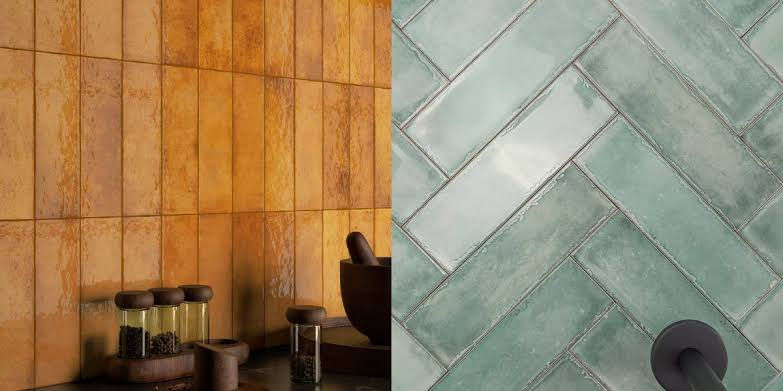
Why does one handmade tile cost four times what the next one does, and will it survive a wet room or a floor? The short answer is firing. The temperature the clay saw, how long it sat there, and how fully it vitrified decide almost everything a buyer cares about later: water resistance, chipping, color shift under light, and whether the piece behaves like art or like a working surface.
Specifying handmade ceramic is less a style exercise than a sequence of decisions. Each one trades something you want for something else you also want. Here are the choices worth making deliberately before anything is ordered.
Decide Whether You Want Earthenware, Stoneware, or Porcelain
Understanding how clay composition and firing temperatures affect the finished product is an important part of ceramic production. These decisions require the same attention to materials, quality control, and manufacturing processes emphasized throughout the broader ceramics manufacturing industry.
Earthenware. Fired low and left porous. Earthenware leans on its glaze to hold water out, so a chipped edge on an earthenware floor tile is a leak path, not a cosmetic complaint.
Stoneware. Fired hotter, vitrifies on its own, and takes a knock without flinching. The right call for handmade floors, hearths, and heavy-use counters where you want the handmade look without babysitting it.
Porcelain. Densest, whitest, most expensive to fire. It behaves like glass in miniature: low absorption, sharp detail, cold to the touch. Specify it where water, stain resistance, or thin large-format panels matter.
If a maker cannot tell you which body a tile is and the cone it was fired to, you are buying on faith.
Pick a Lane: Handmade Character or Certified Performance
The handmade look and the certified-performance label pull in opposite directions, and pretending otherwise is how projects go sideways. Handmade tile comes out of small batches, often in gas or wood kilns, where temperature swings and atmosphere are part of the aesthetic. Certified porcelain is engineered against a published standard that verifies the tile actually meets the low water-absorption threshold the word "porcelain" is supposed to imply. If a product is marketed as porcelain and the maker cannot point to that certification or an equivalent test result, treat the label as marketing.
The honest resolution is usually a split: certified porcelain where water and traffic are relentless, and handmade stoneware or earthenware where character earns its keep. Trying to force one material to do both jobs is how a beautiful powder room becomes a warranty conversation.
Choose the Firing Schedule That Matches the Use
Two tiles can look identical in a sample box and behave nothing alike underfoot, because the kiln schedule they came out of was different. Slow firings give the body time to vitrify evenly and the glaze time to settle. Fast single-firings are built for throughput.
A peer-reviewed study of the two most common porcelains lays out the difference: traditional porcelain is typically single-fired for several hours in the 1,250–1,300 °C range, while porcelain stoneware tiles are fast single-fired at 1,190–1,230 °C in cycles of roughly one hour cold-to-cold. Both can be excellent. They are not the same product and they do not age the same way.
Ask the maker how long the kiln sat at peak and how slowly it came down. A controlled cool matters as much as the peak number for crazing resistance and glaze fit. If the answer is vague, that’s the answer.
Budget for the Install, Not Just the Tile
Handmade tile is thicker, less flat, and more variable than machine-pressed porcelain, and the installation line item reflects that. Expect a back-butter, a wider grout joint than the catalog photos suggest, and a setter who has worked with irregular lots before. Lippage that would be a defect on a calibrated porcelain floor reads as a feature on a handmade one, up to a tolerance you and the setter should agree on in writing before the first tile goes down.
Order generous overage. Ten percent is the floor for a straight pattern; fifteen to twenty for diagonals, cuts, or any tile with meaningful shade variation. A reorder from a small studio is not a next-day pickup, and dye-lot drift is real even when the maker is careful.
Match the Material to the Room Before You Fall for the Sample
The last decision is the one most buyers make first, and it is the one most worth deferring: where does this tile actually live? A low-fired crackle glaze is stunning on a fireplace surround and a slow disaster behind a range. A dense porcelain slab is right for a shower bench and wrong for the hearth you wanted to feel hand-touched.
Walk the house room by room and sort surfaces by what they have to survive: standing water, grease, thermal shock, point loads from furniture, UV. Then pick the body and the firing to match. The kiln has already made its decisions about what each tile can take. The job is to not ask it for something it cannot give.


