
How to Choose Wedding Accessories That Work Together
Why Accessory Coordination Matters
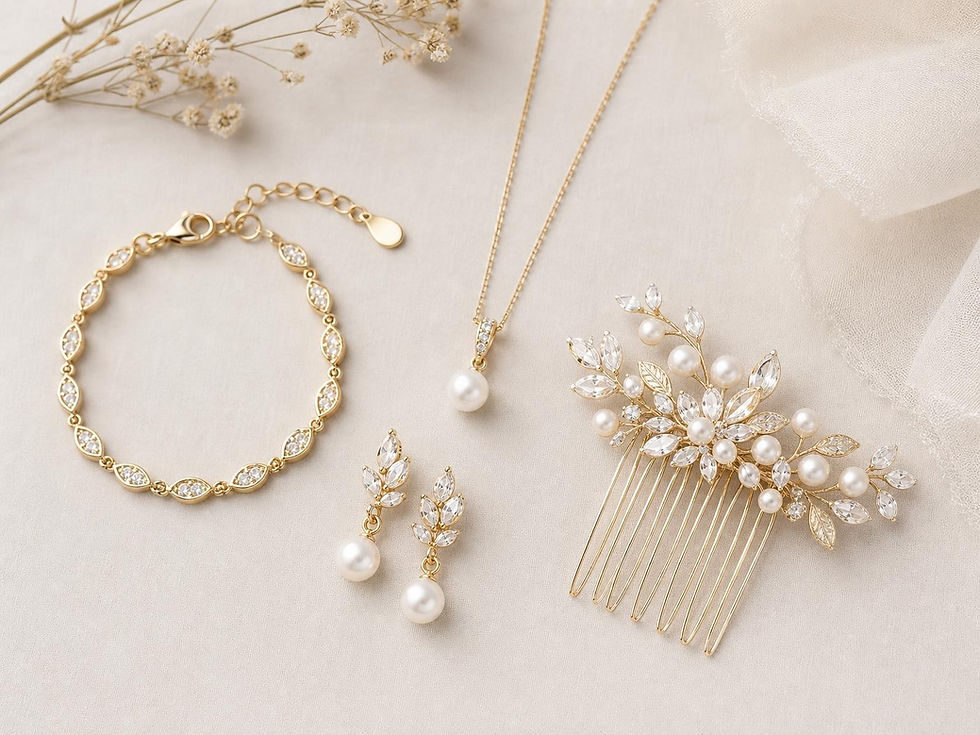
The best wedding accessories support the overall look instead of competing with the dress, the hairstyle, or the bride's comfort. One useful approach is to treat every piece as part of a complete outfit, weighing things like metal color, scale, texture, hairstyle, neckline, and practical concerns such as movement and how long the item will need to be worn. Bridal earrings, for instance, should be considered alongside the neckline, hair accessories, and any other jewelry in the mix rather than chosen on their own. This article lays out a framework for coordinating accessories thoughtfully—it isn't meant to promote any particular retailer or aesthetic.
Start With the Dress and Overall Silhouette
Match Accessories to the Neckline
The neckline often decides whether a necklace enhances a look, distracts from it, or simply isn't needed. Strapless and sweetheart necklines tend to leave more room for jewelry near the collarbone, while high or heavily embellished necklines often look cleaner with little to no necklace at all, letting earrings or a hair accessory take center stage instead. V-necklines are worth pairing with pendant shapes and chain lengths that echo the line without crowding it. These are guidelines, not strict rules—personal preference should always have the final word.
Consider Fabric, Embellishment, and Texture
It's also worth weighing accessories against the fabric and embellishment level of the dress itself. Lace, beading, sequins, and embroidery all carry a fair amount of visual texture, while satin or crepe reads as far more minimal. A simple accessory can balance out a heavily detailed bodice, while a more textured piece can bring interest to a plainer silhouette. It helps to look at the dress in both natural daylight and indoor lighting, since embellishments and metal tones can appear quite different under each.
Expertise and experience notes: Visual weight and scale often affect balance more than any single rule. A bodice with dense beadwork, for example, frequently looks more polished with understated earrings and no necklace at all, since extra sparkle near the neckline can compete with detail that's already there. These are practical tendencies drawn from experience, not universal standards.
Coordinate Jewelry Without Making Everything Identical
Choose a Metal Direction
Yellow gold, white metals, rose gold, and mixed-metal pieces each create a distinct impression. Matching every accessory isn't necessary; repeating one metal tone in two or three spots—say, the earrings and a hairpiece—usually creates enough cohesion on its own. If an engagement ring or wedding band will be worn, it's worth comparing its tone to the rest of the jewelry ahead of time.
Balance Statement and Minimal Pieces
When several accessories are in play, picking one visual focal point helps keep things from feeling cluttered. Statement earrings tend to pair well with a simple necklace or none at all; a detailed hairpiece looks balanced against understated jewelry; a prominent necklace often calls for smaller earrings. Rather than judging each piece on its own, try them on together and see how they actually interact.
Key takeaway: Choose a visual focal point, then let the remaining accessories support it.
Match Accessories to the Hairstyle and Face-Framing Needs
Account for Hair Placement
Updos, half-up styles, loose hair, braids, and short cuts all change how visible an accessory ends up being. Larger drop or chandelier earrings generally show up better with hair pulled back, while smaller studs tend to be more practical when hair is worn down. Testing accessories during a hairstyle trial—rather than relying on product photos alone—gives a much more accurate sense of how things will actually look.
Consider Comfort and Movement
Weight, how securely a piece attaches, and sensitivity to prolonged wear matter just as much as appearance. An earring that looks perfect in a photo can turn uncomfortable after several hours at a reception. Wearing prospective pieces around the house for an extended stretch beforehand can reveal issues a short fitting won't catch, and it's a good idea to have a backup fastener or alternate piece on hand just in case.
Account for Venue, Season, and Schedule
Indoor, outdoor, daytime, and evening settings all affect how accessories look and hold up. Outdoor ceremonies bring wind and movement into the equation; warm weather raises concerns about heat and perspiration; long receptions or outfit changes add to total wear time; and contact with hairspray, perfume, makeup, or water is more or less unavoidable throughout the day. These practical factors should inform decisions about security and comfort—not dictate a particular style.
Plan for Photographs
It's worth testing accessories from the front, the side, and at typical portrait distances, since reflective surfaces can throw off unexpected highlights under flash or bright light. Photographing the full outfit, rather than individual pieces, gives a much more realistic preview of the final result.
Evaluate Materials, Skin Sensitivity, and Care Requirements
Check Material Information
Before buying or borrowing jewelry, it's worth confirming metal content, coatings, and any gemstone treatments. The Federal Trade Commission's Jewelry Guides cover truthful representation of metal, gemstones, quality, and durability claims in marketing. Terms like plated, filled, vermeil, solid, natural, laboratory-created, and imitation describe materially different products, and they shouldn't be treated as interchangeable.
Reduce Irritation Risks
Anyone with known sensitivities should check materials ahead of time, and recurring or severe reactions are best handled by a qualified healthcare professional rather than informal advice. No material should be assumed universally hypoallergenic.
Protect Accessories Before and After the Event
Keeping pieces away from perfume, hairspray, lotions, and excess moisture helps preserve their finish. Storing items separately cuts down on scratching and tangling, and following the maker's care instructions matters especially for treated stones, coatings, or pearls, since some treatments aren't permanent and may need specific handling.
Build a Practical Selection Checklist
Does the accessory complement the dress's neckline and level of detail?
Is its scale appropriate for the hairstyle?
Does it coordinate with, rather than compete with, other jewelry?
Can it stay comfortable through the ceremony and reception?
Are materials and care requirements clearly disclosed?
Has the full look been tested in relevant lighting?
Is there a secure fastening method or backup option?
Test before committing: Wear the complete combination for at least an hour, photograph it from several angles, and move, sit, hug, and walk to catch any comfort or security issues.
Common Mistakes to Avoid
Common missteps include picking accessories before considering the dress silhouette, layering multiple statement pieces without a clear focal point, relying solely on online photographs, overlooking weight or fastening security, assuming every finish shares the same durability, and waiting until the wedding day to test for comfort.
Final Styling Review Before the Wedding
A complete fitting with the dress, shoes, hairstyle, makeup, and accessories together is the clearest way to confirm everything works as intended. Bringing accessories to a final dress fitting, double-checking clasps and posts, and photographing the finished look for reference can head off last-minute surprises. Adjustments are best reserved for genuine practical issues rather than unnecessary eleventh-hour changes.
A Cohesive Look Comes From Balance
Successful wedding accessories balance visual harmony, personal expression, comfort, and durability. There's no single correct combination—only the one that fits the complete outfit and the wearer's actual needs. Testing the full look in advance, verifying material and care information, and prioritizing comfort from the ceremony through the final photographs remain the most reliable steps toward a result that holds up all day.


