
How to Get a Burst Fade Haircut and Keep It Looking Sharp
A burst fade haircut creates a distinctive curved fade around the ear while keeping more length through the top and back of the head. It works with straight, wavy, curly, and coily hair, and can be adapted to everything from a subtle textured crop to a bold mullet or mohawk.
The key is choosing the right fade height, top length, and finish for your hair texture and preferred style. This guide explains how to select a burst fade, communicate your preferences to your barber, style the longer sections, and maintain the cut.
Step 1: Understand What Makes a Burst Fade Different
A burst fade features a rounded, semicircular gradient around the ear. Hair is shortest immediately around the ear and gradually becomes longer outward, creating a radiating effect resembling a sunburst.
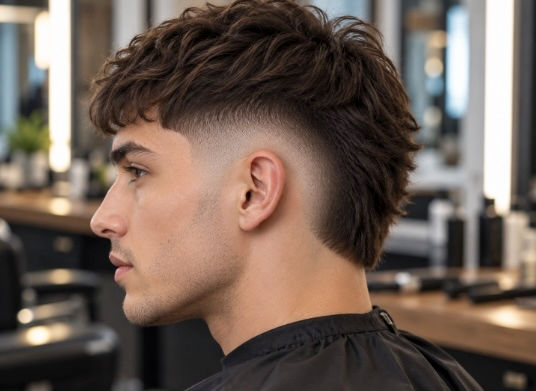
Unlike conventional fades that may extend across the sides and back, a burst fade concentrates the shortest section around the ears. More hair typically remains behind the fade, particularly in mullet and mohawk variations.
The style has connections to Black barbering traditions, including the burst fade mohawk associated with the "South of France" haircut popularized by Usher.
A taper fade generally shortens hair around the temples and neckline, while a drop fade descends behind the ear. Choose a burst fade when you specifically want the rounded ear detail while preserving length toward the back.
Step 2: Choose Your Burst Fade Height
The height determines how dramatic the haircut appears.
Low Burst Fade
A low burst fade keeps the curved transition close to the ear, preserving more hair along the upper sides. It works well with short textured crops, modest quiffs, and curly tops.
This is a practical starting point for someone trying the haircut for the first time because it creates definition without removing excessive length.
Mid Burst Fade
A mid burst fade extends the rounded gradient higher around the ear. It offers more visible contrast while remaining adaptable to straight, wavy, and curly hair.
High Burst Fade
A high burst fade carries the gradient farther up the sides, creating stronger contrast between the closely cut section and the remaining hair.
It pairs particularly well with voluminous curls, faux hawks, and longer textured tops. Skin-close versions require more frequent attention to maintain their sharp appearance.
Step 3: Match the Burst Fade to Your Face Shape
Face shape can guide your choice of fade height, although hair density, head shape, forehead proportions, and top volume are equally important.
Before committing to a burst fade, Facefy is a useful starting point for exploring how different haircut proportions might complement your features. Comparing hairstyle directions before your appointment can help you decide whether a subtle low burst or a more dramatic variation better reflects your preferences.
For a round face, a low or mid burst with height on top can create a more elongated silhouette. Oval faces generally accommodate different fade heights, making personal preference especially important.
Square faces can work with crisp outlines or softer textured tops. Diamond faces may benefit from retaining fullness around the upper sides, while heart-shaped faces can experiment with lower fades that preserve some volume near the temples.
Face shapes often overlap, so these recommendations should guide rather than restrict your choice.
Step 4: Consider Your Hair Texture
Burst fades work across different hair textures, but the longer sections require different styling approaches.
Thick hair creates noticeable contrast between the faded area and fuller top. Your barber may remove excess bulk around the crown while preserving enough density for the intended shape.
Straight hair displays precise blending clearly. Textured crops, quiffs, and short fringes can add movement, while matte clay provides separation.
Wavy hair naturally complements the curved fade, particularly when the back remains longer. Lightweight styling cream can enhance movement.
Curly and coily hair benefits from the contrast between shorter sides and natural volume. Curl cream, leave-in conditioner, and gentle drying help maintain definition.
For fine or thinning hair, a low burst with a softer shadow finish may preserve more visible coverage than a high skin fade.
Step 5: Select Your Burst Fade Hairstyle
The curved fade can support several different hairstyles.
Burst Fade Mullet
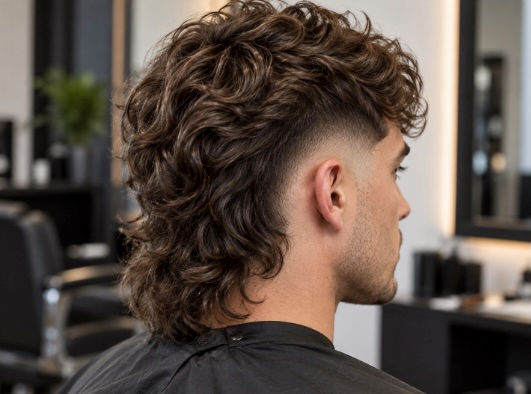
A burst fade mullet combines closely faded sections around the ears with longer hair extending toward the neckline. Wavy and thick hair naturally emphasize movement through the back, although straight and curly textures also work.
Curly Burst Fade
This variation preserves curls or coils above and behind the rounded fade. Depending on length, it can resemble a curly mohawk or compact textured haircut.
Burst Fade With Textured Crop
A short, layered top pairs with the rounded fade for a relatively manageable everyday haircut. The crop can be styled forward with a fringe or worn slightly tousled.
Burst Fade Mohawk
A burst fade mohawk maintains a prominent strip of longer hair through the center while keeping the areas around the ears closely blended. The contrast creates a stronger silhouette than a conventional textured crop.
Step 6: Visualize Your Preferred Hairstyle
Before choosing the final combination of fade height, top length, and back shape, compare the overall silhouette rather than focusing on one detail.
Facefy can help you explore hairstyle directions alongside your facial features before visiting your barber. This is particularly useful when deciding between a compact textured crop, longer mullet, or voluminous curly top.
Treat virtual hairstyle exploration as inspiration rather than an exact prediction. Hair density, growth patterns, texture, and barbering technique influence how the finished haircut appears.
Step 7: Decide Whether to Blend Your Beard
A burst fade can connect naturally with facial hair through the sideburn area. Your barber can create a gradual transition or maintain a more defined separation.
For dense beards, closely faded sideburns can transition into fuller facial hair along the jaw. For lighter or uneven beard growth, a softer shadow blend may create a more consistent appearance.
Discuss your beard's natural growth pattern and preferred neckline before the haircut begins.
Step 8: Tell Your Barber Exactly What You Want
Clear instructions help prevent receiving a different fade from the one you intended.
Specifically request a rounded burst fade around the ears. Then explain whether you want a low, mid, or high transition and whether the shortest section should reach skin, short stubble, or a softer shadow finish.
Describe your preferred top style, including whether you want a textured crop, quiff, curls, mohawk, or mullet. Specify how much length should remain toward the neckline and whether you prefer natural edges or a sharper line-up.
Bring reference photographs showing the front, sides, and back, ideally featuring hair textures similar to yours.
A detailed burst fade may take approximately 30 to 60 minutes, depending on the barber and additional detailing. Prices vary by location, experience, and service complexity, so confirm the cost beforehand.
Step 9: Style Your Burst Fade at Home
The faded area usually requires little styling product. Focus on the longer hair above and behind it.
Matte clay or paste works well for straight hair, textured crops, and quiffs. Sea salt spray can enhance waves and longer mullets, while curl cream helps define curly and coily styles.
Texture powder can provide root lift for fine hair, and lightweight hairspray can help maintain structured tops. For quiffs or faux hawks, blow-dry with moderate heat while directing the hair upward or backward.
Start with small amounts of product. Excessive wax or pomade can weigh down the top and reduce visible texture.
Step 10: Maintain Your Burst Fade
Maintenance depends on fade height, hair growth, and how polished you want the haircut to remain.
Very sharp skin fades or detailed line-ups may need refreshing every one to two weeks. Mid and high burst fades commonly benefit from touch-ups every two to three weeks, while softer low bursts may remain presentable for three to four weeks.
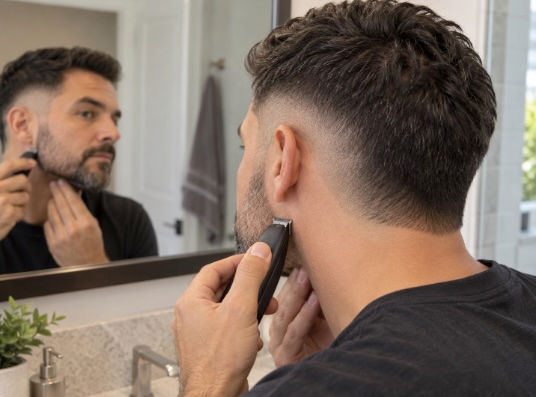
Between appointments, keep the ears, sideburns, and beard neckline tidy without attempting to recreate the curved gradient yourself.
Wash according to your scalp condition and product use, condition longer hair as needed, and moisturize exposed scalp if dryness develops.
Common Burst Fade Mistakes to Avoid
Avoid choosing a fade that is too high before understanding how much hair will be removed. Starting conservatively gives your barber room to increase the contrast.
Do not confuse a burst fade with a taper. Explain that the shortest section should curve around the ear rather than follow a conventional neckline transition.
Avoid copying reference photographs without considering your natural texture. Complicated DIY blending is also risky because the rounded gradient behind the ear is difficult to reproduce evenly.
Final Thoughts
A burst fade offers a distinctive curved outline while allowing considerable freedom in top length, texture, and back shape.
For a subtle introduction, start with a low burst fade and textured crop. Choose a mid burst for more visible contrast or a high burst for a bolder silhouette.
The most successful version considers your natural hair, preferred styling routine, and maintenance expectations. Bring clear reference photos and work with your barber to customize the shape.


