
Integrating Configurators with E-Commerce & ERP Systems
Intro
How many times have shoppers returned products because it wasn’t what they expected?
For most online merchants, those words translate into lost revenue, wasted logistics, and disappointed customers. That’s when they need a solution for more brilliant visualizations based on their specific selections, not just product images—they might embrace doubts. Enter the real-time 3D configurator, a tool that enables the ability to design, configure, visualize, and order online with a higher level of understanding of the finalized product.
However, when 3D configurators work separately, they cannot deliver their full potential. Without integration into eCommerce and ERP systems, they remain just flashy front-end tools, suitable for engagement, but disconnected from inventory, pricing, and production. Thus, we’ll walk through this blog to help you gain a deeper understanding of this aspect.
Right now, keep scrolling to discover more!
What Is A Real-Time 3D Configurator?
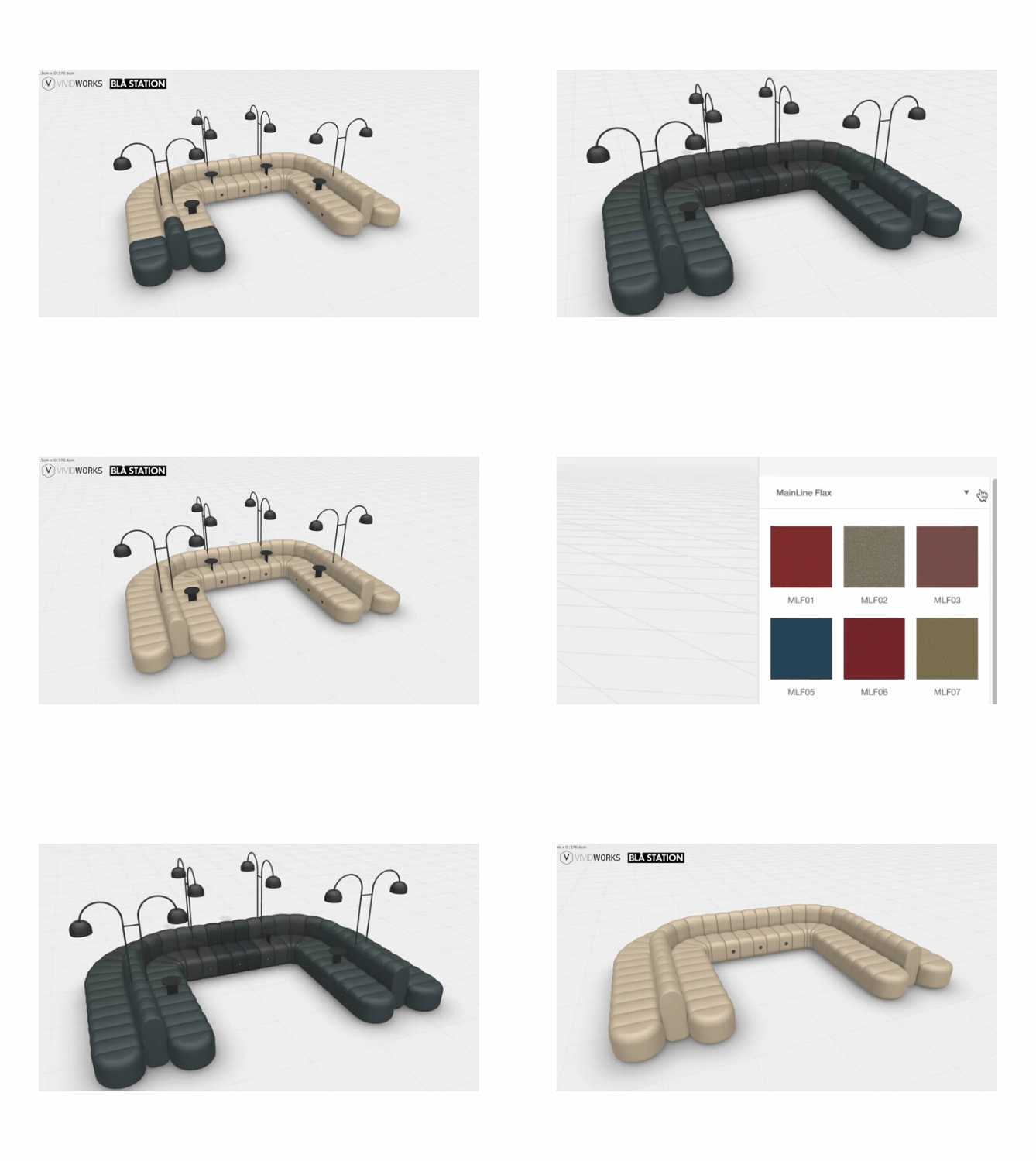
Real-time 3D configurators are product configuration software that allow users to interact with items in 3D: customizing features, rotating them, and previewing variations instantly. Instead of flat visuals, shoppers can see a dynamic version of what they’re about to order.
Advanced 3D configurator software is also built with emerging 3D technologies, such as augmented reality (AR) and virtual reality (VR), to give shoppers an immersive journey. They can effortlessly place their desired products in their real-world environments, like their home or office, to exactly know whether the final design aligns with their demands.
Furthermore, dynamic pricing with Visual Configure, Price, Quote (Visual CPQ), pre-built product logic, and a mobile-friendly, intuitive interface are key functionalities to look for. More importantly, seamless integration with eCommerce platforms, ERPs, or even CRM systems is no longer optional to ensure your operational workflow across departments.
The Role of 3D Configurator Software in eCommerce
Most widely used eCommerce platforms already allow integration with 3D configurators using apps, APIs, and more, making it easier for businesses of all sizes to adopt, such as:
Shopify - B2C and B2B brands that prioritize speed, flexibility, and scalability.
Magento - For enterprises needing advanced customization on their website.
WooCommerce - For businesses leveraging the WordPress ecosystem.
So, why do eCommerce brands need a real-time 3D configurator?
A Shopify, Magento, or WooCommerce 3D configurator is tailored to transform passive browsing into an active, collaborative product creation. This cultivates a sense of ownership and a deeper connection to the product, which is a powerful driver of buyer engagement and loyalty. Consequently, merchants can keep visitors on the website longer for higher conversions.
Customers who can visualize their custom product clearly, accurately, and in real time often feel more confident about closing deals. Even with Visual CPQ, customers can get instant prices every time they configure their design, helping reduce checkout surprises. This also minimizes cart abandonment and effectively drives sales and revenue results.
Integrating with ERP Systems: Why It Matters
ERP (Enterprise Resource Planning) systems automatically control and optimize the company's backbone: inventory, pricing, production planning, manufacturing, and logistics. However, ERP platforms can’t account for the complex, ever-changing demands of customized products. That’s when we need the true power of real-time 3D configurators.
When 3D configurator software integrates directly with ERP, the benefits go far beyond the sales team. Every custom order flows seamlessly into production, ensuring accuracy, efficiency, and speed. All buyers see online is instantly translated into operational reality.
In fact, the result is more than just improved workflows; it’s driving innovation in supply chain management. You reduce manual inputs, optimize resource allocation, remove errors, and respond quickly to made-to-order, complex designs like furniture or modules. As a result, 3D configurators become a strategic asset, helping offer a competitive edge.
Key Technical Considerations for Integration
Adopting 3D configuration software doesn’t involve customer-facing visualizations; it requires a strong technical foundation. Below are the four essential aspects that every eCommerce business should consider to ensure the best preparation before launching.
#1. User Experience (UX)
Your real-time 3D configurator needs to be intuitive, fast, and mobile-friendly across devices. A clunky or slow interface can frustrate users, reduce engagement, and lead to abandoned carts. Smooth navigation, clear customization steps, and a responsive design are all things you should have to ensure customers can interact with designs effortlessly.
#2. Data synchronization
Any integration on your eCommerce store must ensure the highest level of accuracy. That’s the significance of data synchronization in your existing back-end system. Every customization should reflect actual product availability, pricing, and specifications. Without this, you risk overselling, mispricing, or creating mismatched buyer expectations.
#3. Provider Reliability
Your 3D product configurator can not work well without a dedicated software provider. Therefore, to ensure a successful implementation, you need to choose a proper partner. Here are some leading 3D configuration platforms that eCommerce brand can not miss:
VividWorks
VividWorks 3D product configurator excels in modular, rule-based product configuration. It offers real-time 3D visualizations, AR/VR support, Visual CPQ, and even 3D space planning. Also, you can completely integrate it seamlessly with eCommerce platforms like Shopify, WooCommerce, and Magento, ERPs, and CRMs, to transform a smooth operational flow.
Thanks to its robust functionalities, VividWorks is a top-of-mind solution for most B2B, B2C, and resellers in eCommerce across industries, such as retail, automotive, consumer goods, kitchen and bath, furniture, construction, and manufacturing. This platform is even highly evaluated to address complex and highly modular combinations without mistakes.
Threekit
Threekit offers high-fidelity 3D visualization, AR, virtual photography, AI-guided selling, and custom space planning. This makes it ideal for marketing and product visualization. However, if you are selling highly modular products, this platform is not truly a smart solution. Some users also feel overwhelmed with Threekit and need a learning curve.
Zakeke
Zakeke is a B2C-focused 3D and 2D product configurator offering AR, virtual try-on, and web-to-print personalization. It is also top-rated for providing a user-friendly interface and fast setup, making it ideal for fashion, jewelry, and gift items. Honestly, Zakeke is suited for simple customizations and may challenge shoppers with poor mobile support.
#4. Scalability and security
Last but not least, your real-time 3D configurator should grow with your business. Scalability ensures that increased traffic, product lines, and customization options don’t break performance. At the same time, robust security protocols, like SSL encryption, secure APIs, and compliance with GDPR, protect both customer data and your assets.
Conclusion
With this article, we hope you have a deeper understanding of the role of real-time 3D configurators in eCommerce and ERP systems in creating a unified, automated workflow. Instead of investing a significant budget into unnecessary features that might even overwhelm your users, it’s recommended to work with a reliable provider for advice first. As a result, you can exactly know what you should do to have your optimal configurator.


