
Managing Proliferative Dermal Scars Restores Healthy Skin Function
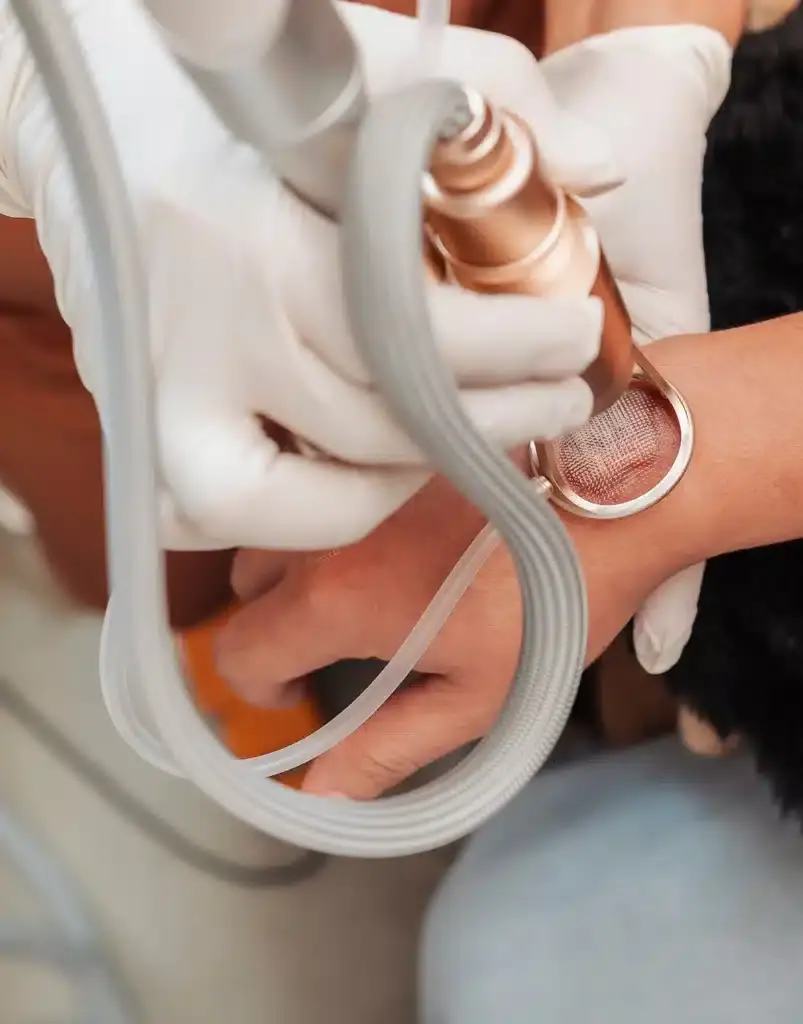
Dealing with an overgrown scar after a minor cut or piercing feels a lot like an infinite loop in production code. Your body triggers a repair routine, but the cellular off-switch fails to engage, causing dense collagen bundles to keep piling up long after the injury has healed.
Achieving lasting smoothness requires shutting down overactive fibroblasts and vascular supply lines rather than simply slicing away the bump. If you are evaluating clinical strategies for Keloid scar removal, reviewing how doctors combine vascular lasers, low-dose steroid infiltration, and suppression protocols gives you a reliable baseline for managing tissue growth. Structuring a multi-modal plan early prevents aggressive recurrence while protecting healthy skin.
The Biology of Uncontrolled Collagen Deposition
A keloid is fundamentally different from a standard raised hypertrophic scar. While hypertrophic scars stay neatly within the borders of the original cut, keloids invade neighbouring healthy dermal tissue like an invasive growth.
Inside the scar, specialised fibroblasts produce up to twenty times more type-one collagen than normal healing skin. Microscopic blood vessels sprout continuously within the mass, feeding the lesion with inflammatory cytokines. Because natural collagenase enzymes cannot break down these chaotic bundles fast enough, the scar remains hard, red, and persistently itchy.
Surgical Excision versus Multi Modal Suppression
Standard cosmetic guides often claim that surgical excision is the fastest, cleanest way to remove a large keloid. The non-obvious trade-off is that cutting out a keloid with a scalpel alone carries an alarming recurrence rate between forty-five and one hundred per cent.
Because surgery creates a fresh wound with skin tension, it inevitably re-triggers the runaway inflammatory cascade that caused the original scar. You trade temporary removal for a severe risk that the keloid returns within twelve months twice as large. Choosing a multi-modal protocol trades instant cutting for staged vascular lasers and steroid injections. Lasers seal off feeder vessels starving the tissue, while injections halt collagen production from within, flattening the mass without fresh incisions.
The Premature Treatment Halt Mistake
The most common and expensive mistake patients make is stopping clinical visits the moment their keloid looks flat and stops itching. People fall into this trap because they assume visual flattening signals complete biological recovery.
In reality, fibroblasts deep in the lower dermis remain primed to produce collagen for up to six months after surface redness fades. Stopping treatment without a maintenance suppression plan allows residual micro-vessels to reopen, causing the scar to rebound aggressively. Patients end up returning a year later with a hardened lesion that requires restarting the entire injection cycle from scratch.
Calculating Real Three Year Treatment Economics
Let us examine a concrete worked example comparing repeated emergency scalpel excisions against a proactive multi-modal protocol over thirty-six months. Consider an individual who undergoes an isolated surgical excision on an earlobe keloid for 1,200 pounds.
Because the wound heals under tension without suppression, the scar regrows larger within fourteen months, requiring a complex flap revision costing 2,400 pounds plus 1,100 pounds for emergency steroid treatments, bringing total outlay to 4,700 pounds across two cycles. In contrast, an initial clinical protocol combining three sessions of vascular laser and targeted medication costs 1,650 pounds total, followed by custom pressure clips costing 150 pounds. Sourcing a multi-modal protocol upfront saves 2,900 pounds over three years while halting tissue expansion.
Core Daily Habits for Scar Prevention
Protecting vulnerable healing skin from runaway collagen production requires establishing simple, repeatable operational habits at home. Keeping physical tension and inflammation low prevents dormant scar tissue from flaring up.
Incorporate these practical operational habits into your daily routine:
Apply medical grade silicone gel sheets daily: Wear silicone sheeting over healing wounds for twelve to sixteen hours daily to maintain hydration and down-regulate fibroblast signalling.
Avoid high-tension body piercings and tattoos: Skip elective cartilage piercings, chest tattoos, and unnecessary skin trauma if you carry a personal or family history of raised scars.
Shield recovering skin from ultraviolet exposure: Use broad-spectrum mineral SPF 50 sunscreen daily to prevent sun rays from stimulating pigment and inflammatory blood vessel growth.
A Clear Decision Rule for Clinical Intervention
You do not need a dermatology degree to determine whether a stubborn scar requires professional suppression therapy. You can apply a straightforward decision rule called the border extension test during your weekly skin check.
Examine the raised scar under good lighting and compare its edges to the boundary of your original cut or piercing. If the raised tissue stays strictly within the boundary of the original injury, it is a hypertrophic scar that will likely soften with silicone sheets and massage over twelve months. If the firm tissue has spilled outside the original wound margin into surrounding skin, or continues to throb after eight weeks, you are dealing with a true keloid that mandates clinical suppression before dense collagen locks into place.
Tackling overgrown scar tissue is ultimately about building a patient strategy that respects your body's healing biology. By avoiding isolated surgical cutting, maintaining post-flattening suppression routines, and applying clear diagnostic rules, you protect both your skin texture and your finances. Approach your scar management with calm discipline, rely on biological facts, and move forward with quiet confidence in your recovery plan.


