
Medium vs Firm Mattress: How to Choose the Right Feel
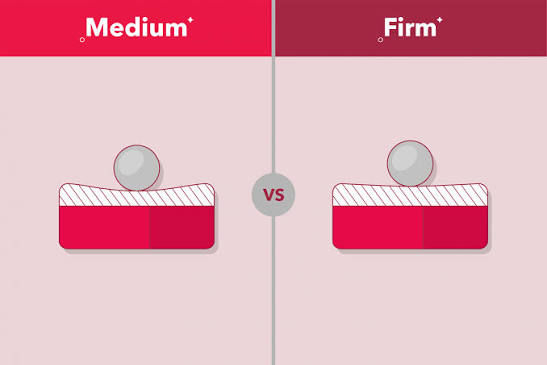
Choosing between a medium and firm mattress means matching the surface feel to your sleep position, pressure-relief needs, and preferred support level. Firmness labels are not standardized, so two mattresses described as firm can feel quite different depending on their materials, height, quilting, coil system, and foundation.
Use a medium vs. firm mattress comparison as a starting point, then judge how well a mattress supports comfortable alignment, relieves pressure, and allows you to change position.
What medium and firm usually mean
Firmness describes the initial sensation when you lie down; it is not the same as support. A mattress may feel cushioned on top while its deeper layers keep your body in a more neutral position.
A medium mattress usually offers more contouring around the shoulders and hips. A firm mattress generally allows less sink and creates a flatter, more surface-oriented feel. Construction matters: a firm hybrid may respond to movement and distribute pressure differently from a firm all-foam model.
Medium vs firm mattress: quick comparison
Decision factor | Medium may suit you if… | Firm may suit you if… |
Sleep position | You spend a lot of time on your side and want shoulder and hip cushioning. | You mainly sleep on your back or stomach and prefer less sink. |
Pressure comfort | Flatter surfaces create pressure at your shoulder or hip. | You dislike deep contouring or feeling stuck when changing position. |
Movement | You prefer a more conforming surface. | You want easier repositioning and a steadier feel. |
Shared bed | Both sleepers want an adaptable, balanced feel. | Both prefer less yield, or one strongly dislikes sink. |
This is a screening tool, not a prescription. Comfort is subjective, and many people use more than one sleep position.
Start with your usual sleep position
Side sleepers: check shoulder and hip comfort
Side sleeping creates prominent contact points at the shoulder and hip. Many side sleepers consider medium or medium-firm mattresses because additional contouring may feel more comfortable there.
Test your usual position long enough for the initial impression to settle. If your shoulder feels compressed, more cushioning may help. If your waist feels unsupported or your hips sink much lower than your upper body, the mattress may not be a good match.
Back sleepers: seek balanced support
Back sleepers often look for a surface that feels stable without leaving a pronounced lower-back gap or allowing the hips to settle too far. Medium-firm and firm models are common starting points, but construction and preference still matter.
Relax fully on your back for several minutes. Notice whether you feel evenly supported and remain comfortable without holding yourself in position.
Stomach sleepers: limit excessive sink
Stomach sleepers often prefer a surface that does not let the pelvis sink far below the chest, making a firmer feel a reasonable starting point. It should not, however, create uncomfortable pressure through the ribs, chest, or knees.
If you alternate between stomach and side sleeping, give more weight to the position you use most and the one that produces discomfort most often.
Separate feel from support
The difference between medium-firm and firm can be subtle on paper but noticeable in use. Medium-firm generally offers more initial give, while firm feels less yielding.
Ask yourself:
· Does my shoulder or hip feel pressured when I lie still?
· Does my midsection sink more than I want?
· Can I change positions easily?
· Is the mattress comfortable in the positions I actually use?
· Does my bed base make the mattress feel rigid, soft, or uneven?
Don't choose a mattress as a treatment for pain. Seek advice from a qualified healthcare professional for persistent, severe, or unexplained pain.
How construction changes the feel
The same firmness label can feel different across mattress types. Read the construction description instead of relying on a single label.
Hybrid mattresses
Hybrids combine coils with comfort layers. Coils can add responsiveness, while upper layers influence cushioning and pressure comfort.
All-foam mattresses
Foam mattresses can feel more closely conforming, depending on the type, thickness, and density of their layers. A firm all-foam mattress may still feel more enveloping than a firm hybrid.
Quilting, toppers, and foundations
A pillow top or thick quilted panel can soften the first contact while the core remains stable. A topper can adjust surface comfort, but it may not correct a poor underlying match. An uneven, worn, or incompatible foundation can also affect performance and feel.
A practical testing plan
Initial comfort matters, but it is not enough. Your body may need time to adjust, and the mattress may feel different on your own base.
1. Set up the mattress on a suitable, level foundation with bedding that does not materially alter the feel.
2. Allow a reasonable adjustment period before judging minor differences.
3. Keep brief notes on sleep position, pressure points, movement, temperature concerns, and perceived support.
4. Reassess after several ordinary nights rather than one unusually good or poor night.
5. Review current trial, return, pickup, condition, shipping, and warranty terms before purchase and before starting a return.
Buyer Questions and Warning Signs
Treat product and policy pages as your specification sheet, especially for a guest room, rental, or shared household purchase.
Questions to ask
· How does the manufacturer describe the firmness, and is the construction explained?
· Are the available sizes compatible with the room, frame, and sheets?
· What are the current shipping, trial, return, pickup, refund, and warranty terms?
· Are there setup or foundation requirements for returns or warranty claims?
· If two people share the bed, whose sleep position, pressure sensitivity, and movement preferences need the most compromise?
Warning Signs
Be cautious when a listing makes broad promises without explaining construction or current policy details. Pause if firmness is presented as a medical solution, return conditions are difficult to locate, or the exact model and size cannot be confirmed.
Don't assume a topper can turn an unsuitable mattress into the right long-term choice. It can change surface feel, but not fully alter the deeper support beneath it.
Final decision checklist
· [ ] I evaluated my primary and secondary sleep positions.
· [ ] I considered pressure comfort and unwanted sink.
· [ ] I checked construction, not just the firmness label.
· [ ] I confirmed size and foundation compatibility.
· [ ] I have a consistent plan for testing the mattress during the trial period.
Frequently Asked Questions
Is medium or firm better for back sleepers?
Neither is automatically better. Many back sleepers start with medium-firm or firm, then assess hip sink, lower-back comfort, and long-term comfort.
Is a medium mattress too soft for a heavier sleeper?
Not necessarily. Body type affects compression, but construction and preference matter too. Judge stability in your usual sleep positions, not by the label alone.
What is the difference between medium-firm and firm?
Medium-firm usually provides a more balanced amount of initial give, while firm provides less. Comfort layers, the support system, and the foundation affect the real-world difference.
How long should I try a new mattress before deciding?
Follow the seller’s current trial terms and assess it across ordinary nights and your typical sleeping positions. Notes can help you spot patterns.
Can a firm mattress fix back pain?
A mattress is not a diagnosis or cure for pain. Choose based on comfort and support preferences, and consult a qualified healthcare professional about persistent, severe, or unexplained pain.
SEO Page Configuration
Meta Title | Medium vs Firm Mattress: How to Choose the Right Feel |
Meta Description | Compare medium and firm mattresses by sleep position, pressure relief, support, movement, and construction to choose the feel that fits you. |
Keyword Tags | medium vs firm mattress, firm mattress, medium mattress, mattress firmness, back sleeper mattress, stomach sleeper mattress, pressure relief |


