
Navigating Commercial and Residential Flat Roof Solutions Across the GTA
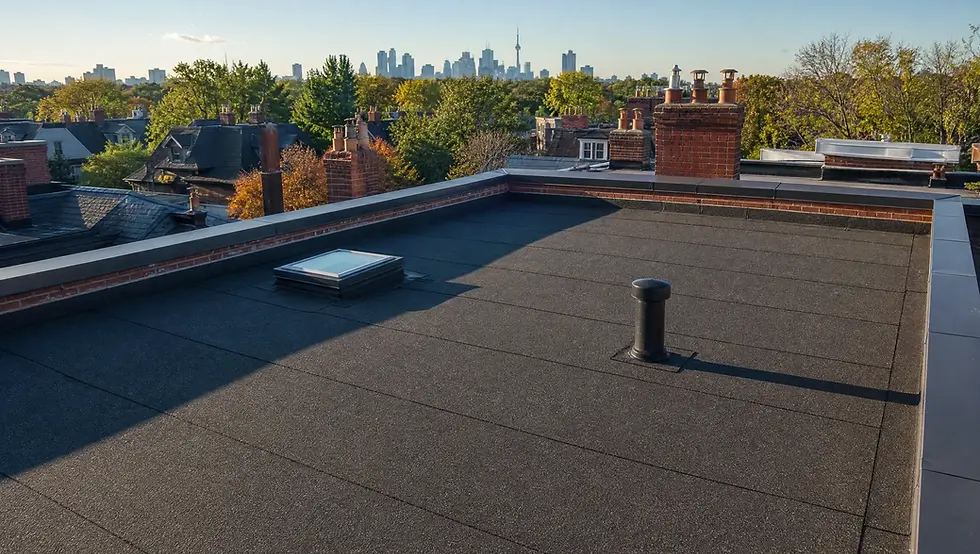
Urban expansion across Southern Ontario has changed how property owners view their roofing assets. With dense zoning, industrial modernization, and changing weather patterns, flat and low-slope roofing systems have become central to structural efficiency, energy management, and space optimization. Selecting the right membrane assembly, maintaining proper drainage, and addressing thermal bridges require a clear understanding of modern low-slope technology.
The Rising Demand for Low-Slope Systems in Modern Architecture
Flat roof construction is no longer restricted to commercial warehouses or downtown high-rises. In recent years, residential properties across urban hubs have increasingly embraced low-slope architecture for both aesthetic and functional advantages.
Maximizing Urban Footprints: Modern residential developments leverage flat roof surfaces for rooftop terraces, green roofs, and private outdoor living spaces that traditional pitched designs cannot support.
Streamlined Mechanical Placement: Flat systems provide designated, secure platforms for commercial HVAC units, solar arrays, and ventilation systems, keeping ground-level walkways clear.
Architectural Clean Lines: Contemporary residential designs rely on low-slope profiles to achieve sleek, geometric aesthetics that complement modern exterior finishes like composite panels and architectural concrete.
Key Flat Roof Assemblies and Membrane Selection
Selecting the correct waterproofing membrane depends heavily on building usage, expected foot traffic, chemical exposure, and budget parameters. Modern low-slope systems generally fall into three main categories:
Roofing System | Construction Type | Core Advantages | Typical Applications |
SBS Modified Bitumen | 2-ply asphalt-based membrane reinforced with fiberglass or polyester mats. | High tear resistance, excellent durability against physical impacts, and proven performance in cold climates. | High-traffic commercial roofs, multi-family residential buildings, and mechanical decks. |
TPO (Thermoplastic Polyolefin) | Heat-welded single-ply synthetic membrane with a reflective surface. | Energy-efficient solar reflectance, strong weldable seams, and high resistance to chemical exposure. | Retail centers, modern commercial facilities, and large industrial warehouses. |
EPDM (Rubber Roofing) | Synthetic rubber single-ply sheet installed using adhesives or mechanical fasteners. | Exceptional elasticity, resistance to UV degradation, and long-term flexibility in extreme cold. | Residential low-slope additions, garage roofs, and small-scale commercial roofs. |
Property owners seeking long-term performance need to balance material costs with proper installation standards. Working alongside specialized regional contractors, such as those at https://flatroofstoronto.ca, ensures that membrane selection aligns with building code compliance and specific climate demands.
Managing Freeze-Thaw Dynamics and Drainage Engineering
Low-slope roofs in regions with severe seasonal variations face unique hydrostatic pressures. Water does not drain off a low-slope roof by gravity alone in the way it does on a steep-pitched roof; precise slope engineering and thermal planning are required.
Tapered Insulation and Positive Slope
Although commonly called "flat," a properly designed roof always incorporates a slight slope—typically a minimum of 1/4 inch per foot. Tapered polyisocyanurate (polyiso) insulation panels are arranged to direct surface water toward internal drains, scuppers, or perimeter gutters, eliminating standing water before it degrades membrane seams.
Thermal Integrity and Condensation Control
In cold winter climates, warm indoor air carries moisture upward toward the underside of the cold roof assembly. Installing an airtight vapor barrier directly over the deck, combined with continuous rigid insulation above the barrier, prevents moisture from condensing inside the roof cavity and damaging structural members.
Thermal Diagnostic Protocols and Maintenance
Proactive roof management prevents minor punctures from escalating into structural damage. Modern low-slope maintenance relies on non-invasive diagnostic tools to identify underlying issues before symptoms appear inside the building.
Infrared Thermal Imaging
Thermal inspections detect moisture trapped beneath the waterproofing membrane. Because wet insulation retains heat longer than dry insulation, infrared cameras scan the roof surface after sunset to pinpoint exact areas of water infiltration, allowing for targeted repairs instead of full roof replacements.
Routine Maintenance Checklist
To maximize the service life of a flat roof, property managers should implement a bi-annual inspection routine:
Clear Drainage Pathways: Remove leaves, sediment, and debris from drain strainers, scuppers, and conductor heads.
Inspect Seam Integrity: Examine welded or adhered seams for signs of lifting, stress cracking, or bridging.
Verify Perimeter Flashings: Check wall flashings, coping caps, and pipe boots for movement, rust, or loose fasteners.
Evaluate Surface Condition: Monitor single-ply membranes for punctures or abrasion, and check modified bitumen surfaces for granule loss.
Energy Efficiency and Sustainable Flat Roof Upgrades
Energy efficiency standards are driving major changes in roof design. Modern low-slope installations actively reduce building energy consumption and mitigate the urban heat island effect.
Cool Roof Technology: Light-colored TPO and PVC membranes reflect up to 80% of solar radiation away from the building envelope, significantly lowering summer air conditioning loads and reducing strain on building systems.
Green Roof Integration: Intensive and extensive green roof assemblies use engineered vegetation layers over root-barrier membranes to capture stormwater, improve thermal insulation, and extend the lifespan of the underlying membrane by protecting it from direct UV exposure.
Solar Readiness: Flat roof spaces offer optimal mounting conditions for photovoltaic panels. Proper ballast calculations and mechanical flashing details ensure solar installations do not compromise the integrity of the waterproofing layer underneath.
Choosing the Right Installation Strategy
Whether upgrading an existing multi-ply asphalt roof or specifying a new single-ply installation for a residential expansion, success depends on proper installation detailing at seams, penetrations, and perimeter walls. Investing in proven materials, verified insulation layers, and routine diagnostic maintenance ensures flat roofing systems remain watertight and structurally sound for decades.


