
Need Tree Removal Goldfields? 7 Warning Signs Your Tree Has Become a Hazard
Trees add shade, beauty, privacy, and value to homes and commercial properties. But like any living thing, a tree can become weak, damaged, or unstable over time. When that happens, a tree that once felt like an asset can become a serious safety concern.
If you live or work around the Goldfields, changing weather, strong winds, dry conditions, and harsh environments can put additional stress on trees. So, how do you know when a tree has become dangerous?
In this guide, we explore seven important warning signs that may indicate a tree needs professional attention or removal. We will also explain what you can do if you notice these problems and how Kalgoorlie Tree Services can help.
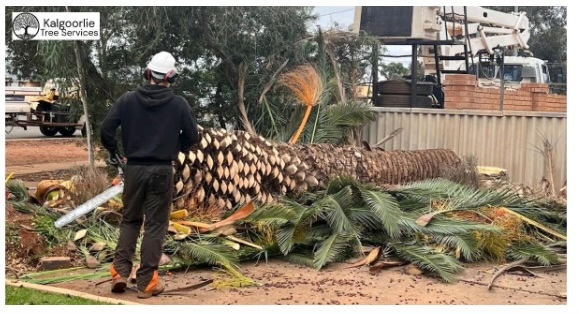
Why Tree Safety Matters in the Goldfields
Trees can live for decades, but their condition can change significantly over time. A tree may look healthy from a distance while developing structural problems that are difficult for an untrained person to spot.
A large branch hanging above a driveway, for example, may appear harmless. However, if that branch is cracked or dead, it could fall during strong winds and damage a vehicle or injure someone nearby.
Think of a mature tree like a large building. You might not notice a problem simply by looking at the outside. Hidden damage to the structure can eventually affect the whole thing.
That is why regular inspections, pruning, and professional assessment are important, particularly when trees are close to buildings, roads, power infrastructure, vehicles, or areas where people gather.
Warning Sign #1: Large Dead or Broken Branches
One of the clearest warning signs is the presence of large dead, hanging, or broken branches.
Dead branches can become brittle and lose their ability to withstand wind or rain. Broken limbs may also leave exposed areas where further damage or decay can develop.
Look for:
Branches with no leaves during a period when the tree should be active
Large broken limbs
Hanging branches
Peeling or damaged bark
Branches that appear unusually brittle
Deadwood positioned above buildings or walkways
Small dead twigs are not necessarily an emergency. However, large dead branches can pose a serious risk, especially when located above places where people or vehicles regularly pass.
Professional pruning can sometimes resolve the issue. If the overall tree is severely compromised, however, removal may be the safer option.
Warning Sign #2: A Leaning or Unstable Tree
Not every leaning tree is dangerous. Some trees naturally grow at an angle, particularly when responding to sunlight or surrounding conditions.
The concern is a new or rapidly increasing lean.
If a tree that previously stood upright suddenly begins leaning, it could indicate damage to the roots, soil movement, trunk problems, or structural weakness.
Pay particular attention if the ground around the base appears raised or cracked. A leaning tree with damaged roots may have reduced stability.
After storms or periods of severe weather, it is particularly important to check trees for changes in their position.
If you notice a large tree leaning toward a home, road, fence, powerline, or other valuable structure, avoid standing underneath it and arrange a professional inspection.
Warning Sign #3: Cracks in the Trunk or Major Limbs
Cracks are another warning sign that should never be ignored.
A small surface crack may not always indicate a major structural problem, but deep cracks extending through the trunk or major branches can be concerning.
Look for vertical cracks, large splits, areas where branches have separated from the trunk, or places where the wood appears to be pulling apart.
The larger and deeper the crack, the more important it is to have the tree professionally assessed.
Trees can sometimes recover from minor damage. However, serious structural cracks may increase the likelihood of branch or trunk failure.
This is one situation where trying to fix the problem yourself can create additional danger. Large trees contain enormous amounts of weight, and damaged timber can behave unpredictably.
Warning Sign #4: Decay, Cavities, or Hollow Areas
Trees can develop internal decay without showing obvious symptoms from a distance.
You may notice:
Holes or cavities in the trunk
Soft or rotten wood
Areas of missing bark
Large wounds
Mushy sections
Evidence of old broken branches
A cavity does not automatically mean a tree must be removed. Trees can sometimes remain stable despite some internal decay.
The important question is whether the decay has compromised the tree's structural strength.
Professional tree specialists can examine visible signs and assess the condition of the tree. Depending on the circumstances, they may recommend pruning, monitoring, additional assessment, or removal.
If decay is located near the base of a large tree, it deserves particular attention because the lower trunk plays an important role in supporting the tree.
Warning Sign #5: Damaged or Exposed Roots
Roots are the foundation of a tree. Even though most of them are hidden underground, their condition has a major effect on stability and health.
Exposed, damaged, severed, or decaying roots can increase the risk of tree failure.
Root problems can result from construction work, excavation, soil disturbance, erosion, vehicle activity, landscaping changes, or natural conditions.
Warning signs may include:
Exposed roots
Soil lifting around the tree
Newly developed cracks in the ground
Severed roots
Changes in the tree's stability
Significant soil erosion near the trunk
Avoid cutting or removing large roots yourself. Doing so can potentially make a tree less stable.
If construction or land clearing is planned around established trees, getting professional advice beforehand can help identify potential risks.
Warning Sign #6: Fungal Growth and Other Signs of Disease
Mushrooms or fungal growth around a tree can sometimes indicate decay, although their presence alone does not prove that a tree is unsafe.
Other signs can include unusual leaf loss, discoloured foliage, dying branches, damaged bark, abnormal growths, or repeated decline.
Trees can suffer from pests, diseases, environmental stress, and physical damage. Some problems are treatable, while others may contribute to structural decline.
This is why it is useful to identify the cause rather than simply reacting to one symptom.
If a mature tree shows several signs of declining health at the same time, arrange an assessment before the problem becomes more serious.
Warning Sign #7: Sudden Changes in the Tree
One of the most important things you can do is simply observe your trees over time.
Sudden changes can provide an early warning that something is wrong.
Perhaps the tree has suddenly lost a significant amount of foliage. Maybe a major limb has dropped, the trunk has developed a new crack, or the tree has started leaning.
After a severe storm, changes may be even more obvious.
Take photographs from the same position every few months if you want to monitor a tree's condition. Comparing older and newer images can make gradual changes easier to identify.
If a tree's condition appears to be deteriorating quickly, don't wait for a branch to fall before seeking professional advice.
When Is Tree Removal Necessary?
Tree removal is generally considered when a tree presents an unacceptable safety risk or has reached a condition where other management options are no longer suitable.
Possible reasons include:
Severe structural instability
Extensive decay
Significant storm damage
A dead tree in a hazardous location
Major root failure
Serious disease or deterioration
A tree threatening buildings or infrastructure
Trees obstructing necessary construction or land clearing
However, removal should not automatically be the first solution.
In some cases, pruning, trimming, bracing, monitoring, or other management approaches may address the problem.
Why Professional Tree Removal Is Safer
Large trees can weigh several tonnes, and their branches can fall with considerable force. Cutting them without proper equipment, experience, and planning can be dangerous.
Professional tree removal involves more than simply using a chainsaw.
A trained team considers:
Tree condition: Is the tree stable or structurally compromised?
Surroundings: Are buildings, fences, vehicles, roads, or people nearby?
Access: Can equipment safely reach the tree?
Falling direction: Where can branches and sections of the tree be safely lowered?
Equipment: What machinery and safety equipment are required?
For these reasons, professional tree removal is often the safest approach for large, damaged, or difficult-to-access trees.
Tree Services for Homes, Businesses, and Worksites
Kalgoorlie Tree Services provides professional tree care for a range of clients across the Goldfields.
With more than eight years of industry experience, the team provides services designed for residential, commercial, mining, and government clients.
Services include:
Tree removal
Tree pruning
Tree trimming
Stump grinding
Land clearing
Emergency tree services
Whether you have a large tree close to your home or require vegetation management for a commercial or worksite property, professional assistance can help you manage tree-related risks.
For anyone searching for tree removal Goldfields, choosing a local service with experience in different property and site conditions can be an important consideration.
How to Choose a Tree Removal Professional
Choosing the right tree service provider involves more than looking for the cheapest quote.
Consider the company's experience, range of services, safety practices, and ability to handle your particular type of property.
You may also want to ask:
How much experience does the company have?
Do they handle emergency tree work?
Can they remove and grind the stump?
Do they provide pruning and trimming?
Can they work on commercial or mining sites?
What safety procedures do they follow?
Is the quote clearly explained?
A company that provides several related services can also make the process easier because you may not need to coordinate multiple contractors.
What Happens During Professional Tree Removal?
The exact process depends on the tree and property, but professional removal generally begins with an assessment.
The team examines the tree, surrounding structures, access points, ground conditions, and potential hazards.
A removal plan is then developed.
Depending on the location, the tree may be dismantled section by section rather than felled in one piece. This can provide greater control when working close to buildings, roads, fences, or other obstacles.
After the main tree has been removed, the remaining stump can be dealt with through stump grinding if required.
The site may then be cleared of branches, timber, and other debris according to the agreed service.
Why Regular Tree Maintenance Can Prevent Problems
You don't always have to wait until a tree becomes hazardous.
Regular pruning and trimming can help identify problems earlier and maintain healthier, safer trees.
Routine maintenance can help manage deadwood, improve the structure of certain trees, reduce unwanted growth, and make emerging problems easier to spot.
This is particularly useful for properties with mature trees near houses, businesses, access roads, car parks, or pedestrian areas.
Think of tree maintenance like servicing a vehicle. You don't necessarily wait until the engine fails before checking it. Regular attention can help identify problems while they are easier to manage.
For property owners, preventative tree care can therefore be a practical part of general property maintenance.
Conclusion
A tree can provide enormous value to a property, but damaged or unstable trees should never be taken lightly. Dead branches, sudden leaning, cracks, decay, damaged roots, fungal growth, and rapid changes in condition can all indicate that professional assessment is needed.
If you spot one or more warning signs, don't attempt risky work yourself. Contact an experienced tree service provider and have the situation assessed.
Kalgoorlie Tree Services has more than eight years of industry experience and provides tree removal, pruning, trimming, stump grinding, land clearing, and emergency tree services for residential, commercial, mining, and government clients.
For property owners looking for tree removal Goldfields, professional assessment can help you understand the safest and most practical way to manage a problematic tree.
Frequently Asked Questions
1. How do I know if a tree needs to be removed?
A tree may require removal if it is severely unstable, extensively decayed, dead, seriously damaged, or posing an unacceptable risk to people or property. A professional assessment can help determine whether removal or another treatment is appropriate.
2. Is a leaning tree always dangerous?
No. Some trees naturally grow at an angle. However, a new or rapidly developing lean, especially when combined with root damage, soil movement, cracks, or other symptoms, can indicate a stability problem that deserves professional attention.
3. Can dead branches be removed instead of removing the whole tree?
Yes. If the main tree remains structurally sound, professional pruning may remove hazardous dead or damaged branches without requiring complete tree removal.
4. Does tree removal include stump grinding?
Not necessarily. Tree removal and stump grinding are often separate services. Kalgoorlie Tree Services provides stump grinding, allowing property owners to address the remaining stump after a tree has been removed.
5. Can professional tree services help after a storm?
Yes. Storms can cause broken branches, split trunks, uprooted trees, and other hazards. Emergency tree services can help property owners deal with dangerous storm-damaged trees and reduce risks around homes, businesses, and other sites.


