
Non-Surgical Ways to Improve Dark Circles and Sunken Eyes
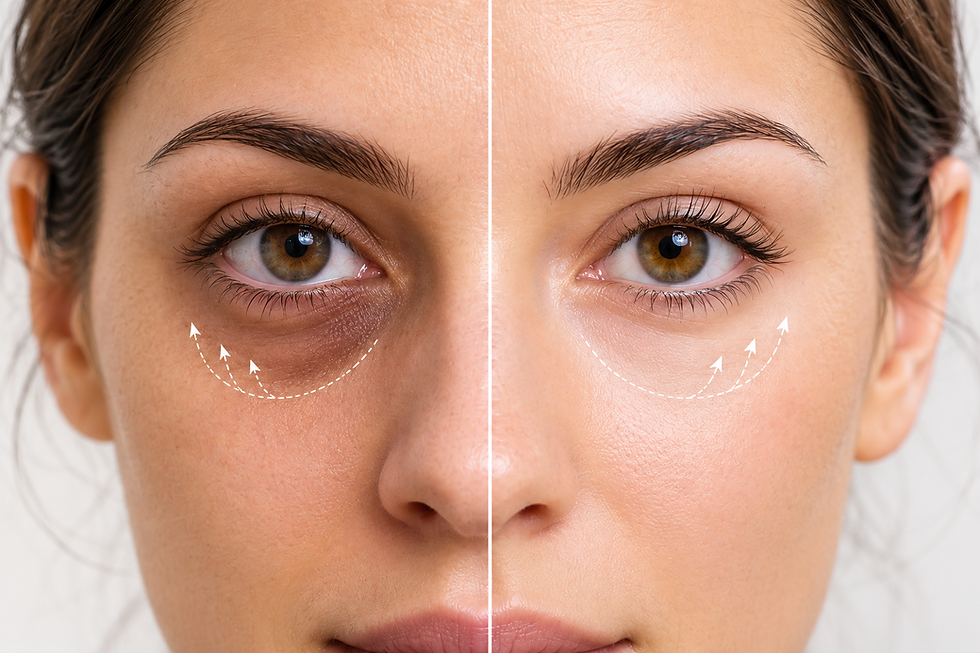
Dark circles and sunken eyes can make someone look tired. Although they are often grouped together, they do not have the same cause. Dark circles may result from pigmentation, visible blood vessels, shadows, or thinning skin, while sunken eyes are more closely linked to volume loss around the eye.
Because the causes differ, there is no single treatment that works for everyone. Non-surgical options may help, but the first step is understanding what is causing the problem.
Understanding Dark Circles and Sunken Eyes
What Causes Dark Circles and Sunken Eyes?
Dark circles can have several causes, including genetics, ageing, sun exposure, pigmentation, and the natural structure of the eye socket. In some people, the skin beneath the eyes becomes thinner with age, making underlying blood vessels more visible. In others, pigmentation creates a darker appearance.
Sunken eyes are different. They may occur because of reduced soft-tissue volume around the eyes, ageing-related changes, genetics, or changes in body weight.
Why Do Under-Eye Hollows Look Dark?
A hollow beneath the lower eyelid can create a natural shadow, which may make the area look darker even when there is little actual pigmentation. This is why someone may search for a dark circles treatment when the main issue is actually an under-eye hollow.
A consultation can help distinguish between pigmentation, vascular dark circles, hollowness, and puffiness before treatment is considered.
Can Dark Circles and Sunken Eyes Be Improved Without Surgery?
In some cases, yes. Non-surgical treatment can be useful when the concern is related to mild volume loss, skin texture, pigmentation, or other superficial changes.
However, treatment cannot completely remove every cause of dark circles or sunken eyes. Prominent fat pads, significant loose skin, or structural changes may require a different approach.
The NHS guidance on cosmetic procedures recommends understanding the possible benefits and risks before undergoing a cosmetic procedure.
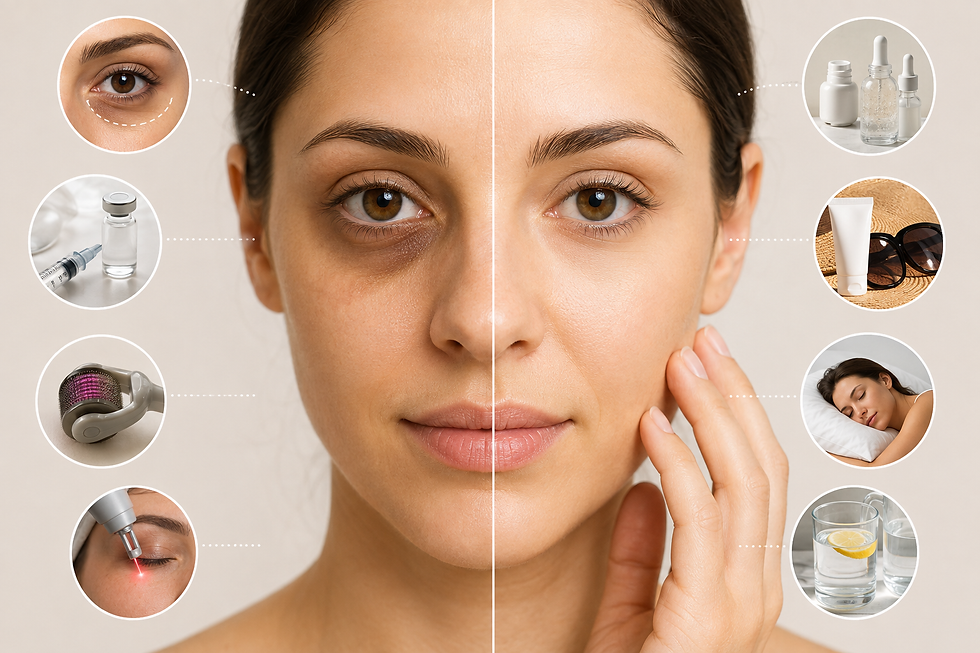
Non-Surgical Treatment Options for Dark Circles and Sunken Eyes
1. Tear Trough Filler
Tear trough filler is commonly discussed when sunken eyes or under-eye hollows are caused by volume loss.
Dermal fillers, often based on hyaluronic acid, can add subtle volume beneath the eyes and soften the transition between the lower eyelid and cheek. It is generally more relevant to hollowing and shadowing than to eye bags or any form of dark circles.
The General Medical Council’s guidance on cosmetic interventions states that doctors providing cosmetic treatments should have the necessary knowledge, skills and experience and should give patients appropriate information before treatment.
2. Skin Boosters and Other Injectable Treatments
Some clinics use skin boosters or similar injectable treatments to improve skin hydration and quality.
These differ from traditional dermal fillers and are generally aimed more at skin quality than at restoring significant volume.
3. Chemical Peels
Certain chemical peels can be used to address selected pigmentation and skin-texture concerns.
They are not suitable for every type of dark circle, particularly when the darkness is caused mainly by shadowing from an anatomical hollow.
The British Association of Dermatologists provides patient information on chemical peels, including their uses, possible effects and risks.
4. Laser and Light-Based Treatments
Laser and light-based treatments may be considered for certain pigmentation, redness, visible blood vessels, or skin-texture concerns. The treatment used depends on what is causing the darkness.
Skin type is also an important consideration because some laser treatments can cause pigmentation changes if they are not selected or performed appropriately.
5. Microneedling
Microneedling may help improve skin texture, fine lines, and some forms of scarring.
It may have a role where the appearance around the eyes is related to skin quality rather than significant volume loss. It should not be assumed to correct a deep tear trough or prominent eye bags.
Lifestyle Changes That May Help Reduce Dark Circles
Poor sleep, dehydration, allergies, and rubbing the eyes can sometimes make the area appear darker or more swollen. Protecting the skin from the sun may also help reduce pigmentation-related concerns.
Simple measures may include:
Getting adequate sleep
Drinking enough fluids
Managing allergies where appropriate
Avoiding unnecessary rubbing of the eyes
Using suitable sun protection
Following a gentle skincare routine
Choosing the Right Treatment for Your Under-Eye Concern
Under-eye concern | Possible non-surgical option | Main purpose |
Hollow tear trough | Dermal filler | Restores subtle volume |
Pigmentation | Selected chemical peels or laser treatments | Reduces selected pigmentation |
Fine lines | Laser, microneedling, or selected skin treatments | Improves skin texture |
Dry or crepey skin | Skin-quality treatments | Improves hydration and texture |
Visible blood vessels | Selected vascular laser treatments | Targets visible vessels |
Mild puffiness | Lifestyle measures or assessment of underlying cause | Addresses contributing factors |
This table is only a general guide. The same visible symptom can have different causes, so treatment should be based on an individual assessment.
How to Choose a Practitioner in the UK
Choosing the treatment is only part of the decision. The person carrying it out matters just as much.
Before undergoing an injectable or energy-based treatment, patients should check the practitioner’s professional registration, relevant qualifications and experience, what products or equipment will be used, possible complications, and what aftercare is available.
For doctors, the GMC medical register allows patients to check whether an individual is registered.
For cosmetic surgery in England, patients can also check whether the provider is registered with the Care Quality Commission (CQC).
Are Non-Surgical Under-Eye Treatments Safe?
Most cosmetic treatments have potential side effects, even when performed correctly. Fillers can cause swelling, bruising, tenderness, lumps, or unevenness. Laser and peel treatments can cause redness, irritation, pigmentation changes, or other skin reactions.
Anyone considering treatment should be informed about both common side effects and less common complications before deciding.
When Is Surgery More Appropriate?
Non-surgical treatment has limits. If the main concern is prominent fat beneath the eyes, significant loose skin, or substantial structural change, a surgical procedure such as lower blepharoplasty may provide a more appropriate solution.
A consultation should therefore focus on why the eyes look sunken or tired, rather than starting with a particular treatment.
Tear Trough Filler Cost in the UK
The cost of tear trough filler varies depending on the clinic, the practitioner’s experience, location, the type of filler used, and the amount required.
Prices may vary between clinics across the UK. A lower price does not necessarily mean better value, particularly when treatment involves the delicate area around the eyes.
Tear Trough Filler Price Comparison in the UK
Tear trough filler prices vary depending on the clinic, practitioner, location, filler used, and amount required.
Prices may also vary between clinics across the UK, while consultation and follow-up fees can affect the overall cost.
Clinic | Location | Price | Address & Contact details |
London | From £750 | 111 Harley Street, London, W1G 6AW Contact No: 0344 241 0816 Rating: 4.9/5 | |
London | On Consultation | 80 Harley Street,London, W1G 7HL Contact No: +44 7543 386196 Rating: 4.9/5 | |
Leicester | £299 | ||
London | From £350 | 104 Judd Street, London, WC1H 8BU Contact No: +44 7770 741928 Rating: 4.9/5 | |
Norwich, England | From £220 | 175 Drayton Rd, Norwich, NR3 2AA 24 Cranes Meadow Way, Wymondham, NR18 9GH 2 Station Road, Thetford, IP24 1AH Contact No: 01603 358635 Rating: 5.0/5 | |
London | £550–£595 | 9 Young Street, Kensington, London, W8 5EH Contact No: 020 3285 6183 Rating: 4.8/5 | |
London | £450 | 33 Cavendish Square, Marylebone, W1G0PW Contact No: 020 4541 7370 Rating: 4.7/5 |
These prices are provided for comparison only and can change. Patients should confirm the current cost, what is included, and whether a consultation is charged separately before treatment.
What Affects the Cost of Tear Trough Filler?
The final price may depend on:
Practitioner experience and qualifications
Clinic location
Type and amount of filler
Treatment complexity
Consultation and follow-up arrangements
Price alone should not determine the choice of practitioner, particularly because the under-eye area requires careful assessment and precise treatment.
Frequently Asked Questions About Dark Circles and Sunken Eyes
What Is the Best Treatment for Dark Circles?
There is no single best treatment. It depends on the cause, such as pigmentation, thin skin, hollowness, or shadowing.
Can Filler Help Sunken Eyes?
Yes, filler may help if the problem is under-eye hollowness caused by volume loss. It does not treat eye bags and is not right for everyone.
Can Dark Circles Go Away Completely?
Not always. Some dark circles can improve, but genetic or structural causes may not fully go away.
How Long Does Under-Eye Filler Last?
It varies from person to person. The result depends on the product used, the amount, and how your body responds.
Can Sleep or Lifestyle Changes Help With Dark Circles?
Sometimes, yes. Poor sleep, dehydration, allergies, and rubbing the eyes can make dark circles look worse. Improving these factors may help, but they may not change genetic or structural dark circles.


