
Nurse Injector Training in Phoenix: A Guide for Aspiring Aesthetic Nurses
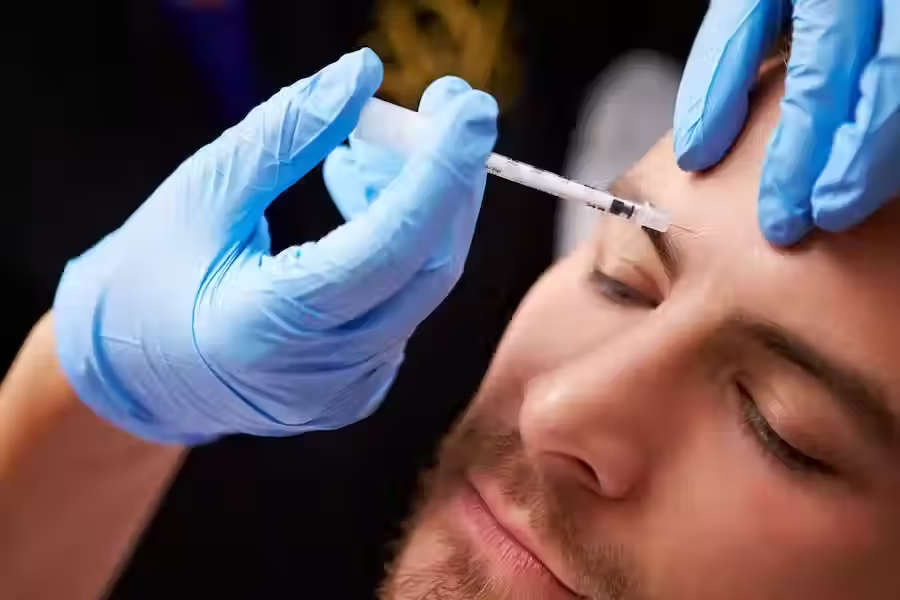
For nurses seeking an exciting career path, aesthetic medicine may provide an opportunity to incorporate advanced cosmetic medicine with clinical expertise. Nurses are interested in acquiring more aesthetic skills and continue to seek out more specialized education to help them do so for this increasing demand for injectables and aesthetic non-surgical procedures.
The first step to choosing is to find the right nurse injector training in Phoenix. Fascinated aesthetic nurses can enhance their knowledge of facial anatomy, patient evaluation, techniques, treatment planning, and safety through comprehensive training and gain confidence in a specialized clinical setting.
What Is Nurse Injector Training?
Nurse injector training focuses on educating qualified nurses with knowledge and skills related to aesthetic injections. Training can include: neuromodulators (Botox, dermal fillers), facial anatomy, consultation skills, injection strategies, and patient safety, depending on the program.
A good program should not be limited to introducing specific injection sites. There are different faces, muscles, skin types and treatment objectives among aesthetic patients. An understanding of these factors helps nurses to tailor treatments to the individual.
Educational programs designed for nurses entering the field of aesthetics can offer a foundation for transitioning their clinical experience to cosmetic medicine.
What Does a Nurse Injector Course Teach?
Aesthetic injections can be taught in a nurse injector course, both theory and practice. Topics typically covered include facial anatomy, patient assessment, product information, injection technique, treatment planning, contraindications and dealing with possible complications.
Botox training could be done on dynamic wrinkles and muscle movement, and dermal filler training can include concepts on facial volume, contouring and product selection. The importance of knowing the reason for a treatment is not only where an injection is made, but also an important element of clinical judgment.
Experiential learning is also beneficial. Nurses can observe techniques, practice the correct approach and gain feedback in a supervised setting as they learn their skills.
Why Facial Anatomy Is Essential for Aesthetic Nurses
One of the most critical parts of aesthetic injector education is a thorough knowledge of the face's anatomy. When performing injectable treatments to the face, it is important to keep in mind the muscles, nerves, blood vessels, and other structures within the face.
Anatomical training, therefore, should be included in a thorough aesthetic nurse program, along with hands-on injection training. The nurse should be familiar with the effect the muscles of the face have on expression and be aware of how alterations of one muscle can impact overall balance of the face.
Understanding this information can guide providers to make informed decisions about the treatment options available to them and inform their aesthetic procedures in a manner that emphasizes precision and patient safety.
Developing Consultation and Treatment Planning Skills
Successful aesthetic nursing has a lot more to do with technique than it does with injection skills. When the provider meets with the patient, he or she can find out what the patient wants to change, decide if the patient's expectations are reasonable, and decide which treatment options might be available.
Nurses can assess facial motion, skin quality, extent of previous treatments, medical history, and patients' desired aesthetic results during an aesthetic consultation. This information can then be utilized to create an individual therapy plan.
Another key element is good communication. It is important that patients are aware of what a procedure can achieve, how long the results will last and any side effects, as well as what recovery and aftercare might entail.
Why Hands-On Experience Matters
There will be a place for classroom learning, but there also needs to be practical skills for aesthetic injections. Nurses can gain more knowledge and experience in treatment preparation, patient positioning, injection techniques and facial assessment through hands-on training.
Supervised practice can also be a great avenue for a new aesthetician to get feedback and understand where they can improve. This can be especially helpful when mastering the technique for different facial shapes and the desired outcome of the treatment.
For those looking to become injectors, it is crucial to find a nurse injector course that gives them a balance of both theory and practical lessons, and not just a lot of lectures.
Patient Safety and Complication Awareness
Patient safety should always be an aesthetic medicine priority. Even cosmetic procedures that are not strictly life threatening require pre-screening, informed consent, procedure and some understanding of possible complications.
Education of nurses to become an injector involves the following areas: medical history, contraindications, infection control, product handling, and identification of adverse reactions. Providers should also be aware of when a treatment should be postponed or when a patient needs further medical evaluation.
When it comes to comprehensive nurse injector training in Phoenix, choosing a program that helps aspiring injectors develop a safety-first approach with their existing nursing background could help them.
What Should You Look for in an Aesthetic Nurse Program?
Not all training courses offer the same kind of learning. When selecting an aesthetic nurse program, take into account the curriculum, the qualifications of the teachers, patient safety, anatomy education, and hands-on experience.
Additionally, it's beneficial to know if the program includes various facets of the aesthetics sector, such as patient consultation, therapy planning, injectables, post-procedure care, and complication recognition. A comprehensive education can offer better preparation for nurses seeking to advance their careers in the field of aesthetics.
Future aesthetic nurses in Phoenix must also make sure that the training they get meets the requirements of their professional, medical and regulatory standards.
Continuing Education for Aesthetic Nurses
Over time, new treatments, technologies, techniques and products are emerging in the field of aesthetic medicine. The completion of an initial training program is thus just the first step of professional development.
Continuing education can broaden the knowledge and skillset of aesthetic nurses and keep them up-to-date on advances in the industry. Continuous improvement of clinical decision-making through learning from experts and regularly reviewing safety can also help to support better clinical decision-making.
Aesthetic training is not a singular event but a commitment to lifelong learning to build a successful aesthetic career.
Start Your Aesthetic Nursing Journey in Phoenix
It takes nursing knowledge, training, experience and lifelong learning to become a good aesthetic injector. Nurses can gain insight into the principles of aesthetic treatments and build confidence in interacting with patients with care and precision through the right training.
A thorough education program can offer valuable background information on facial anatomy, injectables, consultation, treatment plans and patient safety, which is useful for professionals contemplating nurse injector training in Phoenix. Zensken is designed for aspiring aesthetic professionals looking to develop their skills and lay a solid foundation for a successful career in aesthetic medicine.
Disclaimer
This article is intended for general educational purposes only and does not constitute medical, legal, or professional advice. Aesthetic treatments and injectable procedures should be performed only by appropriately qualified professionals within their legal scope of practice. Training requirements, licensing rules, and professional regulations may vary. Always verify applicable requirements with the appropriate licensing and regulatory authorities.


