
Servo Robot Applications
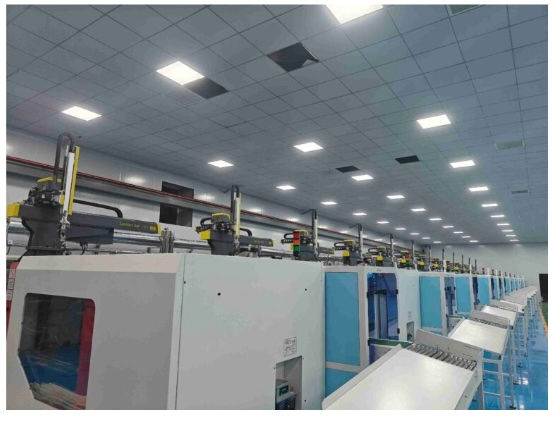
Automation has become an important part of modern manufacturing, and a servo robot can provide precise and repeatable movement for many industrial applications. These robotic systems use servo motors, drives, controllers, and mechanical components to perform programmed movements with controlled speed and positioning.
From assembly lines to packaging facilities, servo robots can be adapted to different production requirements. Their flexibility makes them useful for businesses looking to automate repetitive processes.
Assembly Applications
Assembly is one area where servo robots can provide significant value. Robots can position components, insert parts, tighten selected components, or transfer products between workstations.
Because movements can be programmed precisely, the robot can repeat an assembly sequence consistently. This can help maintain uniform production when large numbers of identical products are manufactured.
The robot's end-of-arm tooling is selected according to the specific assembly task.
Machine Tending
Machine tending involves loading and unloading components from production equipment such as CNC machines, presses, and other automated machinery.
A servo robot can pick up raw or partially finished components, place them into a machine, wait for the operation to finish, and then remove the completed part.
Automating these repetitive movements can help create a continuous production cycle and reduce the need for operators to perform repetitive loading tasks.
Pick-and-Place Operations
Pick-and-place applications require a robot to move products from one position to another. These operations are common in manufacturing, packaging, sorting, and material handling.
Servo control allows the robot to manage acceleration, speed, and positioning during movement. This can be useful when products must be placed accurately on conveyors, trays, or assembly fixtures.
Vision systems can also be integrated when the robot needs to identify product positions or orientations.
Packaging and Palletizing
Servo robots can support several stages of packaging. They may place products into containers, arrange items into cartons, or transfer packages between conveyors.
For palletizing applications, robotic arms can arrange boxes according to a programmed pattern. The pattern can be changed through software when different products or package sizes are introduced.
This flexibility can be useful for facilities handling multiple product types.
Sorting Applications
Sorting systems use robots to separate products according to characteristics such as size, shape, position, or product type.
Sensors or machine vision can identify products while the robot performs the required movement. The robot can then place each item into its designated location.
This type of automation can help manufacturers organize products at high production speeds.
Food and Consumer Products
Servo robots can also be used in industries producing food, beverages, household goods, and consumer products. Depending on hygiene and application requirements, specialized robotic equipment and tooling can be selected.
Robots can perform tasks such as product handling, tray loading, case packing, and other repetitive operations.
The equipment should be designed and maintained according to the requirements of the specific production environment.
Benefits for Manufacturers
A servo robot can provide consistent movement and repeatable positioning. This is useful when production processes require the same sequence to be performed many times.
Automation can also reduce repetitive manual handling and help manufacturers organize production around automated work cells.
Another benefit is programmability. A robot can often be reprogrammed for different tasks, provided its payload, reach, tooling, and mechanical capabilities are suitable.
Factors to Consider
Before selecting a robotic system, manufacturers should evaluate payload, reach, cycle time, accuracy, number of axes, and working environment.
The type of product being handled is also important. Fragile products may require gentle gripping, while heavy components may need stronger tooling.
Integration with existing equipment should also be considered. Communication between robots, conveyors, sensors, PLCs, and other machines can be important for creating a coordinated production process.
Maintenance
Regular maintenance helps support reliable robotic operation. Servo motors, drives, cables, gear systems, joints, sensors, and tooling should be inspected according to manufacturer recommendations.
Software and controller settings should also be backed up and managed properly.
Training operators and maintenance personnel can help reduce errors and improve the long-term performance of the robotic system.
Conclusion
A servo robot can be applied to assembly, machine tending, pick-and-place, packaging, palletizing, sorting, and other industrial processes. Precise servo control allows the robot to perform programmed movements with consistent positioning and speed.
Manufacturers should evaluate payload, reach, cycle time, tooling, integration requirements, and operating environment before selecting a robotic solution. A properly configured servo robotic system can become an effective part of an automated production line.


