
Sudanese Toub Manufacturer for Private Label Brands: How to Prepare a Custom Brief
A Sudanese Toub manufacturer for private label needs more than a product name and a reference photograph. The manufacturer must know what is being made, which decisions are fixed, who approves the sample, and how the finished item will be identified when it is reordered. A usable development brief therefore connects product construction, material direction, artwork, color, labels, packaging, quantity, destination and approval rules. This guide is for private-label brands, importers, distributors and procurement teams preparing a custom Sudanese Toub inquiry.
The practical recommendation is to write the brief in decision order: define the product, explain the brand job, separate fixed requirements from open choices, set the sample gate, and list the information needed for a product-specific quotation. That structure makes an OEM or ODM conversation easier to review without assuming a supplier’s MOQ, price, lead time, capacity or technical result.
Define the product before the brand layer
Begin by naming the exact product form. “Sudanese Toub” should be accompanied by a plain-language description of the intended item, wearer, use occasion and sales channel. If the request could be interpreted as a sewn garment, a generic scarf, fabric only, or another regional term, state the construction boundary in the first line. Ambiguous naming creates more risk than a missing adjective because it can send the whole sample and quotation process in the wrong direction.
Brief field | Decision to record | Why it matters |
Product form | Complete Sudanese Toub, fabric-oriented supply, or another confirmed format | Prevents the manufacturer from quoting a different construction |
Use and channel | Retail, occasion, private label, distributor or marketplace | Sets the relevance of design, packaging and presentation |
Material direction | Preferred material or an open comparison request | Separates a preference from a confirmed order requirement |
Brand layer | Artwork, colors, labels, packaging and naming | Shows which elements must be carried through development |
State the brand job and the non-negotiables
Private label is not a synonym for “make it look like this.” Explain what the product must achieve for the brand. The goal may be a coordinated launch, a recognizable border system, an exclusive color direction, a defined occasion range, or a consistent unboxing experience. Then separate non-negotiables from preferences. For example, a label placement may be fixed while the final packaging format remains open to discussion.
Attach artwork in the format your team can control, identify the reference version, and mark any areas where the supplier may propose alternatives. If a photograph is only a mood reference, say so. If a motif, border, color family or logo is mandatory, identify it as an approval requirement rather than leaving the interpretation to a product name.
Use the manufacturer route for a concrete reference
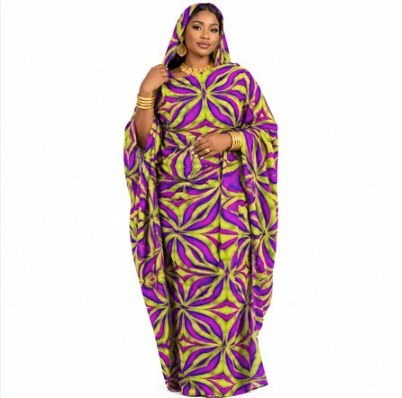
Jinlai Textile has a Sudanese Toub product category and a custom Sudanese Toub manufacturer route that can anchor a product-specific discussion. The next step is to identify the reference and ask which fields apply to the proposed private-label version. Do not assume that one product’s material, dimensions, finish or commercial terms automatically describe the entire category. Treat the reference as a starting point for confirmation and sampling.
The OEM and ODM route is relevant when the brief includes custom design direction, sampling, labels or packaging. That does not remove the need for a precise buyer brief. It makes the brief more important: state which files, physical references, approvals and packaging decisions are ready, which are still open, and what must be confirmed before a quote or sample can be evaluated.
Separate fixed requirements from open development
A manufacturer can respond more accurately when the brief has two columns in the buyer’s own notes: fixed requirements and open decisions. Fixed requirements might include the intended product form, brand label, approved logo, a required color family or a destination packaging rule. Open decisions might include a proposed material comparison, border treatment, print scale, packing method or a choice between two reference directions.
This distinction also protects the buyer. If every idea is written as mandatory, the quotation may become unnecessarily narrow. If nothing is marked mandatory, the sample may drift away from the brand. A short decision log is often more valuable than a long mood board because it tells both sides what can change and what cannot.
Make sampling a formal approval gate
A custom Sudanese Toub should be approved as a version, not merely described as “approved.” Record the sample identifier, artwork file, color reference, material wording, finished format, label and packaging status, approval date and responsible person. When the complete piece matters to the retail presentation, review the complete piece rather than relying only on a swatch or screen image.
A useful Sudanese Toub product reference can help the buyer discuss the visual and material direction, but the private-label approval must remain product-specific. Check motif scale, drape, coverage, placement and finish under the conditions in which the item will be photographed, displayed or worn. If those checks are not possible yet, record the limitation and keep the bulk decision open.
For each revision, change one clearly named variable where possible. If artwork, material and packaging all change at once, the team may not know which decision produced the new result. A controlled revision history helps the brand protect its identity and gives the manufacturer a cleaner basis for the next sample or quotation.
Include the commercial and operational fields
The commercial section should be specific without pretending that the buyer already knows the supplier’s terms. State the initial quantity you are planning, whether the request is a trial or a launch, the desired destination, packaging expectations, label requirements, and the timing constraints that matter to your business. Ask the manufacturer to confirm the applicable MOQ, price basis, lead time, sampling charges, production conditions and shipping assumptions for the exact brief.
Planned quantity by product or version, with any expected repeat order separated from the first order.
Destination and responsible party for labeling, customs, tax and import requirements.
Brand label, care or composition wording, packaging files and carton or unit-marking needs to be confirmed.
Sample quantity, approval owner, revision limit or review sequence requested by the buyer.
Commercial questions that must be answered for the specific product, not copied from a different supplier listing.
Keep compliance and claim boundaries visible
A private-label manufacturer brief should not silently turn a design request into a compliance promise. The importer or brand owner remains responsible for checking destination-specific labeling, customs, tax, marketplace and consumer-information obligations with the relevant local authority or broker. Confirm the exact composition, care, size, finish and origin wording for the order that will actually ship.
The same discipline applies to marketing claims. Do not label a material as certified, sustainable, tested, colorfast or universally breathable unless the exact claim is supported by appropriate evidence for the exact product. A clear brief can ask whether evidence is available; it should not assume the answer.
Write one RFQ that can be reviewed
The final message should let a manufacturer see the whole decision without searching through a long thread. Put the product form and commercial purpose first, then attach the artwork and list the fixed requirements, open questions, sample gate, quantity, labels, packaging and destination. Ask for a response that mirrors those fields so gaps are easy to spot.
Product: define the Sudanese Toub form, wearer, occasion and sales channel.
Brand: state the design language, logo, colors, labels, packaging and naming rules.
Development: identify the reference item, artwork files, material direction and open alternatives.
Approval: define sample views, complete-piece review, approver, revision record and acceptance criteria.
Commercial: request product-specific MOQ, price basis, lead time, sample charges and shipping assumptions for confirmation.
Compliance: list the destination and assign responsibility for required labeling and import checks.
Jinlai Textile’s custom Sudanese Toub and OEM/ODM routes can be used as the next conversation when the brief is ready. Send the exact product task rather than a generic request for a “Sudanese Toub supplier.” A structured inquiry gives the team a clearer basis for discussing custom colors, patterns, labels, packaging and physical sampling while preserving the boundary that final scope and terms require project-specific confirmation.
Conclusion: make the brief the control document
A private-label Sudanese Toub project becomes easier to manage when the manufacturing brief is treated as the control document for naming, design, material, sampling, labeling, packaging, quantity and destination. Define the product before the brand story, distinguish fixed decisions from open development, approve a named sample version, and ask for commercial terms that match the exact item. That process gives both buyer and manufacturer a clearer path without promising an outcome that has not been confirmed.
When you are ready to discuss a project, send the completed fields through the contact page. Include the product form, brand objective, references, quantity, labels, packaging, destination and approval owner so the next response can address the real development task.
Frequently Asked Questions
What is the difference between an OEM and ODM Sudanese Toub request?
The practical distinction is who supplies and controls the design direction. An OEM-style request usually starts from a more developed buyer specification, while an ODM-style conversation may include more supplier-side development. The exact scope varies by project, so state which artwork, references, labels and decisions your team owns before asking for a quotation.
Should a private-label buyer send only a product photo?
A photo is useful as a reference but rarely defines a complete manufacturing brief. Add the intended product form, material direction, colors, artwork boundaries, labels, packaging, quantity, destination and approval rules. Mark what the photo proves and what still needs confirmation so the manufacturer does not have to infer the entire specification.
When should a complete-piece sample be approved?
Approve it before committing to bulk whenever scale, drape, coverage, motif placement, finish or packaging presentation affects the commercial decision. Keep the sample identifier and version record with the order file. If the buyer cannot review the complete piece yet, keep that limitation visible and avoid treating the sample as final approval.
Can the manufacturer confirm MOQ and lead time from a general inquiry?
A general inquiry may begin the conversation, but MOQ and lead time should be confirmed for the exact product, material, design, quantity, packaging and destination. Do not transfer numbers from another SKU or marketplace listing. Ask for the applicable commercial basis after the brief is specific enough to quote.


