
Sympathy Flowers or Funeral Flowers? What to Send, Where and When
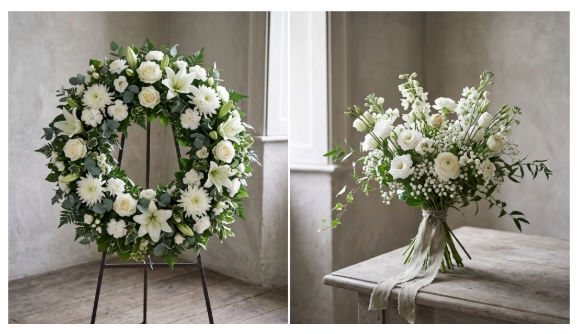
When someone dies, choosing flowers can feel more complicated than it should. The terms funeral flowers and sympathy flowers are often used as though they mean the same thing, but they usually serve different purposes. Understanding the difference between funeral flowers vs sympathy flowers helps you choose something appropriate without making the family manage an awkward delivery or an unsuitable tribute.
Funeral flowers are generally intended for the funeral or memorial service itself. Sympathy flowers are usually sent to the person or family who is grieving. The right choice depends on your relationship with the deceased, where the flowers are going, when they are being sent and, above all, what the family has asked for.
If you are choosing flowers for a different kind of occasion, Elevated’s guide to flower arrangements for different occasions gives a broader overview. For bereavement, however, the distinction between a service tribute and a personal gesture of support matters.
What Is the Difference Between Sympathy Flowers and Funeral Flowers?
The simplest difference is purpose.
Funeral flowers are part of the service. They are chosen to honour the person who has died and may be displayed at the funeral home, church, crematorium or other service venue.
Sympathy flowers are for the people left behind. They are usually sent directly to the bereaved family, often to their home, to show support and let them know they are being thought of.
Quick comparison
Type | Main purpose | Usually sent to | Typical arrangements | Often sent by
Funeral flowers | Tribute for the service | Funeral director, church, crematorium or service venue | Wreaths, coffin sprays, hearts, crosses, letter tributes | Immediate family, relatives, friends, colleagues
Sympathy flowers | Comfort for the bereaved | Family home or recipient | Hand-tied bouquets, vase arrangements, baskets, understated floral gifts | Friends, colleagues, neighbours, extended family
These are useful conventions rather than fixed rules. Every family is different, and the wishes stated in the funeral notice should always take priority.
What Are Funeral Flowers?
Funeral flowers are designed to form part of the ceremony or visual tribute. They may be arranged around the coffin, placed near photographs or displayed with other tributes at the service.
Formal funeral flowers can include wreaths, coffin sprays, hearts, crosses, posies and personalised letter tributes intended for the service itself.
Coffin sprays are often chosen by close or immediate family because they sit directly on the coffin. Wreaths, hearts and other tributes may be sent by relatives, friends, colleagues or organisations, depending on what the family has planned.
Personalisation does not have to be elaborate. A favourite flower, a meaningful colour, initials, a name or a simple shape can make a tribute feel specific to the person being remembered.
What Are Sympathy Flowers?
Sympathy flowers are usually chosen to comfort the people who are grieving and are often sent directly to the family home.
They tend to be softer and less formal than flowers intended for the service. Hand-tied bouquets, vase-ready arrangements and understated floral gifts work particularly well because they are easy to receive and display.
White flowers are common, but they are not compulsory. If you knew the person or family well, a favourite colour or flower may feel more thoughtful than following a traditional palette simply because it is expected.
Sympathy flowers can also be appropriate after the funeral. A bouquet sent several days later may arrive at a time when the first rush of messages and visitors has eased, which can make the gesture feel especially personal.
Who Should Send What?
Immediate family
In many families, close relatives coordinate the main coffin spray and the most personal floral tributes. Because these arrangements form such a visible part of the service, it is sensible for immediate family members to agree on them together rather than order separately.
Extended family and close friends
Wreaths, hearts, posies and other funeral tributes may all be appropriate. A sympathy bouquet can be equally thoughtful, especially if you are not involved in organising the service.
Friends, neighbours and colleagues
For people outside the immediate family circle, a sympathy arrangement sent to the home is often the easiest option. It shows care without creating extra coordination around the funeral itself.
Employers and organisations
An understated arrangement with a collective message can be appropriate, but it is worth checking the funeral notice or asking a family contact first. Some families prefer donations, private tributes or family flowers only.
Where Should the Flowers Be Sent?
For flowers intended for the funeral service, the funeral director is often the safest point of contact because they can confirm where and when flowers should arrive.
Flowers may also be sent directly to a church, crematorium or other venue, but only when the service information makes this clear. Sending flowers to the wrong location can create unnecessary work for the family at an already difficult time.
Sympathy flowers are usually better sent to the family home or directly to the person you want to support. A workplace may be suitable in some situations, but only when you know the recipient would be comfortable receiving flowers there.
If you are unsure, ask the funeral director or a close family contact. A quick check is better than guessing.
When Should You Send Flowers?
Funeral tributes need to arrive before the service, so they should be arranged early enough for the florist and funeral director to coordinate the details.
Sympathy flowers do not have the same deadline. They can be sent soon after the death, in the days before the funeral, after the service or even later if the timing feels more personal.
There is no need to worry that a sympathy bouquet is “too late” simply because the funeral has already taken place. Grief does not end with the service, and a thoughtful gesture afterwards can still be very welcome.
Always respect any request for “family flowers only”, charitable donations or no flowers. The family’s wishes matter more than general etiquette.
Choosing Flowers and Colours With Sensitivity
White and cream are widely used for bereavement flowers because they create a calm, restrained look, but there is no rule that funeral or sympathy flowers must be white.
Pale pink, lilac, soft blue and gentle seasonal colours can work beautifully. If the person who died had a favourite colour, including it may make the tribute feel more personal.
Lilies, roses, chrysanthemums, carnations and seasonal flowers are all commonly used, but availability changes throughout the year. A good arrangement should work with what is fresh and suitable rather than forcing a particular stem out of season.
It is also worth thinking about scent. Lilies and other strongly scented flowers can be beautiful, but they may be overwhelming in a small room or for someone who is sensitive to fragrance.
Be cautious about assigning fixed meanings to individual flowers. Symbolism varies between cultures and families, and personal association is often more important than a traditional interpretation.
Cultural and Religious Considerations Matter
Funeral customs are not universal. Different faiths, cultures and families may have very different expectations around flowers.
Some services welcome large floral tributes. Others may prefer very simple arrangements, charitable donations or no flowers at all.
Do not assume what is appropriate based only on someone’s religion or background. Check the funeral notice, speak to the funeral director or ask a close family member if you are uncertain.
The family’s expressed wishes should always come before general flower etiquette.
What Should the Card Say?
A sympathy or funeral card does not need to be long. A few sincere words are usually enough.
Write according to your relationship with the person who has died or with the recipient. Avoid trying to explain the loss, offer easy answers or tell someone how they should feel.
If appropriate, a short specific memory can mean more than a formal phrase. If you are unsure what to write, Elevated’s guide to funeral flower card messages offers more detailed wording ideas for different relationships and situations.
A Simple Rule When You Are Unsure
• Is the arrangement intended to form part of the service? Choose a funeral tribute and coordinate with the family or funeral director.
• Is the gesture mainly to comfort someone who is grieving? Choose sympathy flowers and send them to the recipient.
• Has the family asked for no flowers or for donations instead? Follow that request.
• Still uncertain? Ask rather than assume.
Final Thoughts
The difference between funeral flowers and sympathy flowers is less about strict etiquette and more about purpose.
Funeral flowers honour the person who has died within the service. Sympathy flowers support the people who are grieving. The most thoughtful choice is the one that fits your relationship, arrives in the right place and respects what the family has asked for.
Florists such as OFC Flower often separate funeral tributes from sympathy arrangements for exactly this reason: the two gestures serve different needs.


