
Vertical Cartoning Machine: The Smart Way to Automate Bottle Packaging
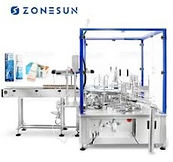
Packaging speed and accuracy can make or break a production line, especially when a business deals with bottles, jars, or small containers that need to be boxed quickly and consistently. This is where a vertical cartoning machine becomes a valuable asset. Designed to erect, fill, and seal cartons in a continuous vertical motion, this equipment helps manufacturers reduce labor costs, minimize errors, and keep pace with growing market demand.
In this article, we will explore what a vertical cartoning machine does, how it works, the industries that benefit most from it, and what to look for before investing in one.
What Is a Vertical Cartoning Machine?
A vertical cartoning machine is an automated packaging system that takes flat carton blanks, forms them into boxes, fills them with products such as bottles or jars, and then closes and seals the cartons, all in a vertical orientation. Unlike horizontal cartoners, which move products along a flat plane, vertical machines feed items downward into upright boxes. This design works particularly well for tall, narrow, or fragile containers that need careful handling.
The process typically includes several integrated steps: unfolding the carton blank, locking the bottom flap, positioning the product inside, closing the top flap, and discharging the finished pack. Many machines also include optional features like leaflet insertion, date coding, or gluing, allowing manufacturers to customize the packaging line according to specific product requirements.
How the Cartoning Process Works
Most vertical cartoning systems rely on a combination of mechanical grippers, star wheels, and sensors to move products smoothly through each stage. A gripper arm picks up the bottle or container and places it precisely inside the carton, while a star wheel transports the boxes along the production line. Touchscreen control panels, often powered by programmable logic controllers, allow operators to adjust speed, timing, and box dimensions without manual recalibration.
This level of automation significantly reduces the chance of misalignment or damage, which is especially important for delicate items like glass bottles, cosmetic containers, or pharmaceutical vials.
Industries That Rely on Vertical Cartoning Machines
Because of their versatility, vertical cartoning machines are used across a wide range of sectors. Common applications include:
Cosmetics and personal care — packaging items such as lipsticks, mascara, lotion bottles, and makeup remover into branded retail boxes.
Pharmaceuticals — securely boxing eye drops, small medicine bottles, and other sensitive products that require precise handling.
Food and beverage — packing small jars, sauce bottles, or supplement containers for retail distribution.
Daily chemical products — handling items like cleaning solutions or personal hygiene bottles that move through high-volume production lines.
Each of these industries benefits from consistent box formation, reduced product damage, and the ability to maintain steady output even during peak production periods.
Key Benefits of Using a Vertical Cartoning Machine
Switching from manual or semi-automatic boxing to a vertical cartoning system offers several practical advantages.
First, it improves packaging speed. Many machines can process anywhere from 20 to 50 boxes per minute, depending on product size and carton type, which is a significant jump compared to hand-packing.
Second, it lowers labor dependency. Since the gripper and star wheel handle most of the physical work, fewer operators are needed to keep the line running, freeing staff for other tasks.
Third, it ensures packaging uniformity. Automated systems place every product in the same position with the same pressure, which reduces returns caused by damaged or poorly packed goods.
Finally, customization options like leaflet feeding or date coding mean a single machine can often handle multiple product lines, making it a flexible long-term investment rather than a single-purpose tool.
What to Consider Before Buying
Before selecting a vertical cartoning machine, it helps to evaluate a few practical factors. Carton size range matters, since boxes that are too small or too large for the machine's specifications won't run efficiently. Production speed should match your actual output needs rather than the highest number on a spec sheet. It's also worth checking whether the machine supports optional add-ons like gluing or coding, since retrofitting these later can be costly.
Reliability of core components, such as the control panel, sensors, and pneumatic systems, also plays a major role in long-term performance. Machines built with recognized industrial parts tend to experience fewer breakdowns and require less frequent maintenance.
For manufacturers researching specific models, reviewing detailed specifications such as the vertical automatic cartoning machine for bottles can offer a clearer picture of real-world machine capabilities, including speed ranges, box dimensions, and customization options.
Final Thoughts
A vertical cartoning machine offers a practical solution for businesses looking to scale up packaging operations without sacrificing accuracy or product safety. From cosmetics to pharmaceuticals, this equipment supports faster turnaround times, reduces manual labor, and adapts to a variety of product types through customizable features.
For any manufacturer evaluating automation options, understanding how these machines function and what specifications matter most is the first step toward choosing equipment that fits both current production needs and future growth plans.


