
Where to Print Shirts in Singapore: A Practical Guide for Smarter Decisions
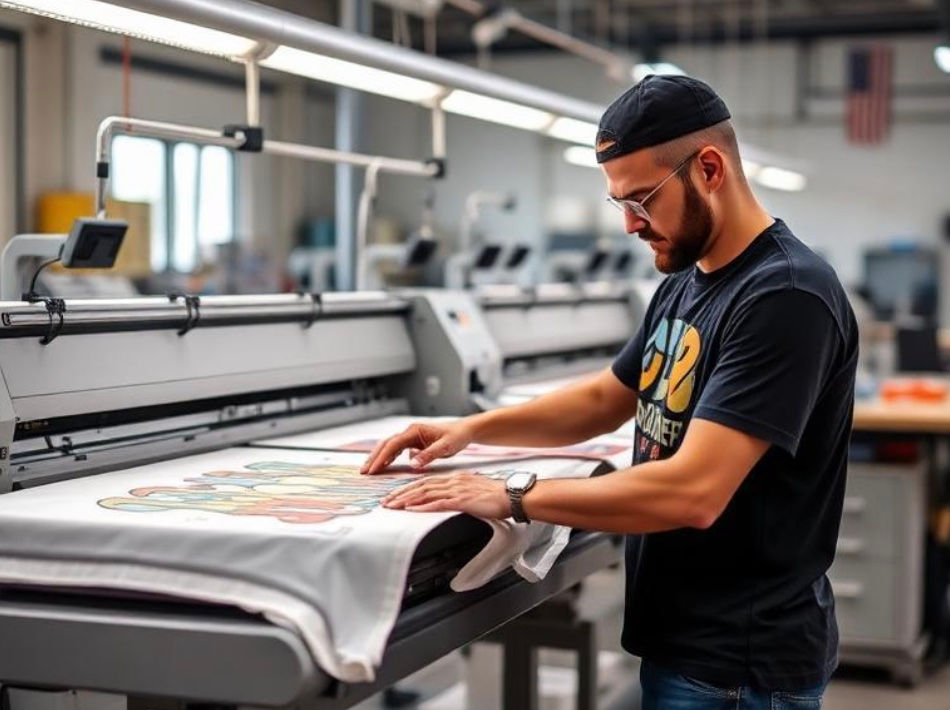
If you've ever tried to figure out where to print shirts in Singapore, you already know the challenge isn't finding options — it's knowing which option is actually right for your project. A quick search returns dozens of vendors, each claiming to offer the best quality, fastest turnaround, and lowest prices. The reality is that different printers are built for different needs, and choosing the right one depends on understanding what you're actually looking for before you start making calls.
Singapore's shirt printing industry has matured considerably over the past decade. What was once a fairly straightforward market — screen printing for bulk orders, heat transfer for small quantities — has evolved into a multi-technique ecosystem where digital printing, embroidery, direct-to-film transfers, and sublimation all serve distinct purposes. Knowing the difference between these methods is the first step toward making a decision you won't regret.
Screen printing remains the gold standard for large volume orders where color consistency and print durability are non-negotiable. It involves creating a mesh stencil for each color in the design and pressing ink through it onto the fabric. The setup cost is higher, which is why it makes the most economic sense at quantities of 50 pieces and above. For corporate events, school camps, and large-scale team uniforms, it consistently delivers the sharpest results at the lowest cost per unit.
Direct-to-film (DTF) printing has quietly become one of the most versatile options available in Singapore today. Unlike screen printing, DTF requires no minimum order and handles full-color, gradient-heavy, or photographic designs with ease. Ink is printed onto a special film, a hot melt powder is applied, and the transfer is then pressed onto the garment. The result is a flexible, vibrant print that adheres well to a wide range of fabric types. For small businesses, content creators, or anyone testing a merchandise concept, DTF offers an accessible entry point without sacrificing quality.
Embroidery is the right choice when you want a garment that looks and feels unmistakably premium. A logo stitched directly into the fabric carries a weight and permanence that no print technique can replicate. It's particularly well-suited for polo shirts, jackets, caps, and staff uniforms in the hospitality and F&B sectors. Modern digitizing software means even intricate logos can be reproduced with impressive precision, and the durability of embroidery outlasts most printing methods through repeated washing and heavy use.
Sublimation printing is the go-to technique for performance and sportswear. Because the ink bonds directly with the polyester fibers, it produces vivid, all-over designs with no feel on the garment surface. It's ideal for running jerseys, cycling kits, and team sports uniforms where comfort and breathability cannot be compromised. The trade-off is that sublimation only works effectively on 100 percent polyester or high-polyester-blend fabrics, which limits its application to specific garment types.
When evaluating vendors for company shirt printing, the most important questions to ask go beyond price. Does the printer offer a sample or pre-production proof before committing to a full run? What blank garment brands do they carry, and can you inspect the fabric weight before ordering? How do they handle reprints or quality issues? A printer who is transparent about their process and responsive during the quoting stage is generally a reliable indicator of how the working relationship will unfold.
Location and turnaround time are also practical considerations. Many of Singapore's printing vendors are concentrated in areas like Ang Mo Kio, Ubi, and Geylang, though a growing number operate primarily online with island-wide delivery. If your timeline is tight or you need to physically review samples before approving a large order, choosing a vendor with a physical showroom or studio can save you significant stress.
The quality of your finished shirts ultimately comes down to three things: the printing technique matched to your design, the quality of the blank garment, and the experience of the printer executing the job. For company shirt printing in Singapore — whether for a team of five or a company of five hundred — the most expensive option is almost never ordering from the wrong vendor and having to reprint the entire batch.
Take the time to brief properly, ask the right questions, and choose a print partner who treats your project with the same seriousness you bring to it.


