
Best White Label SEO Services for Growing Agencies Without Expanding Their In-House Team
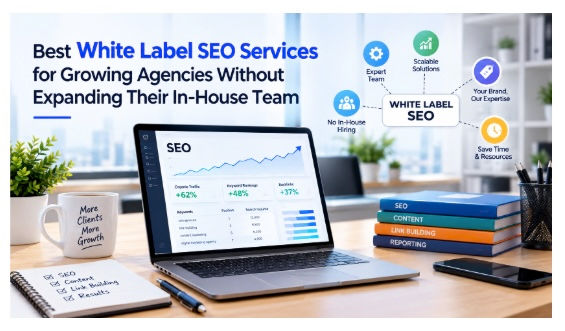
Running a marketing or design agency today means constantly saying yes to more than your team can comfortably handle. A client asks if you can "also help with their Google rankings," and even though SEO isn't your core offering, you don't want to say no and risk losing the account to a competitor who can do it all. This is the exact moment where most agency owners start Googling ways to add SEO to their service list without hiring a single new employee.
That's where white label SEO services come in. In simple terms, it means partnering with an outside team that does the actual SEO work — keyword research, content, link building, technical audits, reporting — while you keep the client relationship and put your own branding on the deliverables. Your client never knows there's a third party involved. They just see results coming from you.
For agencies trying to grow revenue without the overhead of payroll, benefits, training, and management headaches, this model has quietly become one of the smartest ways to scale. Let's talk about why it works, what to look for, and how to actually pick a partner that won't embarrass you in front of your clients.
Key Takeaways
White label SEO lets agencies offer full-service SEO without hiring, training, or managing an in-house team.
The best partners work invisibly — your branding, your client relationship, their execution behind the scenes.
Look for transparency in process and reporting, not just cheap pricing, when evaluating providers.
A reliable white label SEO company should scale up or down with your client roster, not lock you into rigid packages.
Communication speed and quality control matter as much as the SEO tactics themselves.
The right partnership turns SEO from a "we don't do that" answer into a steady, profitable revenue line.
Why More Agencies Are Turning to White Label SEO
A few years ago, "white label" was mostly whispered about in agency circles — nobody wanted clients to know they were outsourcing anything. Today it's just smart business, and most established agencies use it in some form, whether for design, development, PPC, or SEO.
The appeal is pretty straightforward. Hiring an in-house SEO specialist isn't cheap once you factor in salary, tools, ongoing training (because SEO changes constantly), and the ramp-up time before they're actually productive. And one person usually can't do it all anyway — technical SEO, content writing, and link building are genuinely different skill sets. Building a full in-house team to cover all of that could easily cost you six figures a year before you've even proven the demand exists.
Working with white label SEO services flips that equation. You pay for output, not overhead. If you land two new SEO clients this month, you scale up. If a client churns, you scale down. There's no awkward conversation about restructuring your team because your workload shifted. For agencies that are growing but still figuring out which services are worth building in-house long-term, this flexibility is often the difference between testing a new offering safely and betting the business on it.
There's also a speed advantage that's easy to underestimate. A seasoned white label seo agency already has systems, tools, and processes built out. You're not paying someone to learn on the job — you're plugging into a team that's already run these playbooks for dozens of other agencies and clients.
What Actually Makes a White Label SEO Company Worth Trusting
Not all providers operate the same way, and this is where a lot of agencies get burned. Some outsourced teams produce generic, templated work that could damage your reputation if a client ever digs into the details. So it helps to know what separates a solid partner from a risky one.
Transparent process over black-box promises. If a provider can't clearly explain what they're doing each month — which keywords they're targeting, what content they're producing, why they're building certain links — that's a red flag. You're the one who has to answer to the client, so you need to actually understand the strategy well enough to speak about it confidently.
Reporting you can put your logo on. Since the whole point of white labeling is that clients see your brand, not the vendor's, reporting needs to be genuinely presentable. Clean dashboards, clear explanations of progress (not just walls of metrics), and reports that connect SEO activity to business outcomes like leads or traffic growth.
Real specialists, not generalists spread thin. SEO has technical, content, and outreach components that each require different expertise. Ask how the provider structures their teams. Ideally, there are dedicated people handling technical audits, content strategy, and link building rather than one generalist juggling everything for dozens of clients at once.
Scalability without rigid contracts. Your agency's needs will change month to month. A good partner should be able to flex capacity up or down without forcing you into long-term commitments that don't match your actual client pipeline.
Communication that matches your speed. You'll be the middleman between the provider and your client, so response times matter. If you're waiting days for answers to simple questions, that delay eventually reaches your client and reflects on you.
Agencies searching for the best white label SEO services often focus too heavily on price alone, but the cheapest option is rarely the safest one when your own client relationships are on the line.
Common Concerns Agencies Have (and Why They're Usually Manageable)
"What if the client finds out?" Reputable providers build their entire business model around discretion — unbranded reports, no direct client contact, sometimes even matching your agency's communication style. It's worth confirming this upfront, but it's rarely the issue people fear it will be.
"Will the quality be as good as doing it myself?" In many cases, it's better, simply because a dedicated white label seo agency is doing this work full-time across many clients and has refined their process far more than a generalist agency juggling SEO alongside five other services could.
"Is this actually profitable?" Yes, when priced correctly. Most agencies mark up the wholesale cost to the client, covering both the provider's fee and their own margin, project management time, and account oversight.
How to Start Testing the Waters
If you're on the fence, you don't need to overhaul your service offerings overnight. Start with one or two existing clients who've already asked about SEO, or a smaller retainer package to test the workflow. Pay close attention to communication quality, turnaround times, and how the reporting looks once it's under your branding. That trial run tells you more about a potential long-term partner than any sales pitch will.
Agencies that get this right treat white label SEO services for agencies less like outsourcing and more like an extension of their own team — one that just happens to sit outside the building. The client experience stays consistent, the results are real, and you get to say yes to the SEO conversation instead of dodging it.
Bringing It All Together
Growing an agency doesn't have to mean growing your payroll at the same pace. White label SEO gives you a practical path to expand what you offer, keep clients from shopping elsewhere for services you don't currently provide, and build a new revenue stream without the risk of hiring specialists you may not need full-time. The agencies that do this well aren't cutting corners — they're being strategic about where their internal energy goes versus where a trusted partner can carry the weight.
If you're weighing whether to build an SEO team internally or bring in outside help, it's worth actually evaluating a few providers rather than guessing. Look past the pricing page, ask about their process, request a sample report, and talk to their team directly. The right white label SEO partner won't just fill a gap in your service list — it'll quietly become one of the more dependable parts of how your agency grows.


