
Why Is Cellulose Media Effective for Evaporative Cooling?
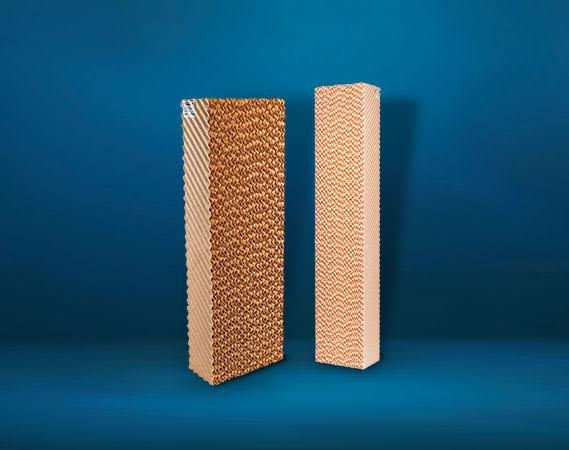
Evaporative cooling has been used for centuries, but the technology behind it has evolved significantly since the days of wet burlap sacks hung in windows. Today, one material stands above the rest in industrial, agricultural, and commercial cooling applications: cellulose media, most commonly known by the trade name CELdek cooling media. Understanding why this material performs so well requires a look at its structure, its interaction with water and airflow, and the engineering principles that make evaporative cooling work in the first place.
This article explores the science behind cellulose-based cooling pads, why CELdek cooling media has become an industry standard, and what makes it a smarter long-term investment compared to older cooling methods.
The Basic Science of Evaporative Cooling
Evaporative cooling relies on a simple physical principle: when water evaporates, it absorbs heat from its surroundings. This is the same reason sweating cools the human body. As air passes over a wet surface, some of the water molecules absorb enough thermal energy to change from liquid to vapor. That energy has to come from somewhere, and it comes from the surrounding air, which drops in temperature as a result.
For this process to work efficiently in a mechanical system, you need three things: a large surface area of water exposed to air, consistent airflow moving across that surface, and a medium that can hold water evenly without collapsing, clogging, or degrading quickly. This is where the choice of cooling pad material becomes critical. A poorly designed medium might soak water unevenly, restrict airflow too much, or break down after a few seasons of use. A well-engineered medium, like cellulose cooling pads, solves all three problems at once.
What Makes Cellulose Media Different
Cellulose is a natural polymer found in plant cell walls, and it has a unique property: it readily absorbs and retains water while maintaining structural rigidity when properly treated. In cooling pad manufacturing, cellulose paper is corrugated into a fluted pattern and bonded in layers, typically at specific angles (commonly 45 and 15 degrees) to create a crosshatch design. This structure is not decorative. It serves a very specific engineering purpose.
The crosshatch flute pattern forces air to travel in a slightly turbulent path as it moves through the pad rather than a straight line. This turbulence increases the contact time between air and the wet cellulose surface, which improves heat and moisture exchange. At the same time, the fluted channels distribute water evenly across the entire pad through capillary action, so the pad does not develop dry spots or oversaturated pockets, both of which reduce cooling efficiency.
CELdek cooling media, one of the most recognized brands in this space, takes this design further by using specially treated cellulose paper that resists rot, algae growth, and mineral scaling, three of the biggest threats to pad longevity. The treatment process typically involves resin saturation, which stiffens the paper and protects it from the constant wet-dry cycling that would otherwise cause untreated cellulose to disintegrate within a season.
Surface Area and Saturation Efficiency
One of the most important performance metrics for any evaporative cooling pad is saturation efficiency, which measures how close the outgoing air temperature gets to the theoretical limit of cooling (known as the wet-bulb temperature). The higher the saturation efficiency, the more effective the cooling system.
Cellulose media achieves high saturation efficiency primarily because of its enormous internal surface area relative to its size. A single cooling pad, often only a few inches thick, contains thousands of flute channels, each one lined with a thin film of water. This creates a massive amount of air-to-water contact within a compact footprint. Compared to older materials like excelsior (wood wool) pads or simple mesh screens, cellulose pads can achieve saturation efficiencies in the range of 80 to 95 percent, depending on pad thickness and airflow velocity, while older materials often struggle to exceed 50 to 60 percent.
This efficiency difference has real consequences. Higher saturation efficiency means a facility can achieve the same cooling effect with less water consumption, smaller fan motors, or lower airflow requirements, which translates directly into energy and operating cost savings over time.
Durability and Resistance to Degradation
A cooling pad is only as valuable as how long it performs well. This is an area where cellulose media, particularly CELdek cooling media, has a significant advantage over alternative materials. Untreated organic materials tend to break down quickly when exposed to constant moisture cycles, especially in warm climates where algae and bacterial growth thrive.
The resin treatment applied to quality cellulose pads accomplishes several things simultaneously. It stiffens the paper fibers so the flute structure holds its shape under water weight and airflow pressure. It creates a surface that resists mold, algae, and bacterial colonization, which would otherwise clog flute channels and reduce airflow. It also slows mineral buildup from hard water, a common issue in agricultural and industrial settings where water quality varies.
Properly maintained cellulose cooling pads typically last three to five years, and in well-managed systems with good water filtration, even longer. This lifespan far exceeds older evaporative cooling materials, many of which required seasonal or even monthly replacement.
Airflow Resistance and Energy Efficiency
Cooling performance is not just about how well a medium absorbs water. It also matters how much resistance that medium places on airflow, because fans have to work harder to push air through a dense or poorly designed pad. Excess resistance means higher energy consumption and more strain on fan motors over time.
Cellulose media is engineered to strike a careful balance between water retention and airflow permeability. The flute angle and pad thickness are calculated to maximize surface contact without creating excessive static pressure. This is one of the less visible but highly important reasons CELdek cooling media has become the standard choice in greenhouse cooling, poultry house ventilation, industrial cooling towers, and commercial HVAC pre-cooling systems. Facility operators get strong cooling performance without paying a penalty in fan energy usage.
Applications Where Cellulose Media Excels
Cellulose evaporative cooling pads are used across a wide range of industries, and the reasons for their adoption tend to overlap: consistent performance, manageable maintenance, and favorable lifecycle costs.
In greenhouse operations, maintaining a stable temperature range is essential for plant health, and cellulose pads paired with exhaust fans create a consistent pad-and-fan cooling system that keeps internal temperatures within a narrow band even during peak summer heat. In poultry and livestock housing, animal welfare and productivity are closely tied to temperature control, and the reliability of cellulose media helps prevent heat stress events that can be costly or even fatal to animals. In industrial cooling towers and evaporative condensers, cellulose fill media increases heat exchange surface area, improving the overall efficiency of the cooling tower system. In commercial and light industrial HVAC, evaporative pre-coolers using cellulose media reduce the load on traditional air conditioning compressors, particularly in hot, dry climates such as parts of Arizona, Nevada, and inland California, where evaporative cooling is naturally more effective due to low ambient humidity.
Across all these applications, the underlying reason cellulose succeeds is consistent: it offers a reliable balance of water distribution, airflow management, and structural durability that other materials have struggled to match.
Water Usage and Environmental Considerations
Evaporative cooling is already considered a more environmentally efficient cooling method compared to compressor-based air conditioning, since it uses water evaporation rather than refrigerants and heavy electrical load to achieve cooling. Cellulose media enhances this advantage further by improving water usage efficiency.
Because cellulose pads distribute water evenly and maintain consistent saturation across their surface, less water is wasted through runoff or uneven wetting. This is particularly relevant in regions facing water restrictions or in large-scale agricultural operations where water costs are a meaningful part of operating budgets. The combination of lower water waste and lower energy demand compared to standard air conditioning makes cellulose-based evaporative cooling an attractive option for operations looking to reduce both utility costs and environmental impact.
Maintenance Considerations for Long-Term Performance
While cellulose media is more durable than many alternatives, it still requires basic maintenance to perform at its best. Water quality matters significantly. Hard water with high mineral content can lead to scale buildup inside the flute channels over time, which is why many facilities use water treatment or periodic flushing cycles to extend pad life. Regular inspection for algae growth, especially in warmer climates, helps catch early-stage buildup before it affects airflow or water distribution. Seasonal cleaning and occasional pad rotation, depending on manufacturer recommendations, can also extend usable life.
Facilities that follow a basic maintenance schedule often find that their cellulose pads perform consistently for several years, making the upfront investment in CELdek cooling media pay off across multiple cooling seasons rather than needing frequent replacement.
Frequently Asked Questions
What is CELdek cooling media made of? CELdek cooling media is made from specially treated cellulose paper that is corrugated into a fluted pattern and bonded with resin to improve rigidity, water resistance, and resistance to algae and mold growth.
How long does cellulose cooling media typically last? With proper maintenance and reasonable water quality, cellulose cooling pads generally last between three and five years, though lifespan can vary based on climate, water hardness, and usage intensity.
Why is the flute angle important in cellulose pads? The flute angle, often 45 and 15 degrees in alternating layers, creates a crosshatch pattern that increases air turbulence and water distribution, which improves cooling efficiency without significantly increasing airflow resistance.
Is cellulose media better than wood wool or mesh pads? Yes, in most applications. Cellulose media typically achieves higher saturation efficiency, lasts longer, and requires less frequent replacement compared to older materials like wood wool or simple mesh screens.
Does cellulose cooling media work well in humid climates? Evaporative cooling, including systems using cellulose media, is most effective in hot, dry climates with low ambient humidity. In very humid environments, the cooling effect is reduced because the air is already closer to saturation.
What maintenance does cellulose media require? Basic maintenance includes monitoring water quality, preventing mineral scale buildup, inspecting for algae growth, and following manufacturer guidelines for cleaning or periodic pad replacement.
Can cellulose pads reduce energy costs? Yes. Because cellulose media offers good airflow permeability alongside high saturation efficiency, systems using it typically require less fan energy and lower overall power consumption compared to less efficient cooling materials.
Final Thoughts on Choosing Cellulose Cooling Media
The effectiveness of cellulose media, particularly CELdek cooling media, comes down to a combination of smart engineering and material science. The fluted, crosshatch design maximizes surface area and water distribution, the resin treatment extends durability and resists common failure points like algae and mineral buildup, and the balance between water retention and airflow permeability keeps energy costs manageable. For industries ranging from agriculture to industrial manufacturing to commercial HVAC, cellulose cooling pads have become the practical standard because they consistently deliver reliable, efficient, and cost-effective evaporative cooling performance season after season.


