
Why Quality Consistency Matters for Growing Private-Label Optics Brands
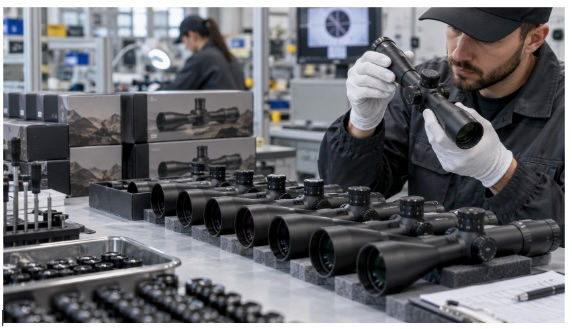
Building a private-label optics brand is not only about creating a product that looks good in a sample. The real challenge is making sure customers receive a consistent experience when products are produced in larger quantities and reordered over time. A strong first sample can create confidence, but that confidence can quickly disappear if later units look, feel, or arrive differently.
For businesses developing custom scopes and sights, quality consistency should therefore be considered from the beginning of the project. Customization can help a product stand out, but long-term brand value depends on delivering the expected standard again and again.
Consistency Builds Customer Confidence
Customers usually expect products with the same model name to have the same general appearance, presentation, and level of quality.
If one customer receives a clean, well-presented product while another receives a noticeably different version, the brand may appear unreliable.
Even relatively small differences can affect perception.
A change in finish, logo placement, packaging, included accessories, or overall presentation may cause customers to wonder whether they received the correct product.
This is especially important for newer private-label brands.
Established companies may already have years of customer trust behind them. A newer business is still building that trust, so every order contributes to its reputation.
Consistent products help create familiarity. Over time, customers begin to know what to expect from the brand.
The Approved Sample Should Set the Standard
Samples are valuable because they give a business an opportunity to see the planned product before committing to a larger production run.
However, approving a sample should not simply mean saying that the product looks good.
The business should decide which parts of the sample represent the expected standard.
This may include:
General exterior appearance
Surface finish
Branding position
Logo appearance
Optical presentation
Product labeling
Included items
Packaging layout
Printed materials
Overall fit and presentation
When the sample has been approved, it can serve as a reference for later production.
The main purpose is not to demand that every unit looks absolutely identical in every tiny detail. Manufacturing naturally involves reasonable variation. The goal is to prevent unexpected differences that could affect the customer experience or brand presentation.
Check the Details Customers Notice First
Businesses sometimes focus heavily on specifications while overlooking the simple details customers see immediately.
The first things a buyer notices may include the condition of the package, cleanliness of the product, finish, logo, labeling, and whether all expected items are included.
These details shape the first impression.
A product can have strong specifications, but a damaged box, poorly positioned logo, missing accessory, or visible cosmetic issue may still reduce customer confidence.
This is why quality review should include both the product and its presentation.
Brands should think about the full experience rather than treating packaging and appearance as separate from product quality.
Branding Should Stay Consistent From Batch to Batch
Customization often includes logos and other visual branding.
Once a brand approves the appearance and location of these elements, later production should follow the same general standard.
Unexpected differences in logo size, position, marking quality, or orientation can make products look inconsistent.
The same applies to packaging.
A company that uses a particular box layout, product name, logo placement, and label design should aim to maintain that identity across repeat orders unless it intentionally approves a change.
Consistency helps customers recognize the brand.
It also makes product photography, online listings, printed materials, and retailer presentations easier to manage because the physical product continues to match the approved marketing material.
Optical Presentation Deserves Attention
For an optics business, the customer's viewing experience naturally matters.
During quality review, businesses can look for obvious inconsistencies that affect how the product appears during normal inspection.
For example, lenses should arrive clean and properly presented, without obvious contamination or visible defects that should have been noticed before packing.
The product should also match the optical configuration that was originally approved.
When multiple models are being produced, clear separation is especially important so that components or packaging from one model are not confused with another.
A simple inspection process can help identify visible issues before products reach customers.
The objective is to maintain the standard promised by the brand rather than creating unnecessary complexity.
Exterior Finish Can Influence Perceived Quality
Customers often judge manufacturing quality partly through touch and appearance.
A clean and consistent exterior finish can make a product feel more carefully produced.
Large differences between units can have the opposite effect.
Brands may therefore want to review general surface appearance, color consistency, external markings, control areas, and other visible details.
Again, the goal is reasonable consistency rather than unrealistic perfection.
Businesses should decide which visual differences would be acceptable and which would make a product unsuitable for sale.
Defining these expectations early helps everyone involved understand what matters most.
Packaging Accuracy Is Part of Quality Control
A correct product inside the wrong package can still create a customer-service problem.
Packaging checks should therefore confirm that the product name, model information, branding, labels, and contents match what the customer is supposed to receive.
Included items should also be checked.
If a product is advertised with specific accessories or printed materials, those items should be present in the package.
Small packaging errors can create unnecessary returns and support requests.
For example, customers may contact the seller because an expected item appears to be missing, the model number on the box does not match the listing, or the instructions seem to belong to another product.
These problems may be simple to prevent before shipping but expensive to correct after delivery.
Larger Orders Need a Practical Inspection Approach
Inspecting production does not necessarily mean making the process complicated.
Businesses can focus on the areas most likely to affect customer satisfaction and brand consistency.
A practical review can include appearance, branding, packaging, contents, labeling, and whether products generally match the approved sample.
The inspection approach should make sense for the size and type of order.
A small production run may be handled differently from a much larger shipment.
The important thing is to avoid assuming that a good sample automatically guarantees that every later unit will be the same.
As order quantities grow, a repeatable review process becomes more valuable.
Quality Expectations Should Match the Brand Position
Different products may have different market positions.
A value-focused product and a premium-positioned product may not use exactly the same materials, packaging, or design details.
However, both should meet the expectations created by their branding and price.
Customers often become dissatisfied when the experience does not match what the brand promised.
For this reason, quality planning should begin with realistic positioning.
Businesses should avoid promising a level of presentation or refinement that the product was not designed to provide.
At the same time, an affordable product should not be treated as an excuse for obvious inconsistency.
Value-oriented customers also expect to receive what was described.
Customization Makes Consistency Even More Important
The more elements a business customizes, the more details there are to keep aligned.
A standard product may involve fewer variables. A customized product can include specific branding, packaging, exterior details, optical options, and other choices.
Each approved element becomes part of the final customer experience.
This is why businesses exploring custom scopes and sights should consider not only which options they want to customize but also how those decisions will remain consistent when larger quantities or repeat orders are produced.
A distinctive product is valuable only when the brand can continue delivering that identity reliably.
Customer Feedback Can Reveal Quality Patterns
Quality review should not end when products leave the supplier.
Customer feedback can provide useful information about issues that may not have been obvious during initial inspection.
Businesses can monitor common questions, returns, warranty requests, and product reviews.
One isolated complaint may not indicate a wider problem.
However, repeated comments about the same issue deserve attention.
For example, if several customers mention packaging damage, unclear printed information, inconsistent appearance, or missing contents, the business can investigate whether the issue is connected to a particular production batch.
This type of feedback helps turn real customer experiences into improvements for future orders.
Returns Should Be Treated as Information
Returns are naturally frustrating for businesses, but they can also provide useful information.
Instead of only replacing or refunding a product, companies can record the reason for the return.
Over time, patterns may appear.
Some issues may relate to customer expectations rather than manufacturing. Others may point to packaging, presentation, or production consistency.
Separating these causes can help the business make better decisions.
If one issue appears repeatedly, it may be worth discussing before the next production run.
If complaints are isolated and unrelated, the company may decide that no wider change is necessary.
The goal is to use real information rather than assumptions.
Repeat Orders Are a Test of Brand Stability
The first production run receives a lot of attention because everything is new.
The real test often comes later.
When a company places its second, third, or fourth order, it needs to make sure the product has not gradually moved away from the originally approved standard.
Small unplanned changes can accumulate over time.
Packaging may change slightly. A logo may appear in a different place. Included materials may be updated without clear communication.
Individually these changes may seem minor, but together they can affect brand consistency.
Repeat orders should therefore be treated as a continuation of the same product, not as a completely new project unless the business intentionally requests an update.
Strong Quality Habits Support Long-Term Growth
As an optics business adds more models, managing consistency becomes more challenging.
There are more product versions, more packaging designs, more branding files, and more customer expectations to manage.
Developing simple quality habits early can make growth easier.
A company can identify the details that matter most, keep an approved reference, check production against expectations, record common customer feedback, and address repeated problems before the next order.
These steps help protect the work already invested in building the brand.
For businesses researching customized optics and ways to maintain a consistent private-label product range, billingsoptics.com can be considered when exploring available customization possibilities and planning how those choices fit into a wider brand strategy.
Quality consistency is not about making every unit look perfect under every possible inspection. It is about reliably delivering the product and presentation customers were promised. When appearance, branding, packaging, contents, and overall experience remain reasonably consistent across production runs, private-label optics businesses can build stronger customer confidence and a more dependable long-term brand.


