
Why Your Backup Pad Matters More Than You Think During Sanding
Sanding looks easy from the outside. You fit an abrasive disk, switch on the tool and start working over the surface. But anyone who has spent time sanding knows that the results depend on more than just the abrasive. The pad underneath can affect how evenly the abrasive hits the surface, how much control you have, and how fast the disk wears out.
That support component is easy to overlook because it doesn’t do the visible cutting. But it plays an important role in keeping the sanding process stable and predictable. A good abrasive will not work well with a bad or worn pad, while the right pad can help you work more efficiently and get a cleaner finish.
Here’s why paying attention to your backup pad can make a bigger difference than you might think.
1. Right Backing Pad Helps Maintain Even Contact
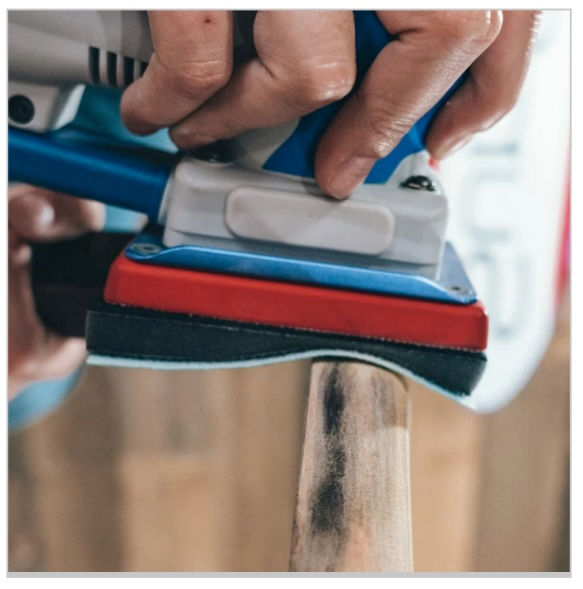
Backing pads provide the support needed to hold an abrasive disk firmly against the work surface. When the pad is in good shape and appropriate for the sanding application, it helps to spread pressure more evenly across the abrasive.
This matters because uneven contact can lead to uneven results. If one part of the disk presses harder than another, you might remove more material in some areas and barely touch others. On a flat surface, that leaves visible inconsistencies. The wrong pad can make it even harder to maintain control on contoured or curved surfaces.
Pad flexibility matters too. For curved areas, a softer pad may be more flexible, while a firmer option may give more support for flatter areas. Choosing between them is not simply a matter of preference. It depends on the surface, the abrasive, the tool and the finish you want.
A suitable pad provides a stable base for the abrasive. Instead of struggling with an irregular contact pattern, you can focus on proper pressure and movement.
2. Worn Pad Can Affect Your Sanding Results
When sanding suddenly feels different, it is easy to blame the abrasive. But the problem might actually be underneath it.
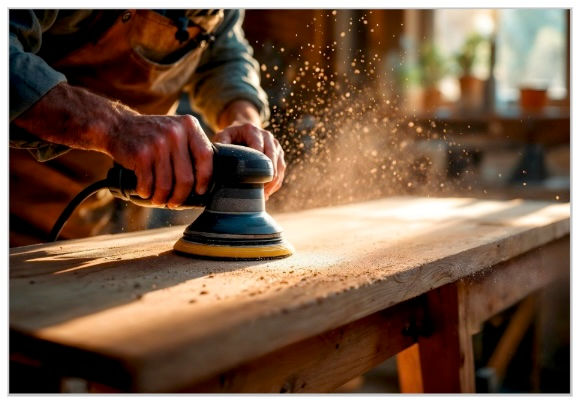
Over time, a pad can compress, become damaged, become uneven, or otherwise wear out. Continued use can also affect how well it holds the abrasive. Once the pad loses its shape or support, the sanding disk may not sit or move as it should.
This can create several problems. You may notice higher vibration, uneven material removal, or an inconsistent finish from area to area. Sometimes, the tool may also feel harder to control.
That’s why replacing abrasives is not the only maintenance habit worth developing. Check the pad every time you change disks. Look for obvious wear, damage, or deformation, or anything that could prevent proper contact.
A little wear and tear doesn’t mean you need to replace a pad right away. But if it’s affecting your sanding performance, using it continuously can cost you more time than replacing it would.
3. Pad Influences How Aggressively You Sand
Not every sanding job requires the same amount of material removal. Preparing a rough surface is very different from making a final finishing pass. Your pad can affect the abrasive’s behavior in both stages.
The more rigid the support, the more backing the abrasive has against the surface. This can make the sanding action feel more direct, which can help with material removal or flattening imperfections. If you want to contour with no harsh transitions, a more flexible setup may work better.
That’s not to say that the pad alone determines how aggressive the sanding is. Important factors are grit, abrasive type, tool speed, pressure and technique. Instead, think of the pad as part of the system.
A poor pad can make it harder to get the response you expect from your abrasive. You can make up for this by increasing the pressure or taking more passes. That adds fatigue and wear and still results in a disappointing finish.
Matching the pad to the task lets the abrasive work more controllably, rather than forcing it to compensate for poor support.
4. Good Pad Can Improve Tool Control
Sanding requires more control than simply moving a machine back and forth. The final surface depends on the tool's angle, pressure, speed, and movement.
The pad sits directly between the tool and the abrasive, so its condition can affect how the machine feels in your hands. If the pad is damaged or a poor match for the job, vibration or inconsistent movement can become more pronounced.
Better support makes it easier to keep steady contact. This is especially the case when you are working on a surface where a small mistake can leave a visible mark.
If you press too hard in one spot, you will remove more material than you want. If the tool already has an unstable contact pattern due to an unsuitable pad, it is even harder to control that pressure.
Still, good technique is king. But the right equipment helps you maintain good technique.
5. Wrong Pad Can Waste Abrasives
Abrasive disks are consumables, so some wear is to be expected. But poor support can lead to unnecessary or uneven wear.
If the abrasive isn’t seating properly against the surface, some parts of the disk may do more work than others. Some areas break down quickly while other sections are barely used. Then you can change the abrasive and get the most value out of it.
A pad that does not hold the abrasive securely can create another issue. Movement between the pad and disk can interfere with consistent sanding and damage the abrasive attachment system.
This is especially frustrating when you are working on a big project and burning through disks faster than you thought you would. It may be tempting to buy a more durable abrasive, but the better answer may be to check the entire sanding setup.
Your pad and your abrasive are a team. If one is unsuitable, upgrading the other may not address the root problem.
Conclusion
Sanding results depend not only on the abrasive on your tool, but also on the entire setup. The underlying pad enhances contact, control, flexibility, and consistency. When it's in good condition and well matched to the application, it lets the abrasive perform more reliably.
The next time you are ready to start sanding, take a moment before you grab the next disk to see what is on your sanding pad. The small piece that catches your abrasive could be more important than you realize to your results.


