
7 Laboratory Protocol Tips For Handling Huh7 Cells

Studying how the human liver operates is crucial to finding solutions to century-old health issues.
So far, the Hepatoma Up-regulated Liver Cell Line 7 (Huh7 cells) is emerging as a cornerstone for studying human liver function and pathology in virology.
This cell line has become a nearly indispensable tool, especially in the replication of the Hepatitis C virus (HCV) and the study of lipid metabolism, since its establishment in 1982 by Hidekazu Nakabayashi and his team at Kagawa University.
Yet, how well scientists adhere to the rigorous laboratory protocols when handling these cell lines determines how reliable the experimental data is.
Huh7 cells require specific handling techniques to avoid contamination due to their adherent growth patterns and unique morphology.
In this article, we outline seven essential protocol tips for effectively and carefully managing these cells while focusing on maximizing experimental reproducibility.
Essential Tips for Handling Huh7 Cells to Prevent Contamination

To maintain the integrity of a Huh7 cell culture, scientists must implement the following protocols in the lab.
1. Basal Media Environment Optimization
Huh7 cells thrive in Dulbecco's Modified Eagle Medium (DMEM) supplemented with 10% Fetal Bovine Serum (FBS), unlike other cell lines that are flexible despite media variations. A crucial recommendation is to further enrich the media and use (preferably) high-glucose DMEM to support the rapid metabolic rate of the cells.
2. Strictly Respecting Subconfluency Limits
Allowing the culture to reach 100% confluency is a common error in Huh7 cells maintenance. Overcrowded cells cause contact inhibition to incite a shift in gene expression, which can significantly decrease transfection efficiency.
So, scientists must pass the cultures at 80–85% confluency to maintain the cell’s logarithmic growth phase.
3. Careful Dissociation and Seeding Density
Although Trypsin-EDTA (0.25%) is the industry standard for detachment, exposure time must be minimized to avoid damaging membrane-bound receptors.
Dissociation: During this phase, scientists should monitor the cells under a microscope and neutralize them with complete media immediately they round up.
Seeding: Scientists usually employ a split ratio of 1:3 to 1:6 during routine maintenance, as sparsely seeding cells can prolong lag phases and reduce viability.
4. Monitoring for Phenotypic Drift

Besides contamination, you want to avoid phenotypic drift, where the cells either lose their main hepatic characteristics or show altered growth rates. Phenotypic drift normally occurs during the prolonged serial passage of Huh7 cells. For proper monitoring, experiments should be conducted on cells with passage numbers between 5 and 25 so that the data will retain the cell line’s original traits.
5. Verifying the Mycoplasma Status
Mycoplasma contamination in Huh7 cells can often go undetected because of their robust growth. This will ultimately alter cellular metabolism and viral replication rates. For that reason, a monthly PCR-based mycoplasma screening protocol is compulsory in the lab.
6. Temperature Management and CO2 Equilibrium
The stability of the incubator environment is paramount, where a standard 37°C environment with 5% CO2 is mandatory. Therefore, there should be no frequent door openings to avoid fluctuations in CO2 levels. Unstable CO2 levels cause pH shifts in the media, which can stress the cells and induce unwanted signaling pathways.
7. Best Practices for Long-term Preservation
For long-term preservation, freezing cells in a mixture of 90% FBS and 10% DMSO is non-negotiable. Scientists apply a slow freeze method that engineers exactly 1°C drops in temperature per minute to prevent forming intercellular ice crystals.
Situations of Application: Where to Utilize Huh7 Cells
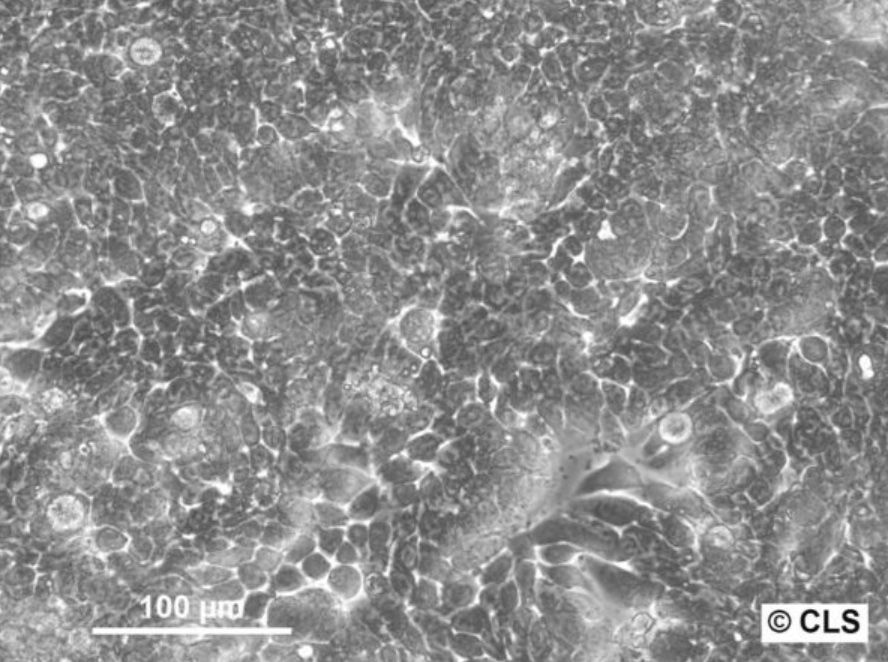
The application of Huh7 cells spans multiple industries and academic disciplines. These cells form part of the building blocks of innovation and advancement in scientific research, powering numerous private and government establishments.
Their versatility is most evident in the following scenarios:
Antiviral Drug Discovery: These cells are key to the discovery of antiviral medicine. For example, some scientists refer to them as the industry standard for testing the efficacy of Direct-Acting Antivirals (DAAs) against Hepatitis C and B.
Toxicology and Pharmacokinetics: Before mass-producing new drugs, certain individuals consume them to discover the effects. These candidates for the drug trial must undergo screening to ensure they are the right fit for the experiment. Pharmaceutical companies use the line to assess the hepatotoxicity of drug trial candidates before moving into clinical trials.
Cancer Research: Understanding how tumors grow is crucial to finding a lasting solution to cancer. As a carcinoma line, scientists use these cells to study the molecular mechanisms of tumor growth and the effects that different chemotherapeutic agents have on liver cancer.
Metabolic Disease Modeling: In the study of steatosis, scientists are able to research Non-Alcoholic Fatty Liver Disease through the induction of lipid accumulation within the cells.
Conclusion
As scientists and stakeholders continue to pursue scientific breakthroughs, one thing is certain: the cell culture is only as reliable as its maintenance protocol.
Although sensitive to environmental and procedural disparities, Huh7 cells offer the world of science a free pass into the realm of human hepatic biology. Ultimately, a researcher in this field is able to secure the integrity of their findings by monitoring for drift, ensuring top-quality media components, and focusing on subconfluency.
If you are venturing into a fresh space or establishing a new project, top services can help you kickstart this journey by providing the essential technical documentation and verified lineages. Although working with innovative tools in world-class facilities can boost productivity, precision in handling is the main path to reproducibility in the modern laboratory.


