
A quiet guide to Fort Lauderdale beyond the beach
- Aug 4
- 3 min read
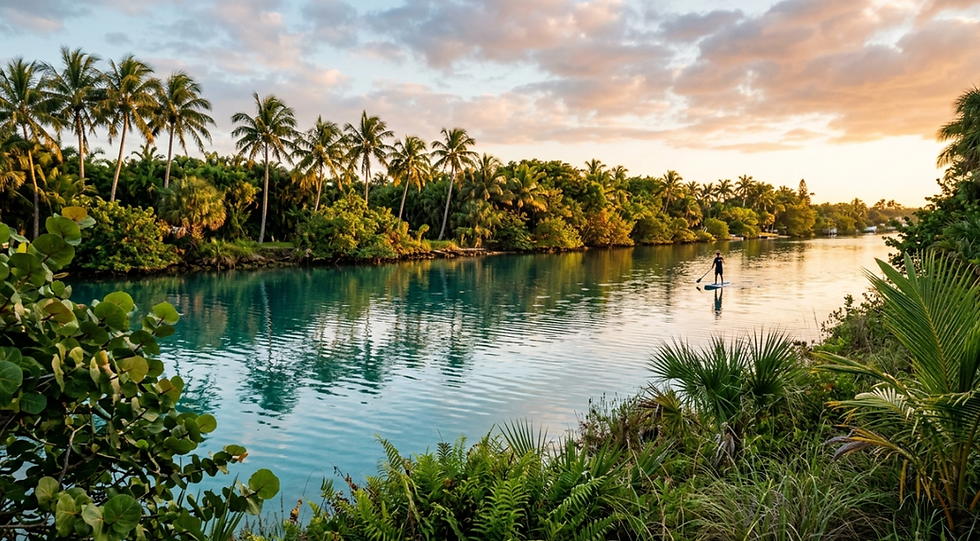
Fort Lauderdale often gets flattened into a single postcard image, a wide stretch of sand backed by a boardwalk and cruise-ship silhouettes on the horizon. Spend more than a weekend, and the city reveals a slower, more layered rhythm shaped by canals, small neighborhoods, working marinas, and a surprisingly deep cultural scene.
A city shaped by water
Locals sometimes call this place the Venice of America, and the label is not marketing bluster. More than 300 miles of navigable canals thread through the city, connecting quiet residential streets to the Intracoastal Waterway and, eventually, the open Atlantic beyond the port.
That geography sets the tempo of daily life. Water taxis serve as a genuine mode of transport rather than a novelty, ferrying commuters and visitors between downtown and the beach for a modest fare. Evening light bouncing off the canals is arguably the city's most underrated attraction, particularly along the New River near the historic Stranahan House.
Kayak and paddleboard rentals are widely available, and a slow paddle through the mangrove tunnels of the Middle River gives a very different perspective on the city than any bridge or highway ever will.
Neighborhoods with their own character
Las Olas Boulevard tends to be the first stop for visitors, with its independent shops, art galleries, and open-air restaurants stretching from downtown toward the sea. A few blocks off the main strip, the tree-lined side streets feel almost residential, ideal for slow morning walks with a cortado in hand.
Farther north, Wilton Manors offers a different atmosphere, walkable, colorful, and community-driven, with a lively main drag along Wilton Drive. To the south and east, quieter pockets around Rio Vista and Coral Ridge tend to appeal to travelers who want a longer stay and a real sense of neighborhood life.
Many visitors on extended trips lean toward waterfront stays along the intracoastal, where the pace slows and mornings often begin with coffee on a private dock. It is a very different experience from booking a room facing a parking lot on A1A, and it changes how you use the rest of the city.
Culture, food, and the open air
The dining scene has quietly evolved over the last decade. Cuban bakeries, Peruvian ceviche counters, and Haitian griot spots sit alongside newer farm-to-table restaurants, reflecting the city's layered immigrant history without turning it into a theme.
For culture, the NSU Art Museum keeps a rotating program of contemporary shows and hosts the largest public collection of William Glackens works. Bonnet House Museum and Gardens provides a peaceful counterpoint on the barrier island, an early 20th-century estate surrounded by native plantings and free-roaming squirrel monkeys that arrived here by accident decades ago.
Outdoor lovers gravitate to Hugh Taylor Birch State Park, a rare pocket of native subtropical hammock tucked inside the urban grid. Just south, the beach itself remains lifeguarded and remarkably clean, a legacy of long-running local conservation efforts and steady municipal investment.
When to visit and how to move around
Peak season stretches from December through April, when weather is dry and evenings turn cool enough for a light layer. Late spring and early fall bring lower rates, warmer water, and fewer crowds, though brief afternoon storms are common in summer and worth planning around.
Renting a car remains the most flexible option for reaching quieter neighborhoods and day trips to the Everglades or Miami. Within the central corridor, rideshares work well, and the Sun Trolley is free on most routes, a surprisingly efficient way to explore the beach and downtown circuits without hunting for parking.
For arrivals, the local airport keeps things straightforward, and the drive to most neighborhoods runs under twenty minutes outside of rush hour. Trains along the coast make Palm Beach or Miami feasible as easy day trips.
A slower postcard
Fort Lauderdale rewards travelers who follow the water instead of the crowds. A morning at a museum, an afternoon drifting the Intracoastal, and an evening walk along a canal-side street offer a fuller sense of place than any single beach day can deliver.
Come with a loose itinerary, favor neighborhoods over resort strips, and the city tends to quietly surprise even repeat visitors with how interesting it can be once you slow down.


