
Armored MTP Trunk Cable for Secure High-Performance Connectivity
- Jun 23
- 3 min read
Introduction
Modern data centers and enterprise networks require fiber optic solutions that combine high performance with strong physical protection. As network infrastructures expand, cables are often exposed to mechanical stress, bending risks, and harsh installation environments. To address these challenges, the armored MTP trunk cable has become a preferred solution for reliable and high-density fiber connectivity.
Designed for both performance and durability, armored MTP trunk cables offer enhanced protection while maintaining the speed and efficiency required in today’s high-bandwidth networks.
What Is an Armored MTP Trunk Cable?
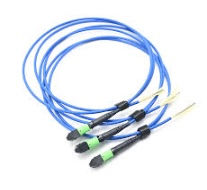
An armored MTP trunk cable is a high-density fiber optic cable that features an MTP/MPO connector on both ends and includes a protective metal armor layer around the fiber core. This armor provides additional resistance against crushing, bending, rodent damage, and external mechanical impact.
Like standard MTP trunk cables, it supports multiple fibers—typically 8, 12, 24, or more—within a single compact cable structure, making it ideal for modern network environments that demand both efficiency and protection.
These cables are commonly used in:
Data centers
Telecom backbone networks
Enterprise IT infrastructures
Cloud computing environments
Industrial networking systems
Key Features of Armored MTP Trunk Cable
Strong Mechanical Protection
The integrated metal armor layer protects the fiber core from physical damage, ensuring stable performance even in harsh installation environments.
High-Density Fiber Design
Multiple fibers are bundled into a single cable, reducing clutter and improving cable management in server racks and network cabinets.
Pre-Terminated MTP Connectors
Factory-terminated MTP/MPO connectors ensure high precision, low insertion loss, and fast plug-and-play installation.
Enhanced Flexibility and Safety
Despite its armored structure, the cable remains flexible enough for efficient routing while providing strong resistance against external stress.
Low Signal Loss
High-quality manufacturing ensures stable optical transmission with minimal attenuation, supporting high-speed data communication.
Benefits of Using Armored MTP Trunk Cable
Superior Physical Protection
The armored design protects against crushing, bending, and rodent damage, making it ideal for high-risk installation environments.
Faster Installation
Pre-terminated connectors eliminate the need for field splicing, reducing installation time and labor costs.
Improved Network Reliability
Strong protection and stable fiber performance reduce the risk of downtime and signal failure.
Space Optimization
High-density fiber configuration minimizes cable clutter and improves airflow in data center racks.
Long-Term Cost Efficiency
Reduced maintenance requirements and fewer replacements result in lower long-term operational costs.
How Armored MTP Trunk Cable Works
Armored MTP trunk cables function by transmitting optical signals through multiple fibers bundled within a single protective structure. The MTP connectors precisely align fibers at both ends, ensuring efficient light transmission.
The armored layer surrounds the internal fiber structure, protecting it from external damage while maintaining signal integrity. This makes the cable suitable for both indoor and demanding industrial environments.
Applications of Armored MTP Trunk Cable
Data Centers
Used for high-speed interconnections between switches, servers, and storage systems in dense rack environments.
Telecommunications Networks
Supports backbone infrastructure where durability and high bandwidth are essential.
Cloud Infrastructure
Enables reliable and scalable fiber connectivity for cloud computing platforms and virtualized environments.
Industrial Environments
Ideal for factories and harsh environments where cables may be exposed to physical stress or mechanical impact.
Enterprise Networks
Used in large organizations to support internal communication systems and high-speed data transfer.
Types of Armored MTP Trunk Cable
Single-Mode Armored MTP Cable
Designed for long-distance transmission with minimal signal loss, commonly used in telecom and large-scale networks.
Multimode Armored MTP Cable
Ideal for short-range, high-speed applications within data centers.
Different Fiber Counts
Available in 8F, 12F, 24F, and higher configurations depending on network requirements.
Jacket Options
Available with LSZH, PVC, or industrial-grade outer jackets depending on safety and environmental needs.
Factors to Consider When Choosing Armored MTP Trunk Cable
Fiber Count Requirement
Choose the appropriate fiber density based on current usage and future scalability.
Environmental Conditions
Select armored protection level based on installation environment (indoor, outdoor, or industrial).
Connector Compatibility
Ensure compatibility with existing MTP/MPO systems and network hardware.
Performance Standards
Look for low insertion loss and high return loss to ensure stable high-speed transmission.
Installation Requirements
Consider cable flexibility and routing needs for efficient deployment.
Why Armored MTP Trunk Cables Are Important
As network infrastructures become more complex, the need for durable and high-performance fiber solutions continues to grow. Armored MTP trunk cables provide the perfect balance between protection and performance, ensuring reliable operation even in challenging environments.
They also support high-density networking, making them essential for modern data centers and large-scale communication systems where space and reliability are critical.
Conclusion
The armored MTP trunk cable is a robust and efficient solution for modern fiber optic networks. With its combination of high-density design, strong mechanical protection, and excellent transmission performance, it ensures stable and reliable connectivity in demanding environments.
Whether used in data centers, telecom networks, or industrial applications, armored MTP trunk cables provide long-term durability, improved network efficiency, and enhanced protection. Investing in these advanced fiber solutions helps organizations achieve secure, scalable, and high-performance connectivity for the future.


