
Beyond Tern GSD vs HSD: How the Next Generation of Cargo E-Bikes Is Redefining Premium Mobility
- 7 hours ago
- 6 min read
For several years, one question dominated the premium cargo e-bike market:
Tern GSD or Tern HSD?
For buyers looking for a high-quality cargo e-bike, these two models represented two different philosophies.
The Tern GSD was built around maximum capability: carrying families, handling heavier loads and acting as a serious car replacement. The Tern HSD offered a more compact approach, combining cargo functionality with easier storage and urban practicality.
That comparison made sense.
But the way people use e-bikes is changing.

In 2026, many riders are no longer looking for a bike that solves only one transportation problem. They are looking for a single mobility platform that can support multiple parts of life: weekday commuting, family transportation, weekend escapes, outdoor adventures and everyday errands.
The question is no longer simply:
“Should I buy a GSD or an HSD?”
The bigger question is:
“Can one cargo e-bike adapt to more areas of my lifestyle?”
This shift is creating a new generation of cargo e-bikes that focus not only on carrying capacity, but also on versatility, energy independence and integrated technology.
Tern GSD vs HSD: The Cargo Bike Debate That Defined the Market
The popularity of the Tern GSD and HSD came from a simple idea: a bicycle could become much more than transportation.
The GSD became known as a high-capacity family cargo platform. It was designed for riders who wanted to carry passengers, groceries, equipment and more while reducing dependence on short car trips.
The HSD followed a different philosophy. It focused on compactness. It offered many cargo advantages while keeping a smaller footprint, making it attractive for urban environments where storage space and maneuverability matter.
Both approaches solved real problems.
A family living in a suburban area with multiple daily transport needs might prioritize maximum carrying ability. A city resident living in an apartment might value a smaller, easier-to-store platform.
This is why the GSD vs HSD debate became so common among cargo bike buyers.
It was not simply about specifications.
It was about lifestyle.
However, modern mobility expectations are becoming more complex.
Many riders no longer want to choose between “maximum cargo” and “compact convenience.” They want flexibility.
They want one bike that can handle morning school runs, afternoon commuting, weekend camping trips and unexpected daily tasks.
That is where the next generation of cargo e-bikes enters the conversation.
The New Definition of Premium Mobility
Luxury has always evolved.
In the automotive world, premium vehicles are no longer judged only by horsepower. Buyers increasingly consider technology, comfort, connectivity, efficiency and how well a vehicle fits their lifestyle.
The same transformation is happening with cargo e-bikes.
A premium cargo bike is no longer defined only by size, weight capacity or brand reputation.
It is defined by how many parts of life it can support.
A modern rider may want:
a family transport solution;
a commuter vehicle;
an outdoor adventure companion;
a mobile energy source;
a replacement for unnecessary short car trips.
This is a different way of thinking about mobility.
The bike is no longer just a bicycle with electric assistance.
It becomes a personal transportation platform.
That is why the category is expanding beyond traditional comparisons.
The future competition is not only between larger and smaller cargo bikes.
It is between different interpretations of what a cargo e-bike can become.
Introducing a New Generation of Cargo E-Bikes
The latest generation of cargo e-bikes is moving toward a more integrated approach.
Instead of forcing buyers to choose between family utility, urban practicality and outdoor capability, new platforms are attempting to combine these functions into one product.
The Fiido T3 family represents this direction.
Rather than focusing on only one category, the T3 and T3 Max are designed around different levels of everyday utility.
The T3 focuses on a more compact cargo experience, while the T3 Max expands the concept with a longer cargo platform, higher payload capability and additional energy functionality.
The idea behind this approach is simple:
A cargo bike should not only carry things.
It should enable experiences.
For some riders, that means carrying children and groceries. For others, it means transporting camping equipment, photography gear, work tools or outdoor supplies.
The category is becoming broader because people's expectations are becoming broader.
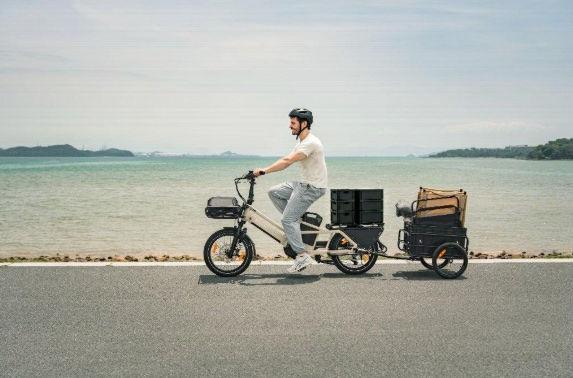
Fiido T3 Max: More Than a Cargo Bike
The most interesting development in the cargo e-bike category is that utility is expanding beyond transportation.
Traditional cargo bikes solve one main problem:
How do I carry more?
The next generation asks another question:
What else can this bike help me do?
The Fiido T3 Max represents this expanded approach. It combines a longtail cargo platform with high load capacity, dual-battery capability and portable power functionality.
The dual-battery version reaches up to 1620Wh, and the removable battery system can provide power for external devices when paired with the appropriate accessories.
This changes the meaning of a cargo e-bike.
Imagine a weekend adventure.
A rider leaves the city with camping equipment, cameras, a drone, navigation devices and outdoor accessories. The bike is not only responsible for carrying the equipment to the destination. It can also support the technology that makes the experience possible.
The destination becomes less dependent on traditional power sources.
The bike becomes part transportation, part outdoor platform.
That is a major shift.
Battery Capacity Is Becoming a Lifestyle Feature
For years, battery capacity was mostly discussed as a range number.
A larger battery meant more kilometres.
That is still important, but the role of battery technology is expanding.
In modern mobility, energy availability affects what people can do.
A larger battery can mean:
fewer charging concerns;
longer exploration;
more flexibility;
more confidence when carrying heavy loads.
For cargo e-bikes especially, battery capacity matters because additional weight changes energy consumption. A fully loaded bike carrying passengers or equipment demands more from the motor and battery system.
This is why range should not be viewed only as a technical specification.
It affects lifestyle freedom.
A rider who has confidence in the bike's energy reserve is more likely to use it beyond short daily trips.
Instead of thinking:
“Can this bike get me there?”
The question becomes:
“What experiences does this bike allow me to reach?”
From Cargo Bike to Personal Adventure Platform
One reason premium SUVs became successful is that they combined multiple roles.
They could transport families during the week, carry equipment on weekends and support travel adventures.
Cargo e-bikes are following a similar direction.
A modern cargo e-bike can become:
a family vehicle;
a commuter solution;
an outdoor travel platform;
a practical everyday tool.
This is especially relevant for riders who do not want multiple specialized vehicles.
Instead of owning:
a commuter bike;
a family transport solution;
an outdoor equipment carrier;
one versatile cargo e-bike can cover more situations.
That is the real appeal of the category.
Not replacing every other vehicle.
But reducing the number of situations where another vehicle is necessary.
European Manufacturing and the New Premium Expectation
As the e-bike market matures, consumers are paying more attention to where products are assembled, how they are supported and how brands approach long-term ownership.
Premium mobility is not only about performance.
It is also about trust.
For European riders, manufacturing location and regional support are becoming increasingly important factors when choosing higher-value products.
Fiido has highlighted its French assembly operations for European-market products as part of its strategy to move closer to European riders and strengthen localized production.
This reflects a broader trend across mobility industries.
Consumers want to understand not only what a product can do, but also where it comes from and how the ownership experience will work over time.
The future of premium e-bikes will likely combine:
engineering;
software;
manufacturing quality;
service;
lifestyle integration.
Choosing a Cargo E-Bike in 2026
The right cargo e-bike depends less on specifications and more on lifestyle.
A buyer focused on maximum family transportation may prioritize capacity.
A city rider may value compact design.
An outdoor enthusiast may care about battery flexibility and adventure capability.
A small business owner may focus on reliability and daily operating costs.
There is no universal winner.
The better question is:
What role does this bike need to play?
A cargo e-bike should match the rider's actual life, not an imagined one.
That means considering:
storage space;
riding environment;
passenger needs;
cargo requirements;
travel distance;
maintenance expectations.
The best mobility solution is not always the biggest or most expensive.
It is the one that removes the most friction from everyday life.
The Future Is Not GSD vs HSD
The Tern GSD vs HSD debate represented an important stage in cargo e-bike development.
It helped consumers understand that different riders need different solutions.
But the next stage is different.
The future of cargo e-bikes is about flexibility.
It is about combining transportation, adventure, family utility and technology into one platform.
The modern Electric Cargo Bike is no longer simply a replacement for carrying bags or passengers.
It is becoming a new form of personal mobility.
The question for 2026 buyers is no longer:
“Which category should I choose?”
It is:
“How much of my life can one well-designed electric platform support?”
That is the real evolution of the cargo e-bike market.


