
Beyond the Bouquet: Designing Wedding Flowers Around the Way You Celebrate

A bouquet can be beautiful on its own and still feel disconnected from the wedding around it. The same is true of a grand ceremony arrangement or an elaborate reception centrepiece. What makes flowers memorable is not simply the quantity of them; it is the way they work with the setting, the light and the people moving through the space.
For couples planning a wedding in Australia, a little preparation before the first floral consultation makes a real difference. You do not need to know the names of every flower. You do need to know which parts of the day matter most, how your venue will be used and what you want guests to notice when they walk in.
A useful floral brief gives the designer something meaningful to work with, without turning the celebration into a copy of someone else's photograph.
Begin with the room, not the mood board
Begin with the practical picture: your wedding date, ceremony and reception locations, approximate guest count, table layout and venue photographs. If you have a floor plan, share it. If you do not, ask the venue for one before discussing major installations.
The same arrangement can behave very differently in two rooms. A low, spreading design might look generous on a long banquet table but feel cramped on a small round table filled with glassware and shared food. Flowers that frame a garden ceremony may disappear against a large ballroom wall.
Mark three places on your floor plan: where guests first arrive, where the ceremony's main photographs will be taken and where everyone will spend the longest part of the reception. These are useful starting points for deciding where flowers deserve space, height or a more restrained treatment.
Ask the venue about anything that could change the floral plan: access times, where deliveries can be unloaded, whether structures may be attached to walls or ceilings, and whether candles or freestanding installations are permitted. It is far easier to design around those requirements at the beginning than to change an installation after the proposal has been approved.

Choose the moments before you choose the stems
A long list of arrangements is not the same as a clear design direction. Instead, identify two or three moments where you would most like the flowers to make an impression.
For one couple, that might be the ceremony backdrop and the bridal table. For another, it might be the entrance to the reception and flowers running the length of two banquet tables. Once those priorities are clear, smaller arrangements can support them rather than competing for attention.
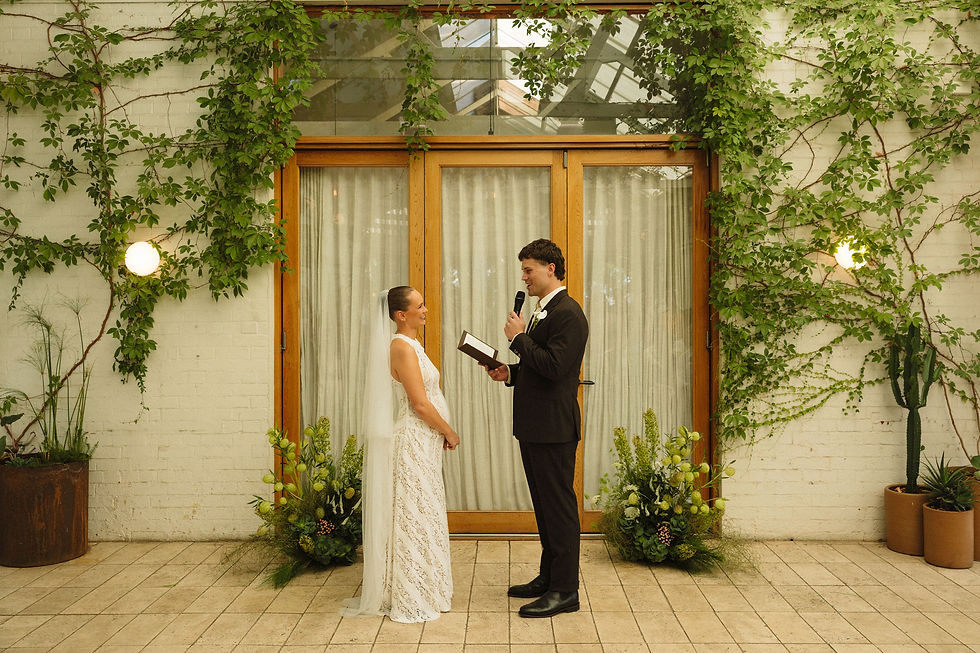
Consider an outdoor ceremony with an established garden behind it. Adding a huge floral arch may hide the very view you booked the venue for. Two carefully positioned ground arrangements might frame the couple while allowing the landscape to remain visible. In a high-ceilinged reception room, the opposite may be true: a small centrepiece alone might not give the space the presence you want.
This is where a full-service wedding florist becomes a design partner rather than simply a supplier of individual arrangements. Adelaide wedding and event floral studio Studio88flowers works across personal flowers, ceremony styling, reception florals and larger installations, allowing the design to be considered as a whole.
Design the tables for the people sitting at them
Before settling on a centrepiece, check the actual table dimensions and what else will need to fit: place settings, glassware, menus, candles, shared dishes and serving space.
On a long table, several smaller arrangements with breathing room between them may be more useful than one continuous floral runner. On a round table, a low design can keep conversation open. A tall arrangement can also work, but its structure and placement need to preserve sightlines across the table.
If you are planning a mix of low and elevated arrangements, ask to see how the two styles will relate to each other. They should share a colour direction or a recognisable flower or foliage shape; they do not need to be identical. The variation can give the room rhythm without making every table look like a separate event.
Have the florist account for the final table count, too. A concept based on ten tables will need to be revisited if your seating plan grows to sixteen. The number and dimensions of tables affect quantities, installation time and the overall quote.
Be specific about the feeling, flexible about the flower
An inspiration image is most useful when you can explain what you love about it. Is it the soft, almost monochromatic colour? The movement of the branches? The way large blooms sit beside delicate flowers? Or the fact that the arrangement feels loose rather than symmetrical?
Share those observations with your florist instead of asking for a stem-for-stem recreation. A flower pictured in an overseas spring wedding may not be readily available for your Australian wedding date. Even locally, weather and supply can affect which varieties are obtainable in a particular week.
Think of your colour palette as a direction, not a shopping list. You might ask for warm ivory, soft apricot and a little depth from foliage, then allow the designer to select varieties that provide the right shape and texture in season. If one requested flower is unavailable, the design can retain its character without relying on an exact substitute.
For outdoor summer ceremonies, add one more question: how will the flowers be kept in suitable conditions before and during the event? Bouquet storage, the amount of direct sun at the ceremony site and the time arrangements need to remain on display should all inform the flower selection and setup plan.
Decide what can move before the wedding day
Couples often ask whether ceremony flowers can be reused at the reception. Sometimes they can, and it is worth discussing early. But an installation should not be designed around an assumed second use until someone has checked the timing and the mechanics.
Freestanding arrangements made in suitable vessels may be easier to relocate than flowers fixed into the ground or built around a structure. The distance between venues matters, as does the time available between the ceremony ending and reception guests arriving. Someone also needs to be responsible for the transfer, placement and any necessary touch-ups.
Ask your florist to identify which pieces could realistically have a second location and to include any relocation work in the proposal. If the ceremony and reception take place in the same venue, the practical options may be different from those for a celebration requiring a drive across town.
The aim is to make good use of the flowers without creating a rushed setup or compromising the arrangements guests will see later in the day.

Read the floral quote as a plan for the day
A wedding flower quote should help you understand more than the cost of bouquets and centrepieces. Check what is included in design, preparation, delivery, onsite styling, hire items, installation, relocation and pack-down. Ask when final table numbers are due and what happens if the floor plan changes.
If you are comparing proposals, make sure they cover the same scope. One may include delivery and onsite installation; another may price those services separately. A hanging feature may require equipment, venue approval and additional installation time that is not apparent from a photograph of the finished flowers.
There is no need to spread the budget evenly across every part of the day. It is more useful to tell your designer which elements are non-negotiable, which would be lovely if the budget allows and which can stay simple. That conversation gives the proposal a clear direction and makes later decisions easier.
Remember the flowers beyond the venue
Some floral moments are personal rather than architectural: flowers sent to a family member who cannot attend, a bouquet for a host or a thank-you arrangement delivered after the celebrations. These do not have to match the wedding palette. They should reflect the person receiving them.
If you are arranging a separate gift, think about the recipient's preferred colours, whether they will be home to receive it and whether the flowers need to travel or be displayed immediately. An everyday delivery bouquet has a different job from an installation built specifically for a wedding venue.
For those individual gestures, Adelaide florist Carews Florist offers an option for selecting flowers outside the main event-styling brief. Keeping personal gifting separate from the reception design can make both decisions more considered.
The brief worth sending your florist
You do not need a finished mood board or a detailed list of flower varieties to begin. Send your date and venues, the latest guest and table estimates, photographs or a floor plan, a realistic budget range and three references that show the feeling you are after. Explain what you like about each image. Then identify the two or three floral moments that matter most to you.
A good floral conversation starts there: with a clear understanding of the wedding as a whole, and enough creative room to design flowers that feel as though they belong in it.


