
Beyond the Sealed Road: How Modern Explorers Engineer the Art of Remote Travel
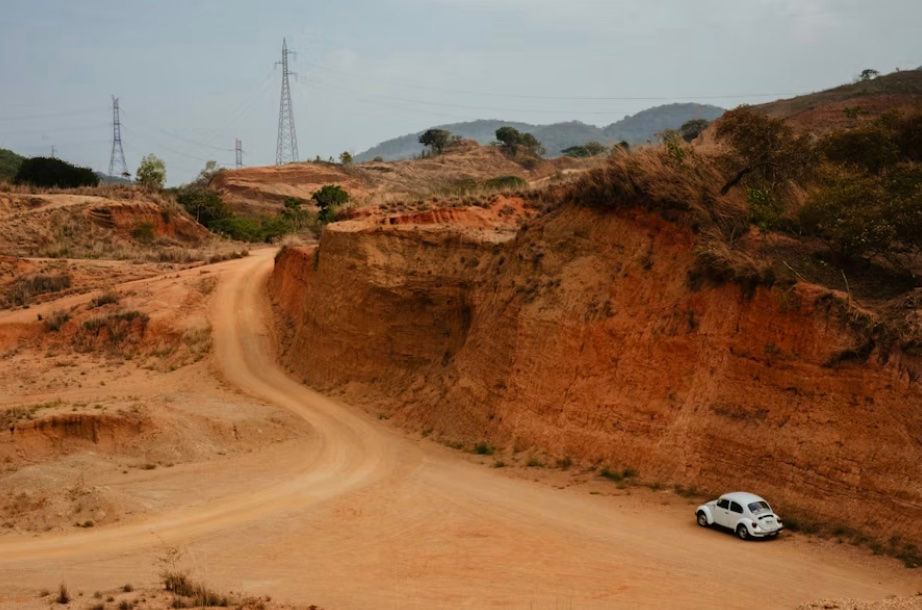
There is a specific kind of silence that exists only at a distance. Not the absence of sound but the presence of something older. Wind across stone. The creak of cooling metal after a long drive. The vast, unhurried breathing of landscape that has never been asked to perform for an audience.
Finding that silence requires leaving behind more than just the city. It requires leaving behind the infrastructure that modern life treats as invisible. Sealed roads. Mobile reception. The quiet certainty that help is never more than a phone call away.
For a growing community of travellers, that departure represents the entire point. Remote exploration has evolved from niche pursuit into a refined practice with its own culture, its own engineering standards and its own definition of luxury.
Understanding what draws people beyond the last stretch of bitumen, and how they prepare for what lies past it, reveals something compelling about what modern travellers actually seek when they use the word adventure.
The new definition of luxury travel
Luxury in travel has traditionally been measured by thread counts and service ratios. The finest hotels. The most attentive staff. The smoothest possible experience from arrival to departure.
That definition still holds for many. But a parallel understanding has emerged among travellers who measure luxury differently. For them, the highest form of travel privilege is access to places that most people cannot reach.
A private beach means nothing if a hundred other resorts line the same coast. A mountain view loses its power when shared with a crowded observation deck. True exclusivity, in this framework, belongs to those willing and able to travel where roads end and preparation determines outcome.
This is not roughing it. The modern overland traveller expects comfort. They simply accept that comfort in remote environments requires more planning and better equipment than comfort in a five-star lobby. For those planning their own luxury driving vacation, the starting point is always preparation.
Why distance appeals
The psychology of remote travel deserves examination. What compels successful, comfortable people to deliberately place themselves in environments where things can go genuinely wrong?
Part of the answer involves contrast. Lives defined by digital connectivity and constant stimulation create hunger for experiences that operate on different terms. The remote landscape does not negotiate. It does not customize itself for visitor preferences. It simply exists, and the traveller adapts or retreats.
This dynamic produces a form of engagement that structured experiences cannot replicate. Every decision carries genuine consequences. Route selection matters. Timing matters. Equipment readiness matters in ways that feel tangible rather than theoretical.
The resulting satisfaction runs deeper than relaxation. It involves competence, self-reliance and the particular pleasure of having prepared well enough to enjoy rather than merely survive.
Australia as the ultimate proving ground
Few countries test the remote traveller as thoroughly as Australia. The distances involved exceed what most international visitors can initially comprehend. Driving from Sydney to Perth covers roughly the same distance as London to Baghdad.
Between major population centres lie stretches where the nearest assistance might be hundreds of kilometres away. Temperatures in interior regions regularly exceed 45 degrees Celsius. Terrain ranges from deep sand to sharp rock to river crossings that change character with every rainfall.
These conditions have produced a domestic overland culture with sophisticated standards around preparation and equipment. Australian remote travellers approach journey planning with a rigour that reflects genuine respect for the environment they enter.
This respect manifests practically. Vehicles are prepared systematically rather than optimistically. Equipment is selected for reliability under extreme conditions rather than aesthetic appeal. Communication systems provide genuine emergency capability rather than nominal coverage.

The vehicle as mobile infrastructure
In remote travel, the vehicle transcends its role as transport. It becomes a shelter, power source, water carrier and communication platform simultaneously.
This expanded role demands preparation that casual observers might consider excessive. Multiple redundant systems serve functions that a single system handles adequately in urban environments. The redundancy exists because failure in remote settings carries consequences that urban breakdowns do not.
Electrical systems illustrate this principle clearly. A modern remote travel vehicle may carry dual battery configurations, solar charging capability, portable power stations and backup lighting systems. Each serves a specific function. Together they create resilience that no single system could provide.
Water storage, fuel capacity, recovery equipment and navigation redundancy follow similar logic. The goal is not to carry everything imaginable but to ensure that no single equipment failure creates a situation that cannot be managed with remaining resources.
Power independence as safety foundation
Among all preparation considerations, electrical independence has emerged as the most critical for modern remote travellers.
The reasoning is straightforward. Communication devices require power. Navigation systems require power. Medical equipment, water purification, lighting and refrigeration all depend on reliable electrical supply. Without power, the technological advantages that modern travellers carry become inert weight.
This reality has driven significant innovation in portable power systems. Lithium battery technology has transformed what independent travellers can carry and sustain. Solar charging has reached efficiency levels that provide meaningful supplementation even during partly overcast conditions.
Australian specialists have been particularly active in developing and curating equipment suited to the demands of outback travel. Outback SafeTrack has established its focus around providing portable power solutions, battery systems, solar panels and off-grid equipment specifically engineered for the conditions that Australian remote travel presents.
This specialisation matters because generic consumer electronics rarely withstand the vibration, dust, heat and moisture that outback conditions impose. Equipment designed for these specific challenges maintains reliability when general-purpose alternatives fail.
The engineering of confidence
Preparation creates a psychological state that directly influences the quality of the travel experience. Confidence born from genuine readiness feels fundamentally different from confidence born from ignorance.
The traveller who knows their power systems can sustain communication for days beyond planned duration travels differently from one who hopes their phone battery will last. The difference is not visible from outside. But it shapes every decision and every moment of the journey.
This engineering of confidence through preparation represents the true luxury of remote travel. Not the absence of challenge but the knowledge that challenges have been anticipated and resourced against.
The parallel with other premium pursuits is instructive. A skilled sailor does not eliminate ocean risk. They understand it so thoroughly that they can engage with it from a position of competence rather than anxiety. The same principle applies to overland travel at its best.
Route intelligence
Preparation extends well beyond vehicle and equipment readiness. Route knowledge often determines whether a journey succeeds or requires rescue.
Track conditions change with weather and season. A route passable in dry conditions may become impassable after rain. River crossings that presented no difficulty last month may be dangerously high this week. Sand conditions shift with wind patterns that have their own seasonal logic.
Experienced remote travellers gather intelligence from multiple sources before departure. Ranger stations provide current track reports. Online communities share recent observations. Satellite imagery offers perspective that ground-level information cannot provide.
This intelligence gathering continues during the journey itself. Conditions encountered in morning may change by afternoon. The flexibility to adjust plans based on real-time assessment distinguishes experienced travellers from those following predetermined routes without situational awareness.
Recovery and self-rescue
Even thorough preparation cannot prevent every incident. Vehicles get bogged in sand. Tyres puncture on hidden rocks. Mechanical components fail despite careful maintenance.
Recovery capability represents essential preparation rather than optional insurance. Snatch straps, recovery boards, high-lift jacks and air compressors constitute the basic recovery toolkit that responsible remote travellers carry.
Skill with this equipment matters as much as possessing it. Recovery operations conducted incorrectly create serious injury risks. Proper technique, practised before it is needed, transforms a potentially dangerous situation into a manageable inconvenience.
The willingness to stop and assess rather than force progress through deteriorating conditions represents perhaps the most valuable recovery skill of all. Patience has saved more remote travellers than heroics ever will.
Travelling with purpose
The most compelling remote travellers share a characteristic that transcends equipment lists and route plans. They travel with genuine purpose that goes beyond reaching a destination.
Some seek photographic opportunities that require specific light, season and solitude. Others pursue geological or ecological knowledge that remote landscapes uniquely provide. Many simply seek the restorative quality of landscape experienced without mediation.
This purpose gives journeys structure that pure wandering lacks. It provides reason to be in specific places at specific times. It justifies the preparation investment by connecting it to outcomes that matter to the individual.
Purpose also encourages responsible engagement with remote environments. Travellers who value what these places offer tend to protect them more carefully than those who treat them as backdrop for social media content.
The return
Every remote journey includes a return. The sealed road appears again. Mobile reception returns. The familiar hum of infrastructure resumes.
What persists is less tangible than any photograph. It is the memory of competence exercised in genuine conditions. The knowledge that preparation met circumstance and proved sufficient. The recalibration of perspective that only distance from routine can provide.
This is what the modern explorer actually seeks. Not hardship for its own sake. Not danger as entertainment. But the authentic experience of engaging with landscape on terms that demand genuine preparation and reward it with something that curated experiences cannot provide.
The silence found at distance stays with those who earn it. It becomes a reference point against which the noise of ordinary life is measured differently. A reminder that beyond the last sealed road lies something worth the effort of reaching.
That knowledge, once acquired, tends to draw people back. The next journey begins forming before the current one concludes. The maps come out again. The equipment gets reviewed. The preparation begins.
And somewhere beyond the horizon, the silence waits with characteristic patience.


