
Coir vs Rubber Door Mats: Which Is Better for Outdoor Use?
- Jul 29
- 7 min read
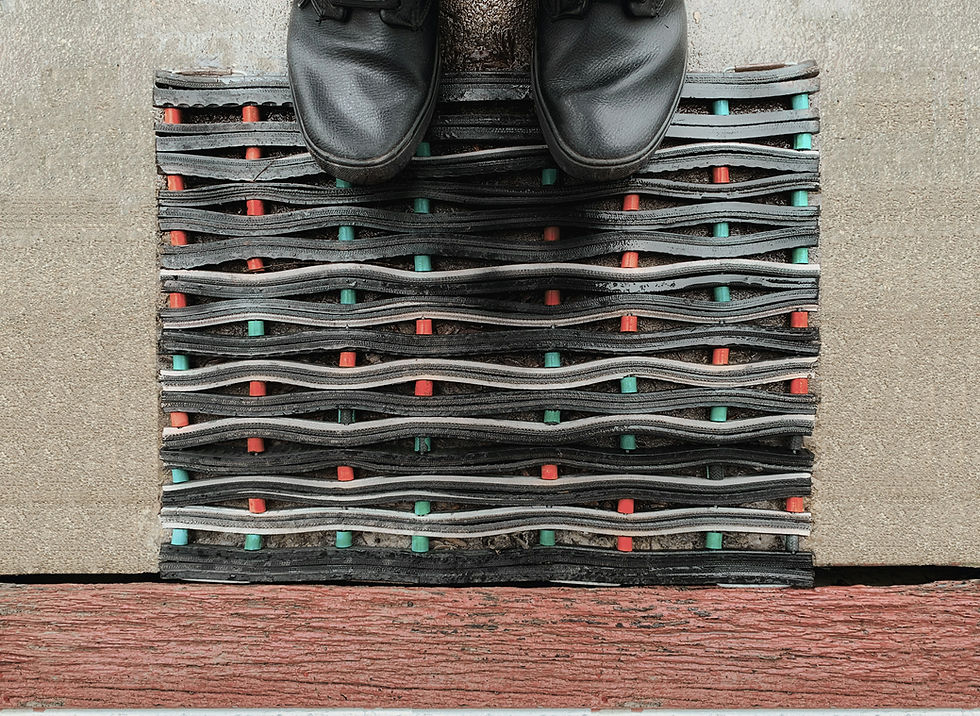
Choosing the right door mat might seem like a minor decision; however, it‘s a surprisingly big part of ensuring your home remains clean, safe, and attractive. While indoor mats are destined to contribute a lot of suffering as possible, outdoor mats get hammered by rain, snow, mud, UV rays, and a thousand pairs of shoes every day.
With thousands of material selections on the market, two are the most popular: coir and rubber. Both are popular with consumers for distinct reasons, but have very different properties for varying climates, lifestyles, and design aesthetics. This article will separate the pros and cons of using either coir or rubber door mats on your entryway.
Understanding Coir Door Mats
Coir- Coir mats are produced from coconut husk fibers, which are woven or tufted into a heavy, bristly fabric. This natural product has been used for centuries as matting owing to its rough texture, which is perfect for scraping mud and soil from shoes before they are brought indoors.
Coir mats are made from coconut husk fibers, which are woven or tufted into a dense, bristly texture. For a broader look at how coir stacks up against other popular door mat materials, see our guide on Top Materials Used in Door Mats and Their Pros and Cons.
Pros of Coir Mats
• Best For Scraping. Coir‘s rough and fuzzy surface is hard to beat for removing layers of mud and grit from shoe soles. If you have muddy boots or muddy paws walking through the house on a regular basis, coir is unparalleled.
• Natural, environmentally friendly material: Coir is the natural by-product of coconut processing. In fact, coir is an environmental friendly and renewable resource.
• Classic Aesthetic Coir mats have a cozy, rustic, natural feeling that complement more traditional, farm house, or cottage decor style homes. They also come in a variety painted or stenciled designs, initials or monogram, or seasonal themes.
• Affordability: coir mats tend to be cheaper initially than most rubber mats.
Cons of Coir Mats
• Inadequate water resistance: The major disadvantage of coir in outdoors. Coir fibers tend to soak up water rather than resist it. So, the mat remains wet for a long time.
• Mold and Mildew Risk: As coir holds water, it is susceptible to mold, mildew, and bad smells appearing if not given ample opportunity to dry out thoroughly between usage. This is considered a major issue in areas of high rainfall or humidity.
• Coir Fibers Do Not Last Long: Coir quickly decays when left outside in rain/moisture and in a UV environment. When left in these conditions, a coir mat needs to be replaced approximately every 1-3 years.
• Shedding of Coir fiber: Newly installed coir mats tend to shed loose coir fiber for the first 2-3 weeks which can be a bit of a pain.
• No backing stability in damp conditions: Several coir mats have PVC or vinyl backs to prevent slipping, but moisture can be trapped underneath resulting in faster fiber degradation and developing perfect conditions for mold.
Understanding Rubber Door Mats
Rubber mats are usually produced using natural or synthetic rubber, often reclaimed from recycled tires, and formed in different textures, designs, thickness and consistency. They‘re designed to stand the test of time and resist the elements.
Pros of Rubber Mats
• Outstanding water repellent qualities: Water rolls off the surface of the rubber easily, eliminating the absorption of water into the mat, and resulting in a fast drying time.
• Mold and Milled Resistant: Rubber does not absorb water so is much less liable to form mould, mildew and bacteria which are vital factors in humid or wet climates.
• Resilient: Rubber mats are made to resist abuse from high foot traffic, temperature extremes and UV rays without cracking or degrading rapidly. A significant amount of rubber mats last 5 to 10 years, and some make it for even longer.
• Easy to care for: Cleaning a rubber mat is quick and easy, just spray it off with the garden hose or wipe it down with a damp rag. There is no concern about fibers shedding or bacteria and other foul odor causing compounds forming in the mat.
• All-Weather Resilient: Rubber works well no matter what the weather. Unlike some materials, it won’t freeze and crack during the cold months, and it can withstand the extreme heat of summer for years without warping.
• Slip-Resistant Design: the rubber mats with a textured surface or which have raised patterns enhance grip and therefore reduce the chance of slips and falls. The rubber mats are sometimes used outdoors too where weather conditions, such as rain or ice, make slips more likely.
Cons of Rubber Mats
• Slightly Less Effective at Deep Cleaning: For extracting bottom-of-shoe dirt and pre-misting dampness, rubber mats do well. But they don‘t have the same bristling action as dry coir e.g., scraping mud with coir.
• Larger and Heavier: Rubber mats have a tendency to be larger/heavier than the coir so are more difficult to shake and move about. This also makes storage more complicated.
• Odor When New: a hand full of rubber mats, are made from recycled tires, is known to be produce a rubber-pepper odor initially when released. However, this should dissipate in a few days to weeks of outdoor airing.
• Less Natural Aesthetic- Rubber mats come in a variety of designs; however, they tend to lack the natural, textured warmth of coir. Today, however, the manufacturing process of rubber mats has increasingly resulted in decorative and brightly colored designs.
• More expensive initially; it is, of course, more expensive to buy quality rubber mats with backing reinforcement or complex designs than conventional coir mats however the higher initial investment can be offset by their extended life span.
Head-to-Head Comparison
Durability in Various Climates
If you are living in a place that gets a lot of rain and snow or high humidity rubber is definitely the most suitable. This is because of the water resistent qualities rubber possesses that prevents it from breaking down as quickly and becoming a wet, moldy pile after a storm. While coir is very attractive it performs poorly in areas that get the consistent wet conditions and needs more maintance.
In situations where the climate is less humid and the rainfall less frequent, coir has the potential to perform very well, possibly outliving expectations as the main reason for its demise: over exposure to water is less likely to occur.
Maintenance Requirements
Cleaning Maintaining rubber mats is about as easy as “set it and forget it”. Dirt falls right off, and the mats dry quickly. Coir mats require more work are best regularly shaken out and are then dried thoroughly when wet. They should be vacuumed or brushed periodically to remove any dirt and debris that becomes lodged between the fibers. During the wet season, a few homeowners are known to flip their coir mats inside each evening to dry out, and then bring them back out in the morning.
Safety Considerations
Rubber doormats with rough, slippery surfaces provide increased grip and reduced risk of slipping in moist, icy, snowy climates. Coir mats, which when wet are just as slippery as dirt floors, are therefore less advantageous when needed the most.
Environmental Impact
If sustainability is most important, then coir is a natural, biodegradable material which is sourced from a renewable source. Rubber mats are also environmentally beneficial as they are a waste product, these are created from recycled tires or waste; virgin rubber mats have a much larger environmental impact. If it is an environmentally friendly product you are after, search for the recycled rubber mats.
Cost Over Time
Despite a lower initial cost, coir mats won‘t last as long. Which means more frequent replacements (1 to 3 years versus 5 to 10 for rubber) and contributed to the overall economic benefits of rubber when calculated over the five-year timeframe on a way.
Which are you to choose?
The right choice ultimately depends on your specific circumstances:
When to Choose Coir
• You reside in a temperate or humid climate with low to medium precipitation
• You are naturally inclined towards the look of the rusticity, naturalness.
• The green product you desire is first of all inexpensive.
• You are okay with doing routine maintenance and replacing the mat every couple of years.
• It is your main concern to scrape off the dirt, mud and do not worry about the water resistance.
When to Choose Rubber
• You live in an environment that is wet rain, snow, or both
• You‘re looking for something durable that won‘t require much care.
• Many aspects of slip resistance and safety are important.
• Aren‘t as cheap to purchase, but are a better long-term Investment as although the initial cost is more, they‘re significantly cheaper in operation.
• You require a mat that will work year-round.
A Hybrid Solution: Best of Both Worlds
If you love the dirt scraping ability of coir but are concerned about its tendency to hold moisture consider a hybrid solution. A lot of manufacturers now produce coir mats with a rubber backing, or rubber framed mats with a coir insert in the middle. These mixes have the best of both worlds, the aggressive dirt scraping top layer and the otherwise water resistant and firm backing and frame of the rubber.
There are also a few early adopters of a two coir mat system, a coir mat for the first, vigorous scraping set back a little from the door and a rubber mat at the door threshold which allows a final slip resistant step into the house and removes any residual water.
Still unsure which material suits your project best? At Miracle Custom, we offer OEM and wholesale custom door mats in all major materials, tailored to your size, design, and budget requirements.
Conclusion
In general for just outdoor toughness, weatherproofness and durability in the long run, rubber mats usually beat coir for the same purpose particularly if you live in an area prone to a good deal of rain, snow, or dampness. Since rubber can stand up to rotting and rotting-inducing factors like mold, mildew, and moisture, it‘s sure to last out in the elements.
Nonetheless coir mats have their own merit for homeowners in drier areas than extreme humid areas or for those who go after natural materials, conventional looks and good mud-scraping capability.
In the end, the best door mat is the one that will suit your weather, cleaning ease, and decor needs. Whatever one you decide on, a good outdoor mat can do the most to keep your floors cleaner, prevent dirt from being carried inside, and improve how welcoming your entrance feels.


