
Colour Consultants: What Do They Actually Do?
- Jul 17
- 4 min read
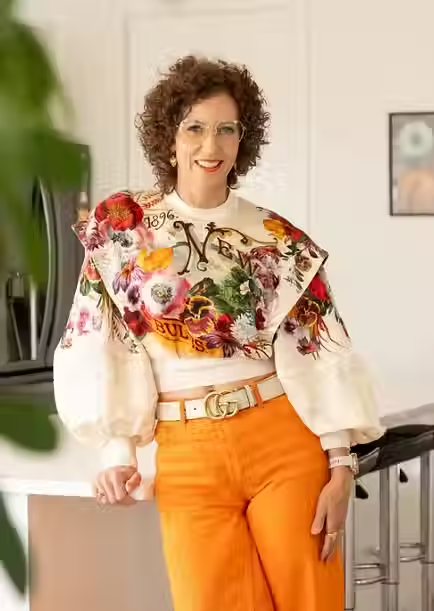
Most people have a drawer full of clothes they basically never wear. Not because the pieces are ugly or badly made, just because something about the colour never quite sat right. Looked fine under the shop lighting, then got home and suddenly felt off.
That's basically the whole problem a colour consultant exists to fix, and the process behind it is a lot more precise than most people assume going in.
The Basic Idea
Everyone's got an underlying skin undertone, warm or cool, plus a certain depth and clarity to their natural colouring. Hair, eyes and skin all factor into it.
A consultant's job is figuring out where you actually land, then turning that into a palette you can genuinely use. Shopping, getting dressed, picking makeup, even choosing jewellery gets a whole lot easier once you know what naturally works with your colouring.
Sounds straightforward written down like that. It isn't always. Plenty of people walk in assuming they're one thing, cool toned for example, then walk out realising they've had it backwards for years.
What Actually Happens In A Session
Sessions usually run somewhere between an hour and two hours, and most start with draping, holding different fabric swatches up near your face under lighting that's designed to strip out any colour bias from the room.
Some fabrics will genuinely lift you, brightening your skin, softening redness or making shadows under your eyes far less noticeable. Others do the exact opposite, and it's honestly a bit surprising how obvious the difference becomes once you see everything side by side.
Some consultants go well beyond a simple warm-cool split too. There are systems working across sixteen different colour directions rather than the traditional four seasons approach, which matters if your colouring sits somewhere between the obvious categories. Honestly, that's where a lot of people seem to end up.
By the end you'll usually walk away with a physical or digital swatch of your palette, something you can actually pull out while shopping or check before ordering clothes online.
It Goes Well Beyond Clothes
Clothing's the usual reason people book in the first place, but the palette applies to much more than your wardrobe. Makeup shades, hair colour decisions, jewellery and accessories can all look completely different depending on whether you're working with your natural colouring or against it.
There's also another benefit that people don't always expect. Shopping gets quicker. Getting dressed stops feeling like a guessing game every morning. You stop buying things that looked great on the hanger but somehow never felt quite right once you got them home.
That part tends to surprise people more than the colour analysis itself.
Who Actually Books These?
There's a bit of a myth that colour analysis is only for people already deep into fashion. Mostly it's the opposite.
Most clients book because they're stuck, not because they're stylish.
Feeling like nothing in the wardrobe goes together. Defaulting to black because it feels safe rather than because it actually works. Coming out of a big life change and wanting a clearer idea of where to start again. Or simply getting tired of second guessing every purchase.
Worth saying too, it's not tied to any particular gender. Anyone wanting a clearer answer on what actually suits them is a fair candidate.
What A Good Session Should Leave You With
More than a list of flattering colours, ideally.
You should come away understanding why certain shades work, how your palette fits together as a whole rather than as a random list, and how to actually use that when you're standing in a shop deciding between two nearly identical tops.
A decent consultant will often go through a few things you already own too, especially the pieces you've never quite trusted, so you can see in real time whether they work with your new palette or not.
Can Your Colours Change?
One question that comes up fairly often is whether your colours actually change over time.
Usually, your underlying undertone stays the same. But other things can shift. Hair turning grey, spending more time in the sun, or making a major hair colour change can all influence which shades within your palette become the most flattering.
That's why some people come back years later for another consultation. It doesn't necessarily mean you'll end up in a completely different palette, but it can help fine-tune the colours that suit you best now.
Picking The Right Consultant
Not every consultant runs their sessions the same way, so a few questions are worth asking before you book anything.
Do they use physical draping, virtual tools, or a mix of both? How many colour categories does their system actually use? And do you walk away with something practical, a swatch, a digital reference, or just verbal advice you'll have forgotten by next Tuesday?
If you're on the fence about whether it's worth the money, a colour consultant can often save you more than the session costs just by helping you avoid shopping mistakes. That's especially true if your wardrobe is quietly full of things you never actually wear.
So Is It Worth Doing?
For most people, yeah.
It's rarely about turning into someone else or throwing out your whole wardrobe overnight. It's really just about cutting out the guesswork, finally understanding why some colours have never worked for you, and having an actual starting point for how you get dressed going forward.
You'll probably still buy the occasional piece that doesn't quite work, everyone does. But once you know your colours, those expensive mistakes usually become a lot less common, and shopping starts feeling a whole lot easier.
Whether it's a one-off session or the first step into something bigger, colour analysis is one of those things people tend to say they wish they'd done years earlier.


