
Customizable Baseball Sunglasses: A Team Buyer's Ordering Guide
- 4 days ago
- 6 min read
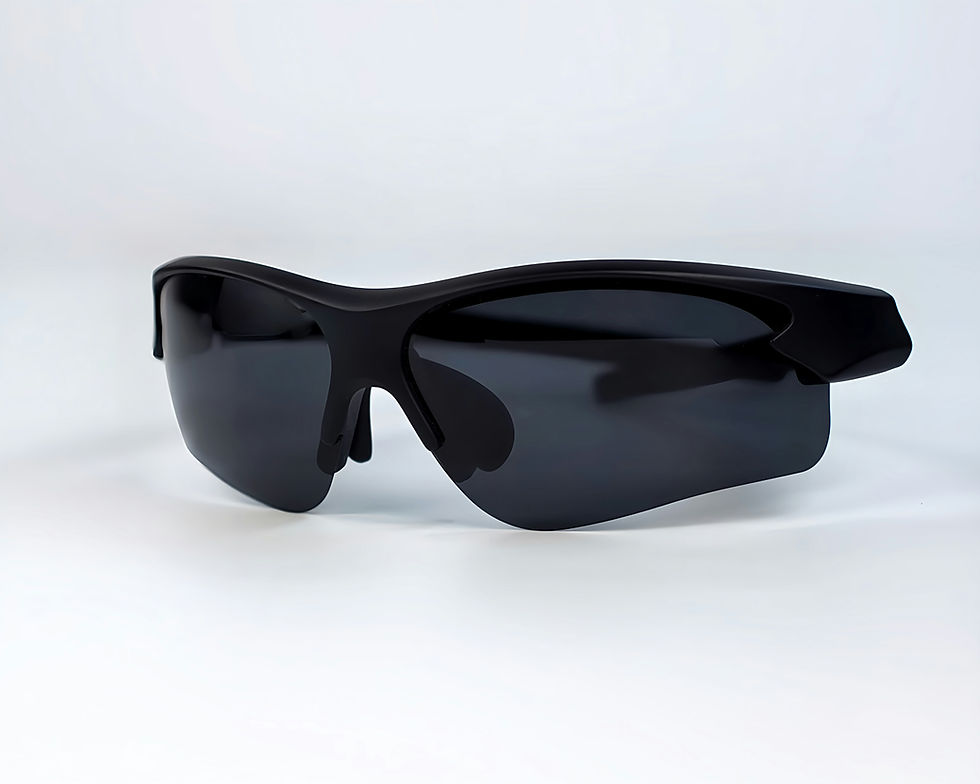
Ordering customizable baseball sunglasses for a team, league, or retail program involves more moving parts than picking a style off a shelf — color decisions, logo approval, sizing across different players, and timing everything around a season schedule. This guide focuses specifically on the ordering process: how to plan, what decisions need to be made early, and how to avoid the scheduling and coordination mistakes that most often trip up team buyers.
Start With a Timeline, Not a Catalog
The single biggest planning mistake with customizable eyewear orders is starting by browsing styles before mapping out a realistic timeline. Custom production — logo application, color matching, proof approval — takes meaningfully longer than ordering stock sunglasses, and missing a deadline usually means players start the season without their gear.
A reasonable planning approach:
Set your "must-have-by" date — typically the first team practice or a key promotional event
Work backward to account for shipping time
Add buffer time for the proof approval and revision cycle
Add supplier production lead time on top of that
That gives you your order deadline — often several weeks to a couple of months before you actually need the product in hand
Starting the sourcing conversation with suppliers this early also gives you more room to negotiate pricing and confirm quality through samples, rather than rushing a decision under deadline pressure.
Who Needs to Be Involved in the Decision?
For team or league orders, sunglasses decisions often involve more stakeholders than a single purchase — and getting input early avoids costly reorders later.
Coaches or team management – Final say on colors, logo placement, and budget
Booster clubs or fundraising coordinators – Especially relevant if sunglasses are being sold to fund team expenses
Players or parent representatives – Useful for gauging fit preferences and sizing needs, particularly for youth teams
School or league branding authority – For programs with strict logo usage guidelines, confirming brand compliance before finalizing artwork avoids rework
Looping in these stakeholders before requesting a final production proof — not after — saves significant time in the ordering process.
Choosing Colors and Branding: Practical Considerations
Matching Existing Team Colors
Request the supplier's full color range early and cross-reference against your team's official color codes (many programs have specific hex or Pantone codes for consistency across all gear) to avoid mismatched shades between sunglasses and uniforms.
Logo File Requirements
Confirm what file format and resolution the supplier needs for logo application — low-quality or incorrectly formatted logo files are one of the most common causes of production delays or disappointing final results.
Single-Color vs. Multi-Color Logos
Some customization processes handle multi-color logos more easily (and affordably) than others — clarify this early, as simplifying a logo for eyewear application may sometimes be necessary depending on the production method used.
Consistency Across Gear
If sunglasses are part of a broader gear package (hats, jerseys, bags), consider ordering from the same supplier or explicitly cross-referencing color and logo specs to maintain visual consistency across the full team kit.
Sizing Across a Team: A Practical Approach
Unlike ordering a single pair for personal use, team orders need to account for a range of head sizes and player ages, especially for youth programs:
Collect general size ranges from your roster in advance where possible, rather than guessing at a standard distribution
Ask the supplier about adjustable fit features (flexible temples, adjustable nose pads) that can accommodate a wider range of players with fewer distinct size SKUs
Order a small size-range buffer beyond your exact roster count to account for growth, new players joining, or fit issues discovered after distribution
For youth leagues spanning multiple age groups, confirm whether the supplier offers distinct youth and adult sizing rather than a single one-size-fits-most option
Managing the Proof and Approval Process
Most reputable suppliers provide a digital proof — a visual mockup showing logo placement, color matching, and overall design — before moving to full production. Treat this step carefully:
Review against your actual brand guidelines, not just visual approval by eye
Get sign-off from all relevant stakeholders before approving, since revisions after production begins are often costly or impossible
Confirm the proof reflects the actual production method (some proofs are digital renderings that may not perfectly represent the final physical product — ask if a physical sample is available for high-stakes or large orders)
Keep written records of proof approval, useful if disputes arise about the final product matching what was agreed
Rushing or skipping thorough proof review is one of the most common reasons teams end up dissatisfied with a bulk custom order.
Budgeting for a Team Order
When budgeting for customizable baseball sunglasses at the team or league level, account for:
Base unit cost, which varies by lens technology and frame quality
Customization fees, often charged per color or per logo complexity level
Setup fees, which some suppliers charge once for new logo artwork setup, separate from per-unit costs
Shipping costs, particularly relevant for time-sensitive orders requiring expedited delivery
Buffer inventory, extra units beyond exact roster count for new players, replacements, or fundraising sales
Building a complete budget picture upfront — rather than just comparing base per-unit prices across suppliers — leads to more accurate cost comparisons and fewer budget surprises.
Handling Reorders and Mid-Season Additions
Teams often need to handle new players joining mid-season or replacing lost/damaged sunglasses. To plan for this:
Confirm with your supplier whether small reorders are feasible without hitting a new minimum order quantity, or whether you'll need to wait for a larger batch reorder
Keep your approved logo files and color specifications on record so reorders can reference the exact same production setup rather than restarting the proofing process
Consider ordering a small buffer stock upfront specifically to handle these situations without needing an urgent, potentially more expensive small reorder
Working With Retail Partners vs. Direct Manufacturers
Teams and leagues have two general sourcing paths:
Local sporting goods retailers or team gear specialists Often provide more hands-on guidance through the customization and ordering process, which can be valuable for teams without prior bulk-ordering experience, though potentially at a higher cost than direct sourcing.
Direct-from-manufacturer or wholesale suppliers Can offer better pricing at volume, but typically require the buyer to manage more of the process independently — logo file preparation, size planning, and proof review — without as much hands-on guidance.
Teams newer to bulk ordering may benefit from the extra support of a retail partner, while experienced program coordinators managing repeat annual orders may find direct sourcing more cost-effective over time.
Frequently Asked Questions
How far ahead of the season should a team start the ordering process? Given production and proofing timelines, starting the process several weeks to a couple of months before the sunglasses are needed is generally a safer approach than ordering close to season start.
What's the best way to handle players who join the team after the main order ships? Keeping a small buffer stock on hand, or confirming reorder feasibility with your supplier in advance, helps avoid scrambling to outfit late additions to the roster.
Do all teams need to go through a formal proof approval process? Most reputable suppliers include this step for custom logo orders, and it's strongly recommended even for smaller teams, since it's the primary safeguard against costly production mistakes.
Is it cheaper to order directly from a manufacturer instead of a retail partner? Direct sourcing can offer better per-unit pricing, particularly at higher volumes, but often requires the buyer to manage more of the process independently compared to working with a retail partner.
How do I make sure sunglasses colors match our other team gear? Providing your supplier with specific color codes (rather than a general color description) and comparing physical samples where possible helps ensure closer consistency across your full team gear package.
Final Thoughts
Ordering customizable baseball sunglasses for a team or league is fundamentally a coordination challenge as much as a purchasing one — timeline planning, stakeholder input, sizing across a roster, and careful proof review all matter as much as the underlying product quality. Teams that start early, involve the right people at the right stages, and build a realistic budget and timeline are far more likely to end up with gear that fits, matches, and arrives on time for the season ahead.


