
Darker Glass Makes A Bathroom Feel Larger
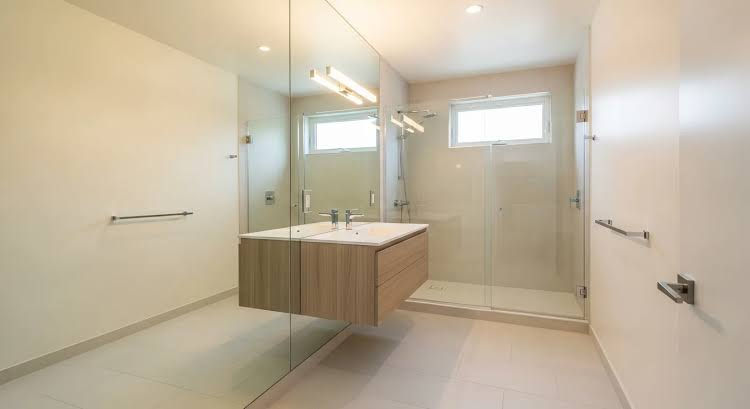
A clear frameless enclosure is the default specification in high-end bathrooms, and the reasoning is sound: glass disappears, the room reads as one volume, and nothing interrupts the line of sight to the far wall.
What the drawing does not show is everything the glass fails to hide. Fixtures, drain, tiled niche, every plumbing decision, and every water mark. Clear glass is honest about all of it, all the time.
Tinted and textured glazing takes a different position. It keeps the volume open and edits what is inside it, and in the right room that produces a space that reads larger rather than busier.
Tone Changes Depth Perception
A bathroom is a small room with hard reflective surfaces, and the eye reads its size partly from contrast.
Clear glass presents the far wall at full brightness, which puts a hard visual stop at the back of the shower. A tinted panel softens that stop. The wall behind it recedes, the transition between wet zone and dry zone becomes gradual, and the room reads as continuing rather than ending.
This works best where there is light to spare. A bathroom with a window, a skylight, or generous artificial lighting can afford the reduction in transmission that tinted glass involves. A windowless internal bathroom generally cannot, and a dark panel there makes the shower feel like a closet.
The relationship is worth testing on site rather than assuming. The same glass reads very differently against white marble and against dark stone.
The Privacy Gradient Is Not Binary
Designers tend to describe glass as clear or obscured, when in practice there is a range and each point on it behaves differently.
Reeded glass, with its vertical ribbed profile, diffuses the view without dimming the room. Light passes through largely intact while detail behind it breaks up into vertical bands. It is the option that gives the most privacy per unit of light lost, and it introduces a texture that reads as deliberate rather than defensive.
Acid-etched and frosted finishes work differently, producing a soft semi-opaque surface that scatters light evenly. The effect is diffusion rather than distortion, and it obscures more thoroughly than reeding at the cost of a flatter appearance.
Tinted glass obscures through reduced transmission rather than through texture. The view is still geometrically clear, just darker, which means it does more for atmosphere than for concealment.
Combining these is common in practice. A tinted panel with a reeded profile obscures and dims simultaneously, which is usually more than a domestic bathroom needs.
Where Tint Earns Its Place
Specifying a smoked glass bathroom door is an aesthetic decision before it is a functional one, and it suits particular rooms rather than all of them.
It works where the bathroom is generously lit and the palette is warm or dark, since tint against dark stone or timber reads as a continuation of the material story rather than as a foreign element. It works where the enclosure is a visual feature of the room instead of something meant to disappear.
It works less well in small, pale, north-facing rooms, where the reduction in light is noticeable and the tint reads as heavy.
The practical benefit that gets underrated is what tint does to the interior of the shower. Fixtures, controls, and the inevitable collection of bottles all become less prominent behind tinted glass, which is why a shower with a busy interior often photographs better behind tint than behind clear glass.
Texture Does The Maintenance Work
The unglamorous argument for anything other than clear glass is cleaning.
Clear glass shows water spots, fingerprints, and soap residue immediately, and in hard-water areas it shows mineral deposit within days. Keeping a clear frameless enclosure looking like the day it was installed is a routine, not an occasional task.
Textured and etched surfaces conceal all three considerably better. Reeded and frosted finishes break up the visual field enough that residue does not read as a mark, which means the enclosure stays looking clean for longer between wipe-downs.
Tint alone does less for this than texture does, since a smooth tinted surface still shows deposits, just against a darker background. For a bathroom where maintenance is a real consideration rather than a theoretical one, a textured finish is the more practical specification.
Thickness And Hardware Determine The Result
Specifying the glass is half the decision. How it is carried is the other half.
Heavy glass, typically 10mm or 3/8 inch, is what makes a frameless enclosure possible. It has the rigidity to span without a frame and the mass to feel substantial when moved, and that weight is precisely why the hardware and the substrate behind it matter.
Hinges on a frameless door transfer the entire load into whatever they are mounted to. A stud wall without adequate blocking will not hold a heavy glass door for long, and the failure is gradual: the door drops slightly, stops closing cleanly, and starts to bind.
Framed and sliding arrangements distribute load differently and suit openings where a swinging door would foul a fixture or where the run is wide. Sliders keep the swing arc out of a tight room, which in a compact bathroom is often the deciding factor regardless of the aesthetic preference.
Hardware finish is where the specification either resolves or does not. A tinted panel with brushed brass hardware reads as intentional. The same panel with whatever the installer had in stock does not.
Lead Time Is The Constraint Nobody Plans For
Specialty glass is made to order and cut to size. It does not sit in a warehouse waiting.
That means the enclosure has to be measured after the walls are set and the tiling is complete, since a frameless installation depends on the opening being accurate, and it means the glass then has a fabrication and delivery period before anything can be installed.
Projects that treat the shower enclosure as a late decision discover that it is the item holding up handover, with the bathroom otherwise complete and unusable.
Ordering samples early is the other half of this. Glass tone and texture look different in a showroom, in a photograph, and in the actual room under the actual lighting, and the difference is large enough to change the choice.
Three Things To Establish
How much light the room genuinely has, measured at the time of day it is used rather than at midday.
Whether the priority is privacy, atmosphere, or maintenance, since the three point toward different finishes.
Whether the wall construction will carry the hardware, confirmed before the tiling goes on rather than after.
Clear glass is the safe specification and it is rarely the most interesting one. The alternatives change how the room reads, and they ask for a few decisions to be made earlier than usual.


