
Deep Pour Epoxy: The Complete Guide
- 2 days ago
- 4 min read
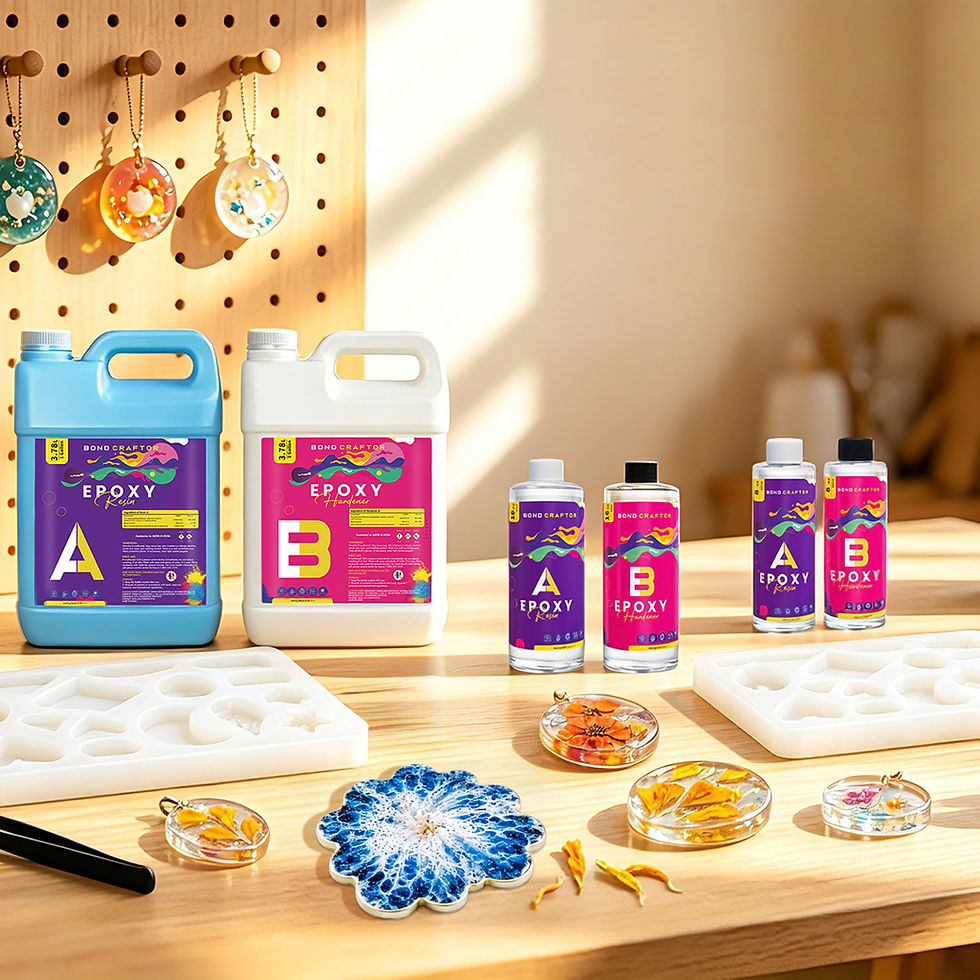
If you've ever admired a river table with a thick, glass-like band of resin running through it, you've seen deep pour epoxy in action. This specialized resin has become a favorite among woodworkers, furniture makers, and DIY enthusiasts for its ability to create stunning, deep, crystal-clear castings in a single pour. But what exactly makes deep pour epoxy different from the standard epoxy you might use for a tabletop coating, and how do you work with it successfully? This guide covers everything you need to know.
What Is Deep Pour Epoxy?
Deep pour epoxy is a two-part resin and hardener system engineered specifically for casting thick sections of clear, hardened resin — typically anywhere from 1 inch up to 4 inches in a single pour, with some premium formulations allowing even deeper single-stage pours. This sets it apart dramatically from standard casting or tabletop epoxy, which is generally limited to thin layers of about 1/8 inch to 1/2 inch per application.
The distinction matters because epoxy curing is a chemical reaction that generates heat as it hardens, a process known as exothermic curing. In a thin layer, that heat dissipates quickly and harmlessly into the air. But in a thick pour, the heat becomes trapped in the center of the mass, and the reaction accelerates itself, generating a feedback loop of intensifying heat. Without a formula designed to handle this, the result can be cracking, yellowing, cloudy or hazy patches, warping, or in extreme cases, a batch that starts smoking or even catches fire.
The Science Behind Deep Pour Formulas
Manufacturers solve the heat problem by re-engineering the chemistry of both the resin and the hardener. A few key adjustments make deep pour epoxy behave so differently from its standard counterpart:
Slower reaction kinetics. The chemical reaction between resin and hardener is deliberately slowed down, spreading heat generation out over a much longer period so it never builds to a dangerous or damaging peak.
Lower viscosity. Deep pour epoxy is formulated to be thinner and more fluid than standard epoxy. This lower viscosity allows the material to self-level more effectively and, critically, makes it much easier for air bubbles to rise and escape before the resin sets — a serious concern in a deep, dense pour where bubbles have a long way to travel.
Extended working time. Where standard epoxy might give you 20 to 45 minutes of workable pot life before it starts to thicken, deep pour epoxy can offer several hours. This extended window is essential for large pours that take time to mix, pour, and settle.
Longer full cure time. As a trade-off for the slower, safer reaction, deep pour epoxy typically takes 48 to 72 hours (or longer) to fully cure and harden, compared to roughly 24 hours for standard formulations.
Common Applications
Deep pour epoxy has become closely associated with a handful of signature projects:
River tables. The most iconic use case, where deep pour epoxy fills the gap — the "river" — between two live-edge wood slabs, creating the illusion of flowing water frozen in glass-like resin.
Bar tops and countertops. Especially those with embedded objects like coins, shells, bottle caps, or photographs that need to be fully encased in a thick, clear layer.
Table legs and sculptural pieces. Furniture makers use deep pour epoxy to create solid-looking resin table legs, geode-style art pieces, and other objects requiring substantial clear sections.
Filling voids and defects in wood. Live-edge slabs often have cracks, knots, and bark inclusions that need to be filled with a thick, stable layer of epoxy to make the piece structurally sound and visually seamless.
Popular Brands
Several manufacturers have built reputations specifically around deep pour formulations, including MAS Deep Pour, Tabletop Deep Pour epoxies, Puduo, and Coosaf, among others. Each brand differs slightly in maximum pour depth per application, cure time, clarity, and UV resistance, so it's worth checking the technical data sheet for the specific product you're considering.
How to Work With Deep Pour Epoxy Successfully
Know your maximum pour depth. Every deep pour product has a maximum recommended depth per single pour, usually stated clearly on the label or technical data sheet. Common limits range from 2 inches to 4 inches. If your project requires more depth than the product allows, you'll need to pour in stages, letting each layer partially cure before adding the next.
Seal the wood first. Raw wood, especially live-edge slabs, contains air and moisture that can off-gas into your resin as it cures, causing unsightly bubbles. A thin seal coat of standard epoxy applied and cured before the deep pour helps lock in the wood and prevent this issue.
Control your environment. Temperature has an outsized effect on how epoxy cures. A workspace that's too cold slows the reaction and can leave the epoxy tacky or improperly cured. A workspace that's too hot speeds up the reaction, increasing the risk of overheating, cracking, and bubbling. Most manufacturers recommend a stable room temperature between 70°F and 75°F (21°C to 24°C) for best results.
Mix thoroughly and measure precisely. Deep pour epoxy is unforgiving of incorrect resin-to-hardener ratios. Even small measurement errors can prevent proper curing, leaving you with a soft, tacky, or cloudy result. Use a reliable scale rather than volume measurements whenever possible, and mix for the full time recommended by the manufacturer.
Be patient with cure time. Because deep pour epoxy is formulated to cure slowly, resist the temptation to sand, drill, or handle your piece before the manufacturer's full cure time has elapsed, even if the surface feels hard to the touch. The center of a thick pour can remain soft long after the surface has set.
Watch for bubbles and debris. Even with a low-viscosity formula, deep pours benefit from a heat gun or torch pass over the surface shortly after pouring to help pop any bubbles that rise to the top. Covering the piece loosely with a box or plastic sheeting (not sealed airtight) can also help keep dust and debris from settling into the curing resin.
Final Thoughts
Deep pour epoxy has opened up creative possibilities that simply weren't practical with standard resin — thick, clear, dramatic castings that would otherwise crack, cloud, or overheat during cure. Its success comes down to respecting the chemistry: pouring within the recommended depth limits, controlling your environment, measuring accurately, and giving the material the time it needs to cure fully. Whether you're building your first river table or filling voids in a live-edge slab, understanding these fundamentals will help you get a clear, durable, professional-looking result.


