
Designing Energy-Resilient Luxury Homes with Storage
- Jul 16
- 8 min read
Introduction
Luxury homes have traditionally been defined by premium architecture, high-end finishes, and advanced smart-home technology. Today, however, homeowners, architects, and developers are placing equal importance on energy resilience. Increasing weather-related disruptions, changing energy demands, and growing reliance on connected home systems have made reliable power an essential component of modern residential design.
Rather than treating battery storage as an emergency solution, many luxury projects now incorporate it as part of the home's long-term electrical infrastructure. Planning for energy resilience from the earliest design stages helps preserve comfort, protect critical systems, and support future technologies without compromising aesthetics.
This guide explains how battery storage can be thoughtfully integrated into luxury homes, covering backup strategies, battery room planning, solar and inverter sizing considerations, HVAC requirements, and the flexibility needed for future household expansion.
Key Takeaways
Energy resilience is becoming a defining feature of modern luxury home design.
Battery storage delivers the best results when planned during the architectural design phase.
Proper system sizing should account for household loads, HVAC demand, and future electrical expansion.
Whole-home and essential-load backup strategies serve different performance goals.
Battery storage should be viewed as long-term residential infrastructure rather than only emergency backup.
Why Energy Resilience Is Becoming Part of Luxury Home Design
Luxury living has evolved beyond elegant interiors and sophisticated automation. Homeowners increasingly expect uninterrupted comfort, reliable power, and systems that continue operating during utility disruptions. Climate-related events, aging electrical infrastructure, and higher household electricity consumption have made resilience an important design objective instead of an optional upgrade.
Modern luxury homes also depend on interconnected technologies that require continuous electricity. Security systems, automated lighting, climate control, communication networks, and intelligent home management platforms all contribute to daily convenience. Even short power interruptions can affect safety, comfort, and the overall homeowner experience. As a result, architects and developers are giving greater attention to electrical resilience during the earliest planning stages.
Energy resilience also supports long-term property value. Buyers increasingly recognize that homes designed for reliable energy management are better prepared for future technologies, changing utility conditions, and evolving lifestyle needs. Rather than making costly modifications after construction, integrating battery storage early creates a more efficient and adaptable electrical foundation.
Before selecting equipment, architects and electrical contractors should determine whether the property requires essential-load protection or a complete whole-home battery backup strategy. Making this decision during the design phase helps guide battery sizing, electrical room layouts, solar integration, inverter selection, and future expansion planning while ensuring the home's performance aligns with homeowner expectations.
Whole-Home Backup vs. Essential-Load Protection
Choosing the right backup strategy begins with understanding how the home will be used during a power outage. Some homeowners want every circuit to remain operational, while others prefer to keep only essential systems running until utility power returns. The appropriate solution depends on lifestyle expectations, electrical demand, available installation space, and long-term energy goals.
Whole-Home Backup | Essential-Load Backup |
Powers the entire residence | Powers selected critical circuits |
Higher capacity | Lower capacity |
Greater comfort | Lower installation cost |
Ideal for luxury properties | Suitable for budget-conscious installations |
Whole-home backup is often preferred in larger custom residences where uninterrupted comfort is a priority. It allows HVAC systems, refrigeration, lighting, security equipment, entertainment systems, and home automation to continue operating with minimal disruption. This approach provides a seamless experience that matches the expectations of many luxury homeowners.
Essential-load protection focuses on critical circuits such as refrigeration, communication equipment, lighting, medical devices, security systems, and selected outlets. While it generally requires a smaller battery system, it also involves careful prioritization of electrical loads during an outage. This option may be appropriate when budget, installation space, or energy requirements make full-home backup less practical.
Neither approach is universally better. Instead, the decision should be based on a professional evaluation of household energy consumption, backup expectations, and future expansion plans. Early coordination between architects, electrical engineers, and solar professionals helps ensure the chosen strategy integrates smoothly into the home's overall design.
Planning Battery Storage During the Architectural Design Phase
Battery storage performs best when considered during the earliest architectural planning rather than after construction is complete. Early coordination allows designers to allocate suitable installation space, simplify electrical routing, and avoid costly structural modifications later in the project.
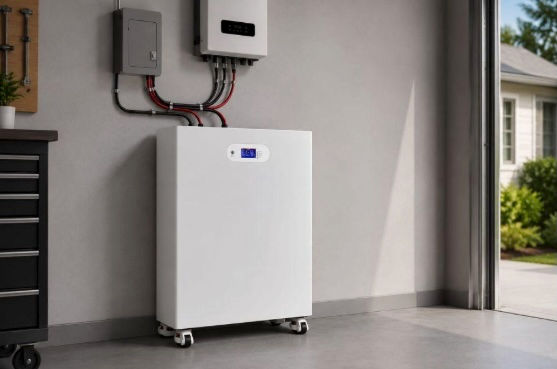
A dedicated battery room should provide adequate ventilation, appropriate electrical clearances, convenient maintenance access, and protection from environmental conditions that could affect long-term system performance. Designers should also consider cable routing, equipment accessibility, structural loading, and noise management so the installation remains functional without affecting the home's appearance or everyday living spaces.
Local electrical codes and manufacturer installation requirements should guide every stage of planning. Working closely with qualified electrical professionals from the beginning helps ensure the battery system integrates safely, supports future upgrades, and complements the overall architectural vision rather than becoming an afterthought.
Matching Solar Panels, Inverters, and Battery Capacity
A well-designed energy-resilient home depends on more than simply adding solar panels or battery storage. These components must be carefully matched to work as an integrated system that supports the home's daily energy needs, backup objectives, and future expansion plans. Oversizing or undersizing one component can reduce efficiency, increase costs, or limit backup performance during extended outages.
Solar panel capacity determines how much electricity can be generated under normal weather conditions, while battery storage determines how much of that energy can be stored for later use. The inverter acts as the bridge between solar production, battery storage, household loads, and the electrical grid. Because these systems work together continuously, they should always be designed as a complete energy solution rather than independent pieces of equipment.
Household energy consumption also plays an important role in system sizing. Daily electricity usage, seasonal changes in solar production, backup duration goals, and the number of critical loads all influence the final design. Rather than relying on generalized estimates, designers should evaluate actual consumption patterns to create a balanced system.
Planning Checklist
Estimate daily and seasonal electricity demand.
Match solar generation with battery capacity.
Select an inverter that supports expected household loads.
Consider backup duration during extended outages.
Allow capacity for future electrical expansion.
Sizing Battery Storage for Larger Luxury Residences
Luxury homes often consume significantly more electricity than standard residences because they include larger HVAC systems, advanced home automation, multiple refrigeration units, entertainment spaces, security equipment, swimming pools, and guest accommodations. These additional loads make battery sizing an important part of the overall design process rather than a simple equipment selection.
Instead of focusing only on battery capacity, designers should determine which systems must remain operational during a power interruption and for how long. Some homeowners prioritize maintaining full household functionality, while others focus on preserving comfort, communication, refrigeration, and selected climate-control systems until utility service is restored. Many modern battery manufacturers, including Avepower, offer modular energy storage systems that can be configured to support a wide range of residential backup requirements, depending on the home's electrical design and energy objectives.
For a larger residence with refrigeration, communications, selected HVAC circuits, security equipment, and integrated smart-home systems, a 30kWh battery backup may provide a practical starting point, subject to a professional load assessment. Final battery capacity should always be determined through detailed electrical calculations that consider actual household demand, expected backup duration, and future expansion requirements rather than relying on generalized recommendations.
Designing for Future EV Charging and Household Expansion
Luxury homes are increasingly expected to support changing lifestyles over the long term. As electric vehicles become more common and households adopt additional electrical technologies, the home's energy infrastructure should be flexible enough to accommodate future demand without requiring major renovations.
Planning for future EV charging is one of the most important considerations during the design stage. Dedicated charging circuits, sufficient electrical capacity, and room for additional battery modules can simplify future upgrades while reducing installation costs. Similar planning benefits homes that may later include heat pumps, home offices, guest houses, outdoor kitchens, pool equipment, or expanded entertainment areas.
Designing with expansion in mind creates a more adaptable property that can evolve alongside homeowner needs while preserving performance, reliability, and long-term investment value.
Battery Storage as Premium Residential Infrastructure
Battery storage is increasingly viewed as a permanent part of residential infrastructure rather than an emergency power product. Like HVAC systems, plumbing, home networking, security technology, and water management systems, battery storage contributes to the home's overall functionality and resilience every day.
This shift reflects changing homeowner expectations. Modern luxury buyers often value uninterrupted comfort, intelligent energy management, and greater independence from grid interruptions. When integrated during the design phase, battery storage becomes another essential building system that supports convenience, efficiency, and long-term operational reliability without affecting architectural aesthetics.
Common Design Mistakes to Avoid
Several common planning mistakes can reduce the effectiveness of residential battery systems. Selecting battery capacity without understanding actual household demand may result in insufficient backup performance or unnecessary equipment costs. Incorrect inverter sizing can also limit overall system capability.
Another frequent issue is overlooking HVAC startup requirements, which often require significantly more power than steady operation. Delaying battery planning until construction is nearly complete may create space limitations, complex cable routing, or reduced maintenance access. Designers should also reserve capacity for future expansion so the system can adapt as household energy requirements increase over time.
Final Thoughts
Energy resilience is becoming a defining feature of modern luxury residential design, reflecting the growing importance of reliable power, long-term sustainability, and future-ready infrastructure. By planning battery storage during the earliest stages of a project, architects, developers, electrical engineers, and solar professionals can create homes that maintain comfort, protect critical systems, and adapt to changing energy demands over time. Whether the objective is whole-home backup or essential-load protection, successful integration depends on thoughtful planning, accurate load assessments, and proper system sizing.
As luxury homes continue to embrace advanced technology and electrification, battery storage should be viewed as a core component of residential infrastructure—alongside HVAC, plumbing, and home networking—rather than simply an emergency backup solution. This approach supports greater resilience, flexibility, and long-term value for homeowners.
As luxury homes continue to embrace electrification and intelligent energy management, choosing the right battery storage solution becomes an important part of long-term planning. Avepower offers scalable residential energy storage systems designed to help architects, developers, and homeowners build more resilient and future-ready homes.
FAQ
What is an energy-resilient luxury home?
An energy-resilient luxury home is designed to maintain comfort and critical electrical functions during power outages. It typically combines battery storage, smart energy management, and, in many cases, solar power to improve reliability and long-term energy performance.
What is the difference between whole-home and essential-load backup?
Whole-home backup powers nearly the entire residence during an outage, while essential-load backup supplies electricity only to selected circuits such as lighting, refrigeration, security systems, and communication equipment.
How much battery storage does a large luxury home need?
The required battery capacity depends on the home's electricity consumption, HVAC demand, backup goals, and future expansion plans. A professional load assessment is the best way to determine the appropriate system size.
Can battery storage be expanded later?
Yes. Many modern battery systems are modular, allowing additional storage capacity to be added as household energy needs increase, provided the original system is designed with future expansion in mind.
Where should residential batteries be installed?
Residential batteries are usually installed in a dedicated utility or equipment room with proper ventilation, electrical clearances, and safe access for maintenance while meeting local building and electrical code requirements.
How do solar panels and batteries work together?
Solar panels generate electricity during the day, while batteries store surplus energy for later use. This stored power can be used during the evening or when the electrical grid is unavailable.
Why are architects planning battery storage earlier in new home projects?
Early planning allows battery storage to be integrated into the home's electrical layout, improves installation efficiency, supports future upgrades, and helps avoid costly design changes after construction begins.


