
Expanding Role of Floating and Marine Discharge Hoses
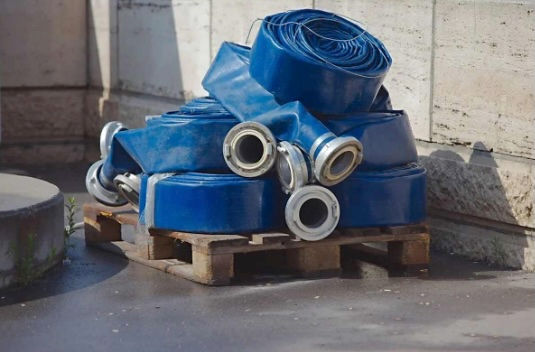
Floating and marine discharge hoses have become an indispensable link in coastal engineering, dredging, and offshore resource projects. They are designed to transport water, sediments, slurry, and industrial by-products safely and efficiently, often under extreme conditions. Their ability to operate in marine environments enables a wide range of applications, from sediment and sludge transport during dredging projects to dewatering operations and the disposal of process water or tailings in offshore mining and energy production.
Growing investment in coastal protection, port expansion, and offshore energy systems has significantly increased demand for hoses that are not only robust but also adaptable to highly dynamic environments.
Core Requirements in Marine Environments
The marine setting imposes severe challenges on discharge hoses, requiring solutions that combine durability, flexibility, and resistance to environmental factors. Key demands include:
Wave action and currents: Continuous movement places stress on hose bodies and couplings. Flexibility and fatigue resistance are essential.
UV exposure: Prolonged sun exposure can degrade materials, requiring UV-stabilized polymers and protective coatings.
Seawater corrosion: Saltwater accelerates the breakdown of reinforcement layers, steel components, and fittings, making corrosion-resistant materials vital.
Mechanical movement: Constant bending, torsion, and stretching require advanced reinforcement designs that maintain integrity under dynamic loading.
In addition, hoses must remain stable on the water’s surface, prevent kinking, and ensure a steady flow even under partial submersion.
Construction Principles and Floating Systems
Modern floating discharge hoses combine advanced polymer compounds, reinforced textile or steel layers, and specialized buoyancy systems. Typical construction features include:
Buoyancy Rings and Float Collars
Hoses are often fitted with external floatation rings or collars made of closed-cell foam. These ensure a consistent freeboard, keeping the hose above the waterline while minimizing drag and abrasion.
Integrated Float Bodies
Some designs incorporate continuous buoyant layers into the hose wall itself. This reduces the need for external floats, offering smoother surfaces and easier handling.
Flexible Anchoring and Mooring Systems
Since hoses are exposed to tides, swell, and vessel movement, flexible anchoring systems are used to reduce stress and maintain optimal positioning. These can involve mooring chains, swivels, and elastic elements.
Coupling and Connection Technology
Special attention is given to flange systems and quick-release couplings, which must remain leak-proof under pressure while tolerating repeated disconnection and reconnection in wet conditions.
Applications in Dredging and Coastal Engineering
The most widespread use of floating discharge hoses is in dredging. Large cutter suction dredgers and trailing suction hopper dredgers rely on these hoses to transport sand, gravel, and silt from the seabed to reclamation areas or offshore deposition sites.
Case experiences from dredging operations highlight the importance of wear resistance. Sediment-rich slurry can be highly abrasive, gradually thinning hose walls. Operators often select hoses with thicker internal liners or ceramic reinforcement for extended service life. In coastal protection projects, hoses play a central role in building artificial islands, reinforcing shorelines, and reclaiming land.
In offshore mining and energy applications, discharge hoses are also used for tailings disposal, cooling water return, and produced-water discharge. These processes demand hoses with precise chemical resistance and long-term stability in aggressive environments.
Optimization Potentials and Industry Challenges
While floating discharge hoses have matured significantly, several optimization pathways remain:
Material innovation: Lighter, more abrasion-resistant polymers and hybrid reinforcements reduce weight without sacrificing strength.
Wear monitoring: Integration of sensors to track wall thickness, pressure, and bending stress allows predictive maintenance.
Sustainability: Recycling of worn hoses remains difficult due to mixed material structures, but progress in thermoplastic designs shows potential.
Handling efficiency: Quicker deployment and retrieval systems reduce vessel downtime and improve operational safety.
Challenges include balancing cost with performance, ensuring reliable supply chains for large-diameter hoses, and adapting to increasingly demanding environmental regulations governing offshore waste disposal and sediment relocation.
Outlook for Marine Hose Technology
As coastal and offshore infrastructure projects expand, the demand for durable, adaptable, and environmentally conscious discharge hose systems will continue to grow. Innovation is steering toward lighter materials, modular buoyancy solutions, and digital monitoring for safer operations.
Future development is expected to focus on longer service life, reduced maintenance, and lower environmental impact, aligning with global trends toward sustainability in marine engineering. Floating discharge hoses, once seen as simple connectors, are evolving into critical engineered components that enable complex operations at sea while supporting the resilience of coastal infrastructure worldwide.


