
Five Lines on a Purchase Order That Keep Forty Lamps Looking Like One
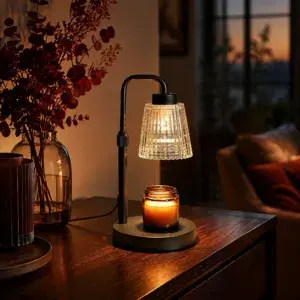
A single decorative lamp bought for a single room can be judged by eye. Forty of them, bought for a hotel corridor or a chain of restaurants, are judged by the purchase order, because by the time the cartons arrive the eye has no say. Procurement people who order decorative lighting in quantity tend to keep a short list of lines that belong on that order regardless of what the lamp looks like, and most of them exist because of a batch that went wrong once.
Name the shade material
Two lamps of the same silhouette will behave completely differently on a table depending on what the shade is made of. Glass sends a soft pool downward and a little outward. Openwork metal prints a pattern on the wall behind it. Fabric holds the glow inside and gives the room an object rather than a lit surface. All three have a place. The problem comes when the order says "shade" and the supplier chooses. Write the material into the line, and if it is glass, write the tint as well.
Ask for the finish chip from the production run
The finish a buyer approves on a showroom sample and the finish that arrives on a batch of forty are produced weeks apart, sometimes on different days of powder coating, and a warm gold can drift toward brass without anyone intending it. The defense is boring: a physical finish chip taken from the production run, not the sample, checked in daylight before the order is released, and the finish named on the purchase order by its code rather than by a color word. It also helps to draw the whole scheme from one supplier's finish family. BeginLighting, for instance, private-labels a whole lighting range with eleven finishes on the same lamp body and will develop a custom color on request, so a project that wants gold in the lobby and black in the rooms can put both on one order sheet and expect them to read as a pair.
Treat the base material as a freight decision
Powder-coated steel bases are consistent and light. Solid wood bases warm a scheme and add weight to every carton, and that weight shows up in the freight quote before it shows up in any room. On a large order the honest question is which spaces will notice the wood and which never will. Some ranges offer wood on selected finishes only, which is worth knowing before the scheme is drawn around it.
Specify controls the night staff can reset
A continuous dimmer slider looks refined on a specification sheet and gets left at the wrong setting for a month. Fixed steps are easier to live with. A lamp with four levels, roughly 10, 30, 70 and 100 percent, can be put back to the evening setting by anyone on shift without a manual, and a lamp that can be put back is a lamp that stays the way the designer left it.
Order the spares with the lamps
Glass shades chip in transit and in housekeeping carts. Bulbs are consumables. The order that includes a small quantity of spare shades and bulbs, in the same finish and from the same run, is the order that never generates a panicked email eighteen months later asking whether that gold is still made. Keep the finish code, the shade specification and the supplier's product number together with the purchase order, because the reorder will be placed by someone who was not in the room when the first one was.
Hold a production sample under the project's own bulbs
None of the above replaces the last step, which is a sample from the production line, not the showroom, placed on the surface it will actually sit on and lit by the bulb the project will actually use. A gold that looked right under showroom lighting can look orange under a restaurant's, and that is a cheap thing to learn from one lamp and an expensive thing to learn from forty.
Style is what the client sees. These lines are what makes the style survive the shipment.


