
How Commercial Roofing Projects Are Planned and Executed
- Jul 1
- 5 min read
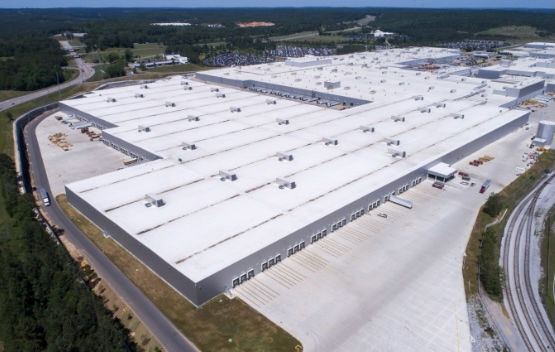
A commercial roofing project is the process of installing, replacing, or repairing the roofing system on a non-residential building, including offices, warehouses, retail facilities, schools, hospitals, and industrial structures. Commercial roofing projects differ from residential roofing in scale, system type, regulatory requirements, and the level of coordination required between the roofing contractor, the building owner, and other building systems.
The NRCA's market analysis estimated the commercial roofing market at approximately $27 billion annually in the United States, with the majority of activity concentrated in roof replacement (re-roofing) rather than new construction. Most commercial roofs are replaced every 15 to 30 years, depending on the system type, the quality of original installation, and the maintenance history.
Commercial roofers in Greeley work within local permitting and building code requirements while selecting roofing systems designed for northeastern Colorado's hail-prone climate. Successful commercial roofing projects depend on meeting both regulatory standards and manufacturer specifications throughout the installation process.
What a Roof Assessment Involves
Before any commercial roofing project begins, a thorough assessment of the existing roof system determines the condition of each component and whether the project should be a full tear-off replacement, a recover (new membrane installed over the existing), or a targeted repair program.
The assessment typically includes a visual inspection of the membrane surface for cracks, seam separations, blisters, and punctures. It includes an inspection of all penetrations (pipes, drains, curbs, HVAC equipment) for seal integrity. It includes an assessment of the drainage system to identify drains that are clogged or improperly pitched.
Moisture testing is a critical component of a thorough commercial roof assessment. Wet insulation under the membrane cannot support a recover installation. A recovery over wet insulation traps the moisture, which continues to degrade the existing deck and creates a mold environment.
Two primary moisture testing methods are used. Infrared scanning performs a thermal scan of the roof surface at dusk or dawn when temperature differentials make wet insulation visible as warm areas against the cooler dry field. Nuclear backscatter testing uses a device that measures hydrogen content in the roofing assembly at specific test points, which correlates with moisture presence.
What Distinguishes a Tear-Off from a Recover
A tear-off removes all existing roofing layers down to the structural deck before new material is installed. This approach provides the most complete inspection of the deck condition, allows correction of any deck deficiencies, and produces a roofing assembly that meets current code requirements without limitations imposed by the existing system.
The International Building Code (IBC), which most Colorado jurisdictions adopt with local amendments, limits the number of roofing layers on a low-slope commercial roof to two layers (including the new installation) without a tear-off. A building that already has two existing layers cannot receive a recovery under the IBC and requires a full tear-off.
A recover installs a new membrane layer over the existing roofing. This approach is appropriate when the existing membrane is in acceptable condition, moisture testing shows the insulation is dry, the total layer count will remain at or below the code limit, and the structural system can support the additional weight of the new layer.
Recovers typically cost 30 to 40% less than full tear-offs of the same square footage because they eliminate tear-off labor and disposal costs. The trade-off is that the existing membrane remains in place, along with any deficiencies it may develop over the service life of the new system.
How Commercial Roofing Specifications Are Developed
A commercial roofing specification is a document that defines the exact materials, installation methods, quality standards, and inspection requirements for a roofing project. On larger projects, the specification is developed by a roofing consultant or architect and becomes part of the project's construction documents.
The specification begins with the base bid system: the standard roofing assembly the project is designed around, including the membrane type, thickness, attachment method, insulation type and R-value, and accessory products (flashing, sealants, fasteners). It includes performance standards, such as requiring wind uplift resistance to FM Global 1-90 or 1-60 standards.
Submittal requirements in the specification define what the contractor must provide before installation begins: documentation of the proposed products, proof of installer training or certification for specific systems, and a project-specific installation plan.
The specification also defines inspection requirements during installation. For premium warranty programs from manufacturers including Carlisle SynTec, GAF Commercial, and Firestone Building Products, a manufacturer's technical representative inspects the installation at key milestones and issues a letter of approval that activates the enhanced warranty.
How Weather Affects Commercial Roofing Schedules in Colorado
Colorado's weather creates specific scheduling constraints for commercial roofing. The optimal installation window for most commercial membrane systems is when ambient temperatures are between 40 and 90 degrees Fahrenheit and no precipitation is forecast for 24 hours.
In Greeley and Weld County, the usable roofing season runs from approximately April through October, with the most reliable conditions in May, June, September, and early October. July and August bring afternoon thunderstorm activity that requires monitoring and can interrupt installation daily.
Cold-weather installations are possible with specific cold-weather adhesives and temporary heating equipment to bring membrane surface temperatures above the minimum adhesive activation temperature. Cold-weather roofing adds cost and complexity but allows scheduling flexibility in shoulder seasons.
Hail is a significant risk in Weld County. NOAA storm data shows that Colorado's Eastern Plains, including Weld County, is within the "Hail Alley" region that experiences some of the highest hail frequency in North America. Hail-resistant membrane options, including TPO and EPDM rated for impact resistance, and impact-resistant insulation boards, provide improved performance in hail events compared to standard membrane systems.
What a Commercial Roofing Warranty Covers
Commercial roofing warranties have two components that operate independently.
The manufacturer's warranty covers material defects and, at higher warranty tiers, workmanship defects when installed by a registered contractor. Manufacturer warranty tiers typically include a standard limited warranty (10 to 15 years, material only), a system warranty (15 to 20 years, material and labor to repair covered defects), and a no-dollar-limit (NDL) warranty (20 to 25 years, full replacement cost coverage for covered defects). NDL warranties are the highest tier and require the manufacturer's pre-approval of the contractor, a pre-installation inspection, and often a post-installation inspection.
The contractor's workmanship warranty covers installation defects that appear within the warranty period. Commercial roofing contractor workmanship warranties typically run 2 to 5 years. Some contractors offer longer workmanship warranties on projects where they install a manufacturer's system warranty simultaneously.
What to Know
A thorough moisture assessment using infrared scanning or nuclear backscatter testing determines whether a recovery is feasible or a full tear-off is required. The IBC limits low-slope roofs to two total layers, making tear-off mandatory when two existing layers are already present. A roofing specification defines materials, installation methods, and inspection requirements.
The optimal Colorado roofing season runs from April through October, with the best conditions in May, June, September, and October. Weld County falls within the North American Hail Alley region, making impact-resistant membrane options relevant in commercial specifications. Manufacturer warranties range from standard limited to no-dollar-limit coverage, with NDL warranties requiring pre-approved contractor status and installation inspections.


