
How Private Gaming Tables Became the New Luxury Status Symbol
- Feb 24
- 7 min read
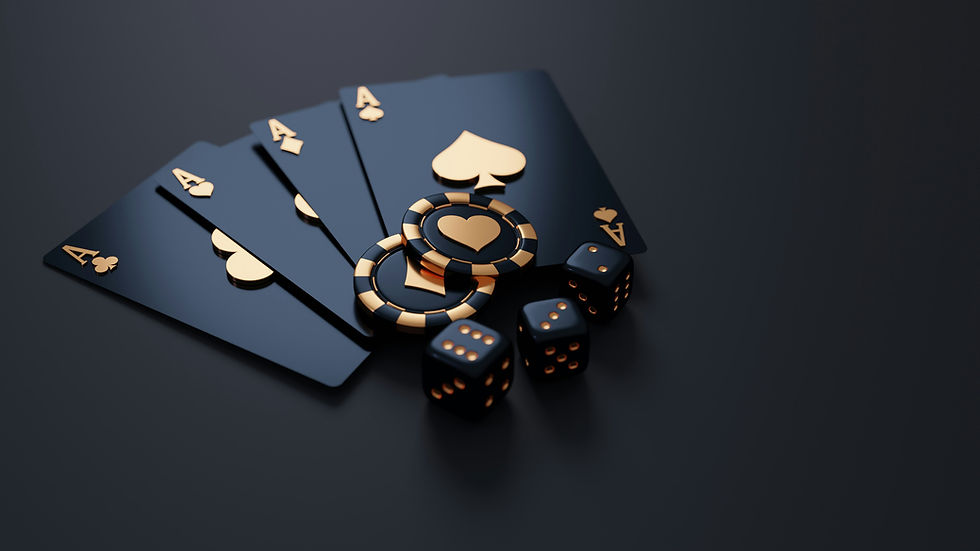
Private clubs at the upper end have been doing something interesting over the past five years, and most people haven’t noticed. The ones in Mayfair, Monaco, Manhattan—where membership runs you the price of a decent car—have started adding gaming rooms. Real ones, with dealers and tables built for the purpose. Poker, obviously. Baccarat. Sometimes bingo, which sounds strange until you see how it works at this level. Speed variants, custom cards, stakes that would make your grandmother’s church hall version look like pocket change. The rooms themselves look nothing like a casino floor. If anything, they feel closer to a wine-tasting room or a private dining space that happens to have card tables in it.
This isn’t really about recreating Monte Carlo or chasing old Rat Pack-style glamour. The appeal is more practical. When you have money but limited free time, an evening that combines dinner and a few hands of cards solves a specific problem: it gives people something to do with their hands during conversation, breaks up three hours of formal dining, and—more than you’d expect—creates little moments of shared tension that help strangers relax around each other. Clubs figured out this formula works and started investing in proper gaming spaces.
The Monte Carlo Effect Never Really Left
Monaco’s Casino de Monte-Carlo has been standing for over 150 years and it’s still a tourist landmark, which tells you something. The building was designed by Charles Garnier—same architect who did the Paris Opera House—and it was meant to send a very specific message: gambling could be elegant. This was recreation for people with taste and disposable income, not desperation. And it clearly worked, because people still link luxury gaming with the Monte Carlo style today.
Even now, when someone says “luxury casino,” most people picture something closer to Monaco than Vegas. Chandeliers, dress codes enforced at the door, table limits that would make a weekend gambler wince. The aesthetic matters. People care how these rooms look and feel, sometimes more than they care about the actual odds at the table.
Modern private clubs borrowed the Monte Carlo aesthetic but dropped the baroque excess. The gaming rooms opening now go for understated elegance. Better acoustics. Seating you can actually sit in for three hours without your back hurting. Wine lists managed by people who take it seriously. The game is what it is, but the environment has been upgraded to match member expectations. Hard to justify five-figure annual fees when your chairs are uncomfortable.
Why Poker Became Respectable Again
Poker’s image rehabilitation over the past twenty years is one of the stranger cultural shifts if you were paying attention. The game went from smoky backrooms and mob associations to charity galas hosted by celebrities. That didn’t happen naturally.
Televised poker in the early 2000s helped. Players became minor celebrities. The game started looking like a legitimate competition rather than pure gambling. Once people understood that strategy, psychology, and math mattered more than luck, poker stopped being just another way to lose money and started being a skill you could cultivate. That shift in perception made a big difference.
But the other part was wealth. When tech entrepreneurs and hedge fund managers started hosting private tournaments with eye-watering buy-ins, poker stopped being a working-class pastime and started being a networking opportunity. The World Series of Poker now regularly attracts participants who arrive by private jet. That changes how a game is perceived.
The World Poker Tour has done particularly well at positioning high-stakes poker as entertainment rather than vice, partnering with luxury brands and upscale venues to create events that feel closer to exclusive galas than gambling tournaments.
What Bingo Is Doing in Belgravia
This is where it gets a bit surprising. Bingo—yes, bingo—has found a second life as a luxury social game, and it's happening in some surprisingly upscale contexts.
The format being played at private London clubs and charity events isn't the 90-ball version your grandparents might have enjoyed at a working men's club in the 1970s. These are often 75-ball or speed bingo variants, played with custom-designed cards, curated number calls, and stakes that make the traditional £1 flutter look quaint by comparison. Some high-end charity bingo nights in London routinely see individual card prices running into the hundreds of pounds, with full houses paying out four or five-figure sums to winning players—all of which goes to the designated cause.
Bingo works in this context for a reason poker doesn’t: there’s no real skill ceiling. A first-timer has the same odds as someone who plays weekly. That matters when you’re mixing groups where not everyone wants to spend three hours getting outplayed by the one person who’s actually studied game theory. If you want to understand how online platforms have adapted traditional bingo for different audiences, The Bingo Online offers an unexpectedly thorough look at the variety of gameplay styles now available, from casual social formats to tournament-level competition.
Speed helps too. A round of charity bingo runs about ten minutes. You can fit three games into an evening, have some champagne between rounds, catch up with people, and still leave by ten. When you’re organizing events for people billing £500 an hour in their day jobs, that efficiency actually matters.
The Rise of the Gaming Concierge
One of the stranger consequences of gaming becoming a luxury amenity is the emergence of what some clubs are calling 'gaming concierges'—staff whose job is to manage the evening's play, explain rules to newcomers, settle disputes, and generally ensure that the gaming portion of an event runs smoothly without requiring hosts to micromanage it.
This isn't a dealer in the traditional sense. A gaming concierge at a high-end private club might have a background in hospitality management or event planning as much as in gaming itself. They're there to handle logistics, read the room, know when to suggest a break, and discreetly manage the pacing of play so that nobody feels rushed or bored.
It's the kind of service role that only makes sense above a certain budget threshold, but for members-only clubs charging five-figure annual fees, it's increasingly considered standard. You're not just paying for access to the gaming tables—you're paying for someone to make sure the experience around those tables is handled professionally.
What Yacht Clubs Learned from Casinos
There's been a noticeable trend over the past five years of yacht clubs and marina-adjacent private clubs incorporating gaming rooms into their facilities. The logic is straightforward: if you're catering to an international membership that includes serious money from the Middle East, Asia, and Russia, gaming is a amenity they expect. Not offering it puts you at a competitive disadvantage.
But there's a learning curve. Early attempts at adding gaming to yacht clubs often felt tacked-on—a couple of tables in a corner, minimal atmosphere, staff who didn't really know how to run a proper gaming room. The clubs that have done it well have borrowed heavily from casino design: proper lighting, soundproofing, dedicated ventilation, purpose-built furniture. It's not trivial to get right.
Monaco's Yacht Club de Monaco set the standard here, integrating a private gaming salon that operates more like a boutique casino than a members' club amenity. The Yacht Club de Monaco manages to make it feel exclusive without feeling seedy, which is the balance every venue in this space is trying to strike.
The Charity Angle That Changed Everything
Perhaps the single biggest factor in legitimizing high-stakes social gaming has been its adoption by the charity fundraising circuit. When a cause you care about hosts a poker tournament or bingo night with a £500 ticket price, suddenly the activity isn't about gambling—it's about philanthropy. The gaming is just the vehicle.
This has been enormously successful as a fundraising model, particularly in the UK where traditional charity dinners have been losing some of their appeal among younger donors. A gaming event feels less staid, more interactive, and—crucially—gives people something to do with their hands during what might otherwise be three hours of speeches and small talk.
Organizations like Elton John AIDS Foundation have raised millions through high-profile charity poker events, demonstrating that there's real money to be unlocked when you combine a good cause with entertainment that wealthy people actually find engaging.
What Regulators Think About All This
The regulatory landscape around private gaming in the UK is more permissive than many people realize, provided certain conditions are met. Members-only clubs can host gaming under considerably more relaxed rules than public venues, which is part of what has enabled this trend in the first place.
The UK Gambling Commission maintains oversight, but private gaming at members' clubs operates in a different regulatory category than commercial casinos. As long as the club isn't taking a rake from games or operating as a de facto casino, there's significant latitude for what's allowed. That legal distinction has been crucial in allowing high-end clubs to offer gaming without the regulatory burden that would come with a full casino license.
That said, clubs take compliance seriously. The stakes involved—and the profiles of the people playing—mean that any regulatory misstep could be enormously damaging. Most established clubs work with specialist legal advisors to make sure their gaming offerings stay within the boundaries of private members' club regulations.
The Tech That's Changing the Game
There's a whole category of technology products now aimed specifically at facilitating private gaming events, and some of it is genuinely impressive. Digital card tables that track hands and payouts automatically, augmented reality systems that overlay information onto physical game boards, custom apps that let hosts manage tournament brackets and prize pools without needing dedicated staff.
The more sophisticated venues are also using RFID-enabled chips and cards that allow them to track gameplay in real time—not for surveillance purposes necessarily, but to generate data that helps them understand which games are most popular, how long people play, what stakes work best for their membership. It's the same kind of operational analytics that high-end restaurants use to optimize table turn times and menu pricing.
Some of this tech is now filtering down to the consumer level. You can buy a poker table for your home with built-in RFID readers and connected screens for around £10,000, which is absurd but apparently there's a market for it. If you're hosting regular games and want the experience to feel professional, the technology exists to support that.
Where This Goes Next
The trend is pretty clear now: gaming is becoming a normal part of luxury leisure, something high-end venues offer alongside wine cellars, spas, and chef’s tables.
What's less obvious is how far upmarket this trend can go. Are we five years away from Michelin-starred restaurants incorporating a private gaming room as part of a tasting menu experience? Will ultra-luxury hotels start offering in-room gaming as a premium amenity for suite-level guests? Both seem plausible, if not inevitable.
The cultural shift that has to happen first is people becoming comfortable with the idea that gaming—when done in the right context, at the right level, with the right people—can be a sophisticated leisure activity rather than a vice. That shift is already well underway among people with money to spend on expensive hobbies. Whether it extends beyond that demographic is another question, but given how quickly attitudes have changed over the past decade, it would be unwise to bet against it.
Monte Carlo proved 150 years ago that gaming could be elegant. What we're seeing now is just that same principle, scaled and adapted for the 21st century version of the leisure class.


