
How Structured Play Helps Children Learn and Grow
Updated: Dec 10, 2025
Structured play might sound formal, but for children, it’s one of the most powerful ways to learn, explore, and thrive. While free play gives kids the freedom to follow their own imagination, structured play introduces gentle guidance, clear goals, and supportive environments that help build essential skills. When balanced well, it becomes a foundation for emotional, social, and cognitive growth.
Understanding What Structured Play Really Means
Structured play is any activity designed with a specific purpose in mind. It includes games with rules, guided tasks, or instructor-led sessions that help children practice skills while still having fun. These activities aren’t meant to restrict a child’s creativity; instead, they give direction and encourage kids to try new things, solve problems, and work with others in a safe and predictable setting. This balance of guidance and play keeps children engaged while supporting the development of important life skills.
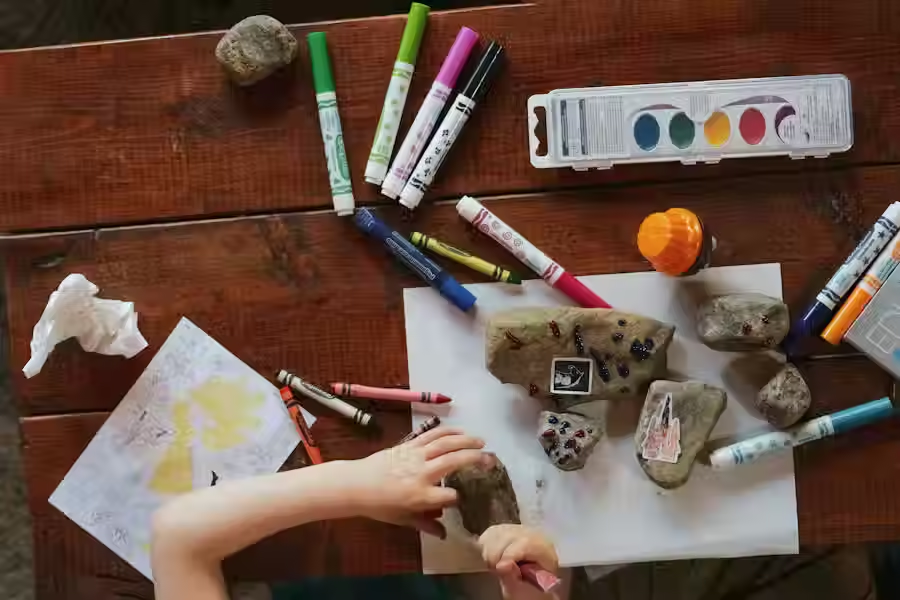
Building Confidence Through Achievable Challenges
Children thrive when they feel capable, and structured play nurtures this by offering clear, manageable challenges. Whether they’re following a simple set of instructions, learning the steps of a game, or practicing a new technique, each small success boosts their self-esteem. Structured activities allow kids to see their progress more easily, giving them a sense of achievement. This growing confidence often spills over into other areas such as schoolwork, friendships, and personal interests, helping them feel more secure in their abilities.
Developing Social Skills Through Cooperative Play
Another major benefit of structured play is the opportunity it creates for positive social interaction. Activities that require teamwork teach children how to communicate, take turns, listen, and work toward shared goals. The group setting also helps kids understand empathy, cooperation, and conflict resolution. These social skills are essential as children grow, and structured play provides a safe space to practice them repeatedly. Even children who are shy or hesitant often find it easier to interact when a clear activity guides the interaction.
Encouraging Physical Development and Healthy Habits
Many structured activities involve movement, giving children a natural way to improve coordination, strength, and overall physical health. Guided play encourages them to stay active, explore new types of movement, and feel comfortable participating in group sports or physical tasks. Activities such as kids football classes also help children develop balance, motor skills, and body awareness while having fun with others. These experiences build healthy habits early, making physical activity a normal and enjoyable part of life.
Boosting Cognitive Growth Through Problem-Solving
Structured play can also help children sharpen their thinking skills. Activities that require following steps, remembering rules, or adapting to new situations teach kids how to process information, stay focused, and think critically. Problem-solving becomes part of the fun, whether they’re figuring out a puzzle, learning a strategy in a game, or adjusting their approach to complete a task. Over time, structured play strengthens memory, attention span, and reasoning abilities; skills that support learning at school and beyond.
Finding the Right Balance for Your Child
While structured play is incredibly beneficial, it works best alongside free play. Children need both the freedom to explore their imagination and the guidance of structured activities to grow well-rounded skills. Parents and caregivers can help by offering a mix of experiences: creative time, outdoor adventures, and organized activities that gently challenge children while giving them room to enjoy themselves. This balance helps children build confidence, develop friendships, and learn in ways that feel natural and joyful.
Structured play is more than just planned fun; it’s an essential part of childhood development. When children engage in activities designed to support their growth, they gain skills that will help them throughout life, all while enjoying the simple joy of play.


