
How to Start an RV Roof Coating Business: A Premium Service Hiding in Plain Sight
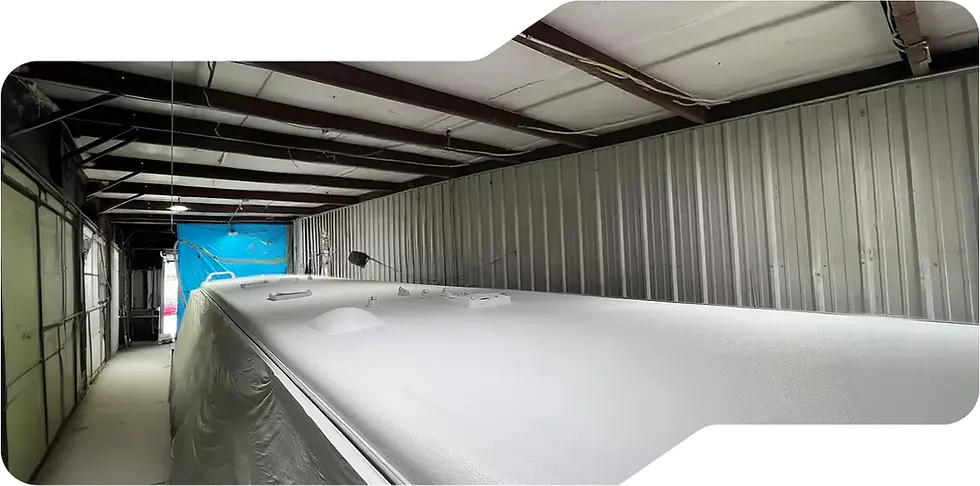
Nobody photographs the roof.
Walk through a motorcoach resort in the Coachella Valley in January, or one of the gated RV communities scattered along Florida's Gulf Coast, and you'll see owners polishing chrome, fussing over awnings and arranging outdoor kitchens that cost more than some people's cars. The rigs are beautiful. Some of the fifth wheels parked there sell well into six figures. And almost none of their owners have been up top in the past year.
That's where the trouble starts.
An RV roof is a thin membrane of TPO or EPDM stretched over a wooden deck, punctured by vents, skylights, antennas and air conditioners, and kept watertight at every one of those openings by a bead of self-leveling sealant. Keystone, one of the biggest towable manufacturers in the country, tells its owners to inspect the roof at least every 90 days, paying close attention to seams, joints and attachments. Few people actually do. Water finds the spot they missed, soaks quietly into the wood underneath, and by the time a ceiling stain shows up the repair conversation has drifted into the $7,000 to $18,000 range for a dealer tear-off and replacement.
For a certain kind of entrepreneur, that gap between what owners should do and what they actually do is a business. A good one, arguably. Here's how it works, what it costs, and why the sharpest operators in this niche price like a concierge service instead of a repair shop.
Why the RV Roof Became the Most Expensive Surface on the Road
RV ownership isn't a fringe hobby anymore. The RV Industry Association's Go RVing demographic study counted 11.2 million American households owning an RV in 2021, a 62 percent jump from 2001, and found that 22 percent of owners were between 18 and 34. That younger crowd matters. They work remotely, they stay out longer, and they keep their rigs in use through more seasons (and more weather) than the weekend camper of a generation ago.
The roofs, meanwhile, haven't changed much. Factory membranes often carry a 10 to 12 year warranty, and the sealant around every penetration is the owner's problem from day one. Hail, UV, a low branch at a state park campsite, the occasional gas station canopy that turned out to be shorter than it looked. The membrane takes all of it.
So owners have historically faced two unappealing choices. Patch and reseal every season, indefinitely. Or pay a dealer to strip the whole thing and install another membrane that will need exactly the same babysitting.
A spray-applied coating is the third option, and it's the product at the heart of this business.
What an RV Roof Coating Business Actually Sells
Set aside the equipment and the chemistry and you're selling one thing: a roof the owner never has to think about again.
The method comes straight out of industrial protective coatings. A plural-component spray rig heats and pressurizes two liquid components, meets them at the gun, and lays down a single, jointless elastomeric membrane over the existing roof, penetrations and all. There are no lap seams left to fail, because there are no laps. A properly built system calls for around 120 mils of basecoat, which works out to roughly an eighth of an inch, and that number is not the place to economize. Films sprayed at 30 or 40 mils are where cheap jobs come apart.
ArmorThane, the Springfield, Missouri coatings manufacturer that has been spraying polyurea since 1989, builds its RV program around two systems. One pairs a SureGrip basecoat with ArmorDeck Topcoat. The other is ArmorFlex UV sprayed on its own; because it's an aliphatic chemistry, it holds its color and shrugs off UV without needing a topcoat at all. The practical difference for an operator is speed. ArmorDeck Topcoat MAX goes tack-free in about an hour, compared with roughly eight hours for competing topcoats, so a client can drop the rig off in the morning and drive away that evening.
For a clientele that guards its time, that's the real selling point. Not the chemistry.
RV Roof Coating Business Startup Costs: The Real Numbers
Most business-opportunity articles go vague right about here. This one won't, because the manufacturer's numbers are public. ArmorThane publishes an unusually candid breakdown for anyone planning to start an rv roof coating business, right down to material cost per linear foot, and the math is worth walking through.
The Spray Package
A low-pressure package runs $25,000. A high-pressure package runs $55,000. Both include the equipment, hands-on training, the first set of chemical, and prep and safety gear. Low pressure is the lighter, more mobile way in; high pressure is the production machine for a shop that expects to run several roofs a week.
The All-In Budget
Equipment is only part of it. Add a vehicle or a bay lease, insurance, working capital and a marketing budget, and the manufacturer models a mobile, low-pressure operation at roughly $45,000 to $76,000 all in. A shop-based, high-pressure setup lands nearer $72,000 to $94,000. Wide ranges, yes, and deliberately so. Rent in Scottsdale is not rent in Springfield.
What a Single Roof Is Worth
This is the part that tends to raise eyebrows.
Material runs about $33 to $35 per linear foot for the SureGrip and ArmorDeck system and about $42 per linear foot for ArmorFlex UV. Retail pricing sits at $175 or more per linear foot. On a typical 32-foot trailer, that means an invoice somewhere between $4,500 and $8,000-plus, against roughly $1,088 in material. After labor, supplies, fuel and fees, ArmorThane's model puts the contribution at around $4,144 per roof, a margin of roughly 70 percent, which means the spray package pays for itself in about six roofs.
Six. On paper, a shop doing two roofs a week clears that inside a month.
I'd treat those figures as a model rather than a promise. Your local labor rate, your close rate and the number of rigs within an hour of your door will decide the real number. But even after a generous haircut, the unit economics are unusual for a trade business with this low a barrier to entry.
Franchise or Independent Dealer?
Anyone researching this space runs into franchise offers quickly. Several RV roofing brands sell territories, and the structure usually looks familiar: a five-figure franchise fee up front, then a royalty and a marketing contribution skimmed off every invoice for as long as you operate.
There's a case for it. A franchise hands you a name, a playbook and sometimes a lead pipeline. If you've never run a service business, that scaffolding is worth something.
Still, set a royalty against the per-roof numbers above and the long-term cost gets hard to ignore. A combined 10 percent royalty and marketing fee, which isn't unusual in franchising, takes $560 off a $5,600 invoice. Every roof. Every year. The manufacturer-dealer route works differently: you buy the equipment and material, you get trained, and there's no franchise fee and no ongoing royalty. You build your own brand, which is more work in year one and considerably more valuable in year five.
Neither path is wrong. It comes down to whether you'd rather rent a business or own one.
Training, Licensing and Insurance
Now for the less glamorous chapter.
Spraying plural-component coatings is a craft. The chemistry is fast and unforgiving. Prep that isn't quite clean leaves fish-eyes, a rig that drifts off-ratio leaves soft spots, and a missed patch (the trade calls it a holiday) becomes the leak you're answering for next spring. That's why hands-on training at the manufacturer's facility matters more than any number of online videos. Expect to spend real time on surface prep, on reading the machine, and on building film evenly around a rooftop air conditioner without flooding it.
On the paperwork side, most states don't require a special license to coat RV roofs, though it's worth confirming locally. What you do need is an LLC or similar entity, a local business license, general liability insurance and garage keepers coverage, which protects the customer's vehicle while it's in your care. Given what some of these rigs cost, skipping that last one would be reckless.
Mobile Rig or Shop Bay?
After financing, this is probably the biggest strategic call you'll make.
A mobile operation goes where the coaches are: RV resorts, storage lots, a client's own driveway. It's cheaper to launch and it suits white-glove positioning beautifully, since the owner never has to move the rig. The catch is weather. Spray coatings care about temperature, humidity and dew point, and wind carries overspray. Nobody wants to explain to a resort manager why the neighboring $400,000 motorcoach now has a speckled windshield. Mobile operators learn to read a forecast like farmers.
A shop bay takes weather out of the equation. You set the temperature, you contain the overspray, and you can run one to four roofs a week on a predictable schedule. It costs more to set up, and the customer has to bring the rig to you. In snowbird markets, a hybrid often makes the most sense: a shop for production work in season, plus a mobile setup for the resort crowd that has no intention of leaving the pool.
Selling to Clients Who Expect White-Glove Service
This is where I think a lot of new operators leave money on the table. They price against the handyman who reseals roofs for a few hundred dollars. Wrong comparison.
The right comparison is the dealer tear-off at $7,000 to $18,000, plus the weeks-long wait that often comes with it. Next to that, a same-day roof with no seams and a written warranty doesn't look expensive. It looks sensible.
The operators who do well here tend to share a few habits:
They document everything. Before-and-after photos, moisture readings on the deck, and a written report the owner can file with the coach's service records.
They schedule around the client's travel, not their own calendar. Snowbirds book months ahead, and full-timers need a turnaround that doesn't leave them stranded in a motel.
They build referral relationships with RV resorts, storage facilities, independent service shops and the insurance adjusters who see a wave of hail claims every spring.
They sell the outcome. The owner doesn't care about mils or cure schedules. They care about never climbing a ladder with a tube of sealant again.
Word travels fast in these communities, too. One well-executed roof at a resort with a couple hundred sites can line up the next few jobs before the rig is even packed.
So, Is It Worth It?
Let's be fair about the downside. This is physical work, done on top of vehicles, in weather that doesn't always cooperate. Chemistry mistakes are expensive, and reputations in tight-knit RV circles are made or lost one roof at a time. It isn't passive income, and anyone who tells you otherwise is selling something.
But the fundamentals are hard to argue with. Millions of RVs are on American roads, and their roofs fail in predictable, well-documented ways. The existing fixes are either temporary or painfully expensive, and the owners, many of them affluent and most of them short on time, will happily pay a premium to make a problem disappear. Material costs are modest, startup costs look more like a well-equipped pickup than a restaurant build-out, and if you go the dealer route there's no royalty eating into the margin.
For the right person (mechanically inclined, a little obsessive about details, comfortable talking shop with someone who just parked a quarter-million-dollar rig in your bay) it's one of the more interesting small businesses on the road right now.
Nobody photographs the roof. Which is exactly why someone should be paid very well to look after it.


