
Latest Trends in Commercial Lighting Control for Warehouses
Warehouse operators face mounting pressure from rising energy costs, tightening safety regulations, and the constant demand to do more with less. In facilities where lights run twelve to twenty-four hours a day across vast floor areas, lighting can account for a significant portion of total electricity expenses. At the same time, poorly lit aisles and loading docks create hazards that put workers at risk and expose businesses to liability. Modern commercial lighting control systems have emerged as a powerful answer to both challenges, combining intelligent automation with high-efficiency hardware to slash energy waste while improving visibility where it matters most. The latest trends driving this transformation include IoT-connected smart controls, advanced LED technology, occupancy-based sensors, and data analytics that let managers fine-tune performance in real time. This article guides warehouse owners through these developments, offering practical insight into how current technologies can optimize lighting for measurable energy savings, enhanced workplace safety, and a faster return on investment.
The Rise of Intelligent Commercial Lighting Control Systems
For decades, warehouse lighting meant rows of metal halide or fluorescent fixtures wired to manual switches or simple timers. Facility managers had two options: lights on or lights off. That era is ending rapidly as intelligent commercial lighting control systems replace outdated infrastructure with networked, software-driven platforms capable of responding to real-time conditions. Several forces are accelerating this shift. Energy costs continue to climb, making waste unacceptable at scale. Regulatory frameworks now mandate minimum efficiency standards and reporting, pushing operators toward verifiable, automated solutions. Meanwhile, labor shortages make it impractical to rely on manual oversight of lighting across hundreds of thousands of square feet.
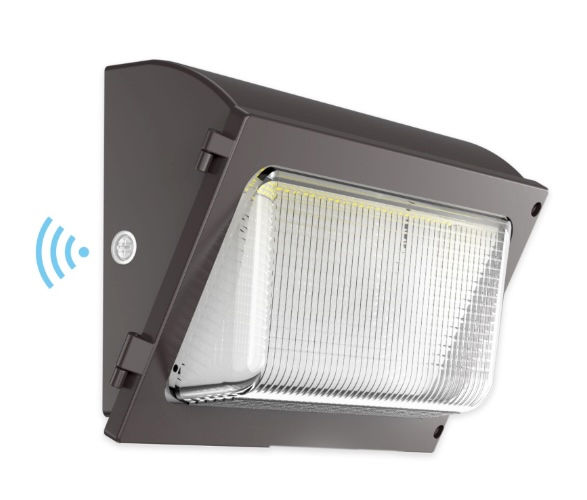
At their core, modern systems combine three elements: high-efficiency luminaires, distributed sensors, and a centralized management layer that ties everything together. Sensors collect data on occupancy, daylight levels, and equipment activity. Controllers process that data and adjust output fixture by fixture. A dashboard or cloud platform then gives managers visibility into consumption patterns and system health. The trend now points firmly toward IoT connectivity, where every fixture becomes a data node on a building-wide network, feeding analytics engines that identify inefficiencies and recommend adjustments automatically. This data-driven approach transforms lighting from a static utility into a dynamic, continuously optimized asset.
Unlocking Efficiency with Commercial LED Lighting
The transition to LED technology represents the single most impactful hardware decision a warehouse can make when upgrading its lighting infrastructure. Unlike legacy metal halide or fluorescent systems that convert much of their energy into heat, LEDs direct the vast majority of consumed wattage into usable light. This fundamental efficiency advantage translates directly into lower electricity consumption—often cutting lighting energy use by fifty to seventy percent compared to conventional alternatives. For a warehouse running fixtures around the clock, that reduction reshapes the entire operating budget.

Beyond raw energy savings, LEDs deliver operational advantages that compound over time. Their rated lifespan frequently exceeds fifty thousand hours, meaning fewer lamp replacements, less maintenance labor, and reduced disruption to daily workflows. Light quality also improves markedly: LEDs produce consistent, flicker-free output with high color rendering, which helps workers read labels, identify products, and navigate aisles with greater accuracy. Lower heat output further benefits climate-sensitive storage environments and reduces the load on HVAC systems during warmer months. Critically, LEDs are inherently dimmable and respond instantly to control signals, making them the ideal companion for intelligent automation platforms. Without this compatibility, advanced sensors and software would have limited effect. Together, LED hardware and smart controls form a foundation that turns warehouse lighting into an actively managed, continuously optimized system rather than a fixed overhead cost.
Understanding the Full Scope of Energy-Saving Lighting Benefits
When evaluating a lighting upgrade, decision-makers should look beyond the utility bill. A single LED high bay replacing a 400-watt metal halide fixture can reduce annual energy consumption for that position by more than two thousand kilowatt-hours. Multiply that across hundreds of fixtures in a typical distribution center, and payback periods often fall between eighteen and thirty-six months—even faster when utility rebates apply. After that break-even point, every kilowatt-hour saved flows directly to the bottom line. Equally important are the safety and compliance gains that better illumination delivers. Uniform, high-quality light reduces shadows in racking aisles and loading areas, lowering the risk of forklift collisions and trip-and-fall incidents. Many jurisdictions now reference updated illuminance standards for industrial spaces, and LED systems make it straightforward to meet or exceed those thresholds while consuming less power. Improved visibility also supports quality control processes, helping staff spot damaged goods or mislabeled inventory before errors propagate through the supply chain. Taken together, these benefits—financial, regulatory, and operational—build a compelling case that extends well beyond simple energy arithmetic.
Choosing the Right High Bay Lights for Your Warehouse Layout
Selecting the appropriate high bay fixtures is not a one-size-fits-all decision. A warehouse with forty-foot clear heights and narrow racking aisles demands a fundamentally different lighting approach than a low-ceiling cross-dock facility with wide-open staging areas. Getting this choice wrong leads to dark spots between racks, excessive glare on work surfaces, or wasted energy from over-lighting zones that need only moderate illumination. The goal is to match each fixture's beam pattern, mounting height, and output to the specific geometry of the space it serves.
Traditional metal halide high bays cast broad, unfocused light that scatters energy in directions where it serves no purpose. LED high bay alternatives from manufacturers like Hyperlite offer precisely engineered optics—narrow beam angles for tall, tight aisles and wider distributions for open sorting or packing areas. This optical control means fewer fixtures can achieve the same or better uniformity, reducing both capital outlay and long-term energy consumption. For warehouses with mixed-use zones, tunable optics or interchangeable lens accessories allow a single fixture platform to address multiple layout requirements without sourcing entirely different product lines.
Assessing Your Warehouse Layout for Optimal Lighting Placement
Before specifying any hardware, walk the facility with a floor plan and document its spatial characteristics zone by zone. Start by mapping ceiling heights, noting where mezzanines, conveyor systems, or overhead sprinkler drops reduce available mounting clearance. Next, identify high-traffic corridors—main forklift lanes, pick paths, and pedestrian walkways—that demand consistently higher illuminance levels. Mark areas of variable activity, such as seasonal overflow storage or infrequently accessed deep-rack bays, where dimming or sensor-driven control will yield the greatest savings. Consider vertical surfaces too: if workers pull product from upper rack levels, fixtures must deliver adequate vertical foot-candles, not just horizontal coverage on the floor. A photometric simulation using the documented dimensions will reveal how many fixtures are needed, where they should mount, and which beam angles prevent light from spilling uselessly onto the tops of racking rather than illuminating the aisle below.
Key Features to Prioritize in High Bay Lights
When comparing fixtures, focus on the specifications that directly affect performance and integration with your control system. Lumen output should match the illuminance targets for each zone—general storage typically requires around twenty to thirty foot-candles at floor level, while inspection or packing stations may need fifty or more. A color temperature near 5000K provides a neutral white that closely mimics daylight, improving contrast for reading labels and detecting product defects. Durability matters in warehouse environments: look for IP65 or higher ingress protection ratings if fixtures will be exposed to dust, moisture, or washdown procedures. Robust housing materials and impact-resistant lenses protect against accidental contact from forklifts or overhead cranes. Finally, confirm that the fixture supports smooth, flicker-free dimming across a wide range—ideally down to ten percent—and communicates via standard protocols such as 0-10V, DALI, or wireless mesh. Without these control capabilities, the fixture cannot participate fully in an intelligent lighting system, limiting your ability to harvest the occupancy-based and daylight-responsive savings that modern platforms deliver.
Integrating Motion Sensors for Smart, Energy-Saving Lighting
Motion sensors represent one of the most effective tools for eliminating wasted energy in warehouse environments where activity levels vary dramatically by zone and shift. Rather than illuminating an entire 200,000-square-foot facility at full output around the clock, a sensor-driven system brings fixtures to full brightness only when workers or equipment are present, then dims or switches them off after a programmed vacancy period. In warehouses with large sections of deep storage that may go untouched for hours at a time, this strategy alone can reduce lighting energy consumption by an additional thirty to fifty percent beyond what LEDs achieve on their own.
Two sensor technologies dominate warehouse applications. Passive infrared sensors detect body heat moving through their field of view, making them well suited for aisle-by-aisle control where clear sight lines exist between racks. Ultrasonic sensors emit high-frequency sound waves and detect motion by measuring changes in the reflected signal, which allows them to sense activity around corners or behind obstructions—useful in complex racking configurations or mezzanine areas. Many modern fixtures combine both technologies in a dual-mode design that minimizes false triggers while ensuring lights activate the instant someone enters a zone. When these sensors feed data back to the central control platform, managers gain occupancy heat maps that reveal traffic patterns, enabling smarter scheduling, labor allocation, and even rack reorganization to shorten pick paths. The result is a lighting system that actively adapts to how the warehouse actually operates rather than running on assumptions.
Practical Steps to Implement Your Energy-Saving Lighting Solution
Moving from research to execution requires a structured approach that minimizes disruption while maximizing the return on your lighting investment. The process begins with a comprehensive energy audit—documenting current fixture types, wattages, operating hours, and utility rates across every zone. This baseline quantifies exactly where energy is being wasted and establishes the benchmark against which future savings will be measured. With audit data in hand, you can prioritize zones where upgrades deliver the fastest payback, typically areas with the longest daily burn hours or the most outdated fixtures.
Component selection follows naturally from the audit findings. Match LED high bays to each zone's height and layout requirements, specify sensor types based on aisle geometry and traffic patterns, and choose a control platform that supports your preferred communication protocol and scales with future expansion. Avoid selecting hardware in isolation—every fixture, sensor, and controller must function as part of an integrated system. Once components are specified, engage a qualified lighting contractor experienced in warehouse environments to validate the design, confirm structural mounting capacity, and coordinate installation scheduling around operational shifts. After commissioning, establish a maintenance cadence that includes periodic sensor cleaning, firmware updates for controllers, and quarterly reviews of energy dashboards to catch drift before it erodes savings.
Planning and Installation Process for Seamless Integration
A phased rollout protects daily operations while steadily delivering results. Begin with a consultation phase where lighting designers and electrical engineers review your audit data, conduct photometric modeling, and produce a detailed layout specifying fixture positions, sensor coverage zones, and wiring paths. This design phase typically takes two to four weeks and should include input from warehouse operations staff who understand traffic flow and shift schedules. Installation then proceeds zone by zone—starting with areas that can be temporarily taken offline or have lower throughput during off-peak hours. Phasing prevents the need to shut down the entire facility and allows the installation crew to refine techniques as they move through successive sections. Once hardware is mounted and wired, system calibration begins: sensor time delays are tuned to match actual occupancy patterns, dimming profiles are set for each zone, and the central platform is configured with scheduling rules and alert thresholds. A final walk-through under normal operating conditions confirms that illuminance levels meet design targets and that sensors trigger reliably without false activations. Document all settings and provide training to facility staff so they can adjust parameters as seasonal workflows or layout changes demand.
Building a Smarter, More Efficient Warehouse Lighting Future
The warehouse lighting landscape has shifted decisively toward intelligent, connected systems that deliver measurable gains on multiple fronts. LED technology provides the efficient hardware foundation, slashing energy consumption and maintenance burdens while producing superior light quality for demanding industrial environments. Smart controls powered by motion sensors and IoT connectivity layer automation on top of that foundation, ensuring energy flows only where and when it is needed. Tailored high bay fixture selection, guided by careful assessment of ceiling heights, aisle configurations, and task requirements, eliminates the dark spots and wasted output that plague generic installations. Together, these trends transform lighting from a passive overhead expense into an actively managed asset that strengthens both the bottom line and workplace safety. Warehouse owners ready to capture these benefits should start with a professional energy audit, engage experienced lighting designers to match technology to their specific layout, and plan phased implementations that protect ongoing operations. The investment typically pays for itself within two to three years, after which savings accumulate continuously. As sensor intelligence, machine learning algorithms, and wireless networking protocols continue to mature, the next generation of lighting systems will grow even more responsive—anticipating operational needs before they arise and pushing efficiency gains further than today's benchmarks suggest is possible.


