
Nature That Cannot Be Printed: The Sophistication of Natural Wallcoverings
Updated: Sep 25
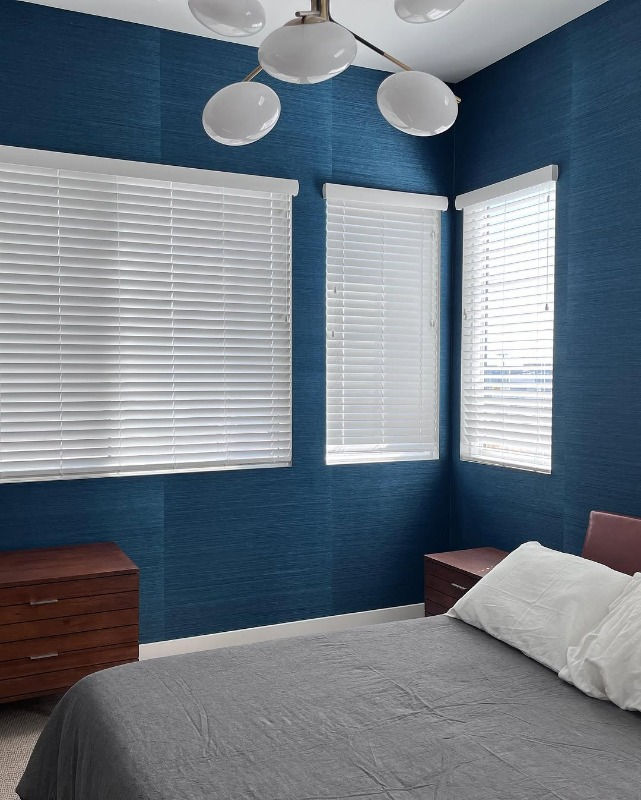
Luxury interiors are increasingly defined by authenticity, texture and material honesty. Natural wallcoverings bring all three together, creating surfaces that change with light, reveal their origins and resist the perfection of mass production.
For generations, wallpaper has borrowed from nature. Leaves, landscapes and organic textures have been painted, photographed and printed onto walls in every imaginable style. Natural wallcoverings take a different approach: instead of reproducing nature as an image, they bring the material itself indoors.
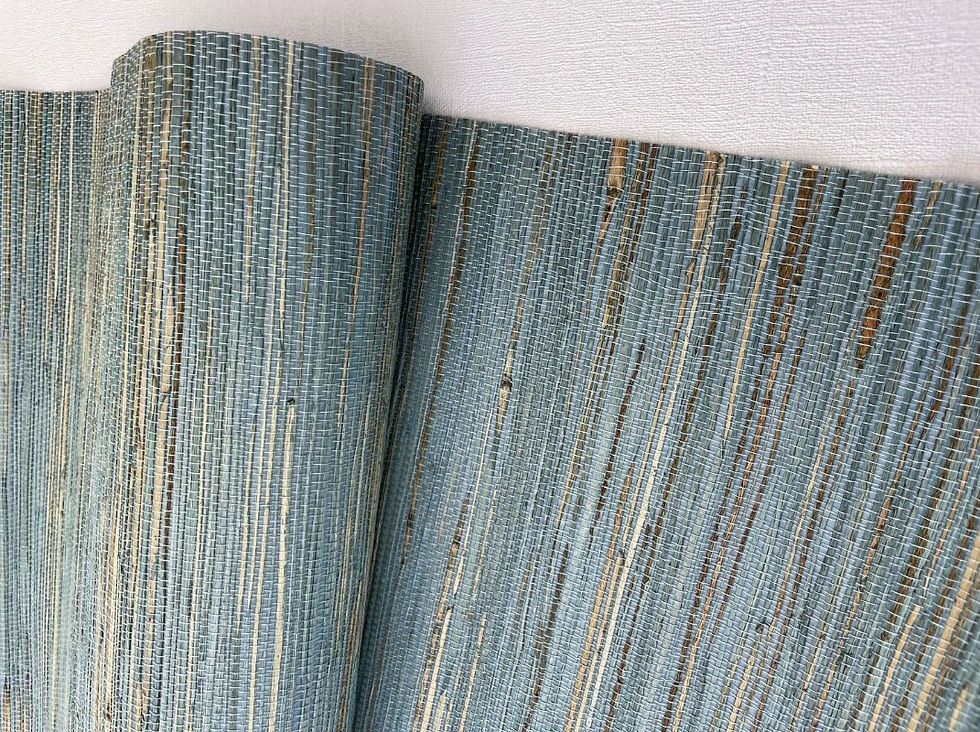
Sisal, raffia, hemp, abaca and cork all have their own grain, direction and irregularity. Their appeal comes from the fact that they are not perfectly repeatable. The same surface can appear quiet in daylight, richer under evening lamps and more dimensional when light moves across it from the side.
California Wallpaper, a renowned Los Angeles-based wallpaper manufacturer, approaches this category as more than decoration: the wall becomes a material surface rather than simply a carrier for pattern. By working with genuine raffia, sisal, hemp, abaca and cork, the company elevates natural wallcoverings into an architectural layer with texture, depth and individuality. That is why natural grasscloth wallpaper feels so at home in sophisticated interiors: it does not merely decorate the wall, it gives the wall a physical presence of its own.
Luxury Without Perfect Repetition
Luxury has gradually moved away from the idea that everything should look polished, identical and untouched. Marble is prized for its veining. Hand-finished wood is valued for grain and tonal variation. Linen is beautiful partly because it does not behave like a synthetic fabric. Natural wallcoverings belong to the same family of materials.
With woven fibres, subtle changes from panel to panel create what installers call paneling or shading. Raffia may show broad organic movement, while fine sisal can appear almost tailored, changing gently as the direction of light changes. Hemp often feels quieter and more structured. Cork introduces an entirely different language, with the irregular markings of real bark becoming part of the surface.
These variations are not decorative effects printed onto the material. They belong to the material itself. That distinction becomes especially important in high-end interiors, where texture often does more work than pattern. A neutral woven wall can appear restrained from across a room, then reveal far more complexity when viewed up close.
The Role of Light
Natural fibres are unusually responsive to light. A sisal that looks almost matte in soft daylight can develop a subtle sheen under directional lighting. Raffia can create stronger highlights and shadows because of its more expressive texture. Cork behaves differently again, with variation in the bark catching the eye in an almost architectural way.
This is one of the reasons physical samples are especially valuable. A digital image can approximate colour, but it cannot properly communicate sheen, fibre direction or how a woven surface interacts with a room. Looking at a sample beside flooring, upholstery, stone or millwork reveals much more than a screen can.
The best approach is to move the sample around the room. Look at it in morning light, under evening lamps and from several angles. The goal is not simply to decide whether the colour works, but to understand how the surface behaves.
Craftsmanship Should Be Visible Only in the Result
The apparent simplicity of a woven wall can disguise how much judgment goes into making it look effortless.
California Wallpaper’s installation team sees one misconception repeatedly: people sometimes expect a natural surface to behave like a perfectly repeating printed wallpaper.
It does not, and forcing it toward that standard can actually diminish the result.
A beautifully installed natural wallcovering should feel composed rather than artificially uniform. Seams should be clean, the wall beneath should be properly prepared and the layout should make architectural sense. But the fibre itself should still be allowed to show its character.
That restraint is part of the craft. Knowing which irregularities belong to the material and which indicate a genuine technical issue often matters more than trying to erase every visible difference.
The Wall Beneath the Wall
Luxury finishes are only as convincing as the surfaces supporting them. Natural fibres can reveal imperfections that ordinary paint easily hides. Slight depressions, old repairs or changes in plane can affect the way adjoining panels meet and the way light moves across the finished surface.
Dark colours make this even more apparent. A deep graphite hemp or navy sisal installed over a bright white background can turn a tiny opening into a conspicuous line. This is why proper preparation is not simply technical housekeeping. It is part of the final visual result.
The same principle applies to layout. With a material that panels naturally, where each width begins and ends becomes part of the composition. A well-planned wall can feel balanced and deliberate even when the material itself remains visibly organic.
Printed Cork: When Artwork Meets Material
One of the most interesting directions in natural wallcoverings is printing directly onto cork.
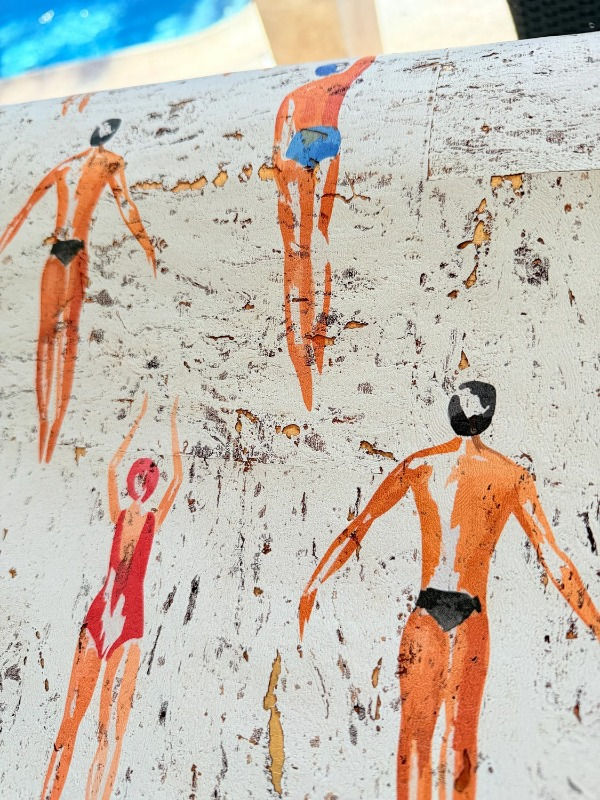
Rather than printing an imitation of texture onto smooth paper, artwork is applied over a genuine natural surface. Cork is made from thin slices of bark from the cork oak tree, Quercus suber, so every section carries its own markings and tonal variation.
California Wallpaper has refined this approach for printed cork wallcoverings. The image remains readable, but the natural bark continues to show through it. From across the room, the printed composition may dominate; up close, the irregularities in the cork become part of the artwork.
The result feels very different from conventional printed wallpaper because the substrate is not trying to disappear. The print and the material occupy the wall together.
This also introduces another level of sophistication in installation. Pattern alignment matters alongside the natural movement of the cork itself. A continuous motif can connect adjacent panels visually while still allowing the underlying surface to retain its character.
Choosing the Right Setting
Natural materials also ask something of the room in return.
Living rooms, bedrooms, dining rooms and libraries are often ideal settings because texture and light can become part of the atmosphere. These wallcoverings pair especially well with timber, plaster, natural stone, linen and other tactile finishes, where the effect comes from layering materials rather than accumulating decoration.
High humidity requires more consideration. California Wallpaper encountered this directly on a project involving a room beside an indoor sauna. Visually, the woven surface was a perfect companion to timber and the warm, organic character of the space. Sustained humidity made the environment less appropriate for the material over the long term.
It was a useful reminder that sophisticated design is not simply about choosing the most beautiful material. It is about knowing where that material belongs.
The Luxury of Something Real
Perhaps this is why natural wallcoverings feel especially relevant now. Contemporary luxury is increasingly defined by authenticity: stone that still looks like stone, wood that reveals its grain, metal that acquires a patina and textiles whose weave remains visible.
Natural wallcoverings fit comfortably within that philosophy.
Their sophistication comes not from pretending to be flawless, but from allowing variation, texture and light to become part of the room. What may initially look like imperfection is often exactly what distinguishes the real material from its printed imitation.
In an interior increasingly surrounded by surfaces engineered to look like something else, there is considerable luxury in choosing something that simply is what it appears to be. That belief sits at the heart of California Wallpaper’s approach to natural wallcoverings: elevate the room through the material itself, rather than through imitation.
About the Expert
Arthur Abdullin leads wallpaper installation operations for California Wallpaper and has worked professionally in wallcovering installation since 2010. His experience with natural fibres, specialty wallcoverings and complex residential installations informs the company’s approach to material selection, wall preparation and installation.


