
Side-by-Side Comparison of Elegant Oval Natural Diamond Rings
- Aug 13
- 4 min read
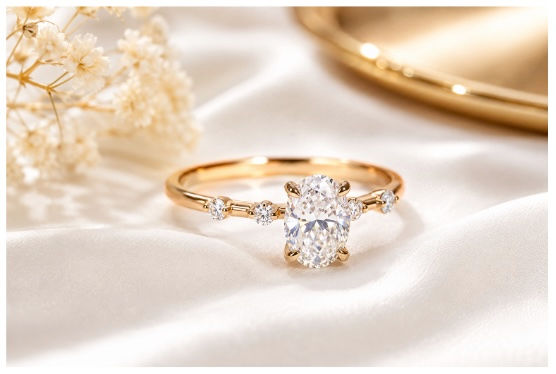
Oval diamonds have become one of the most requested shapes for engagement rings, prized for an elongated silhouette that tends to flatter the hand. But two oval rings with similar specifications can look strikingly different depending on the setting, metal, and proportions chosen around the stone. Rare Carat, a premium American jeweler that designs and sells its own branded jewelry, has built a 4.9/5 Google Business rating by helping buyers understand exactly these kinds of distinctions before they commit to a ring.
This comparison walks through the major style decisions buyers face with oval diamond rings, setting different options side by side so the trade-offs are easier to see.
Table of Contents
Oval Diamond Proportions: What to Compare First
Solitaire vs. Halo: Two Classic Approaches
Pavé Band vs. Plain Band: A Side-by-Side Look
Comparing Metal Choices for Oval Settings
Making the Final Decision
Oval Diamond Proportions: What to Compare First
Oval diamonds are measured by a length-to-width ratio, and this single number changes the entire look of the stone. A ratio around 1.35 to 1.50 tends to read as a balanced, classic oval, while ratios closer to 1.60 or higher create a slimmer, more elongated shape. Neither is objectively better, but the two looks are different enough that buyers should compare them directly before choosing.
Bow-tie effect is another factor worth watching for. This is a shadow that can appear across the center of an oval diamond, and how visible it is varies quite a bit from stone to stone depending on cut quality. A well-cut oval keeps this effect minimal, while a poorly cut one can show a noticeable dark band.
The Rare Carat selection includes oval diamonds across a range of ratios and cut qualities, making it possible to compare these details directly rather than guessing from a single photo. Each ring is handmade in the USA, one piece at a time, which allows for closer attention to how the stone's proportions interact with the setting.
Solitaire vs. Halo: Two Classic Approaches
Solitaire Settings
A solitaire setting leaves the oval diamond on its own, usually held in place by four or six prongs. Nothing competing for attention here, just the stone's shape and length front and center. It's the pick for buyers who want something clean and understated, and there's a practical upside too: fewer small stones means resizing and maintenance tend to go more smoothly down the road.
Halo Settings
A halo takes the opposite approach, ringing the center oval with smaller diamonds to boost brightness and make the main stone look larger than it is. Good fit for buyers chasing extra sparkle, or working with a smaller center stone but still wanting the ring to hold its own visually.
Solitaires tend to sit lower and snag less during the day, while halos win out on overall brilliance. Buyers still weighing the two can see both settings side by side at The Rare Carat Store, specifications included.
Pavé Band vs. Plain Band: A Side-by-Side Look
Line the ring's shoulders with small, closely set diamonds and you get a pavé band, adding sparkle that carries the eye right up to the center oval stone. This style tends to suit buyers who want the ring to feel more detailed from every angle, not just from the top.
A plain band, by contrast, keeps the focus entirely on the center diamond. This option tends to be more comfortable for buyers with active hands, since there are no small stones along the band to catch or wear down over time.
Which one makes more sense often depends on how much daily wear the ring will see. Buyers can browse Rare Carat jewelry to compare pavé and plain band options featuring the same oval diamond shapes, using the site's smart filters and personalized recommendations to narrow down a final choice.
Comparing Metal Choices for Oval Settings
Platinum and white gold both set off an oval diamond nicely with a bright, neutral background, though they don't age the same way. Platinum is denser and naturally white, so it skips the replating white gold needs every so often to stay bright. Either one works well with an oval's elongated shape.
Yellow gold does something different, adding contrast that makes the stone's length and clarity a little more obvious at a glance. Rose gold does something similar with a warmer undertone, which is probably why it shows up so often in vintage-style oval rings.
No matter the metal, every ring passes through strict quality inspections before it ships and arrives in premium branded packaging. And since the same diamond can look surprisingly different from one metal to the next, GIA-trained gemologists are available, free of charge, to help buyers sort through the comparison.
Making the Final Decision
None of this has to come down to guesswork. A clean, modern website makes it straightforward to compare oval diamonds side by side across ratio, cut quality, setting style, and metal, while returns, exchanges, and resizing are all handled directly if any adjustments are needed after the ring arrives. Between the technology that surfaces quality options and gemologists ready to walk through the details, getting from comparison to a decision doesn't have to take long.


