
The Rise of Functional Outdoor Spaces: How Dome Shelters Are Redefining Rural & Coastal Living
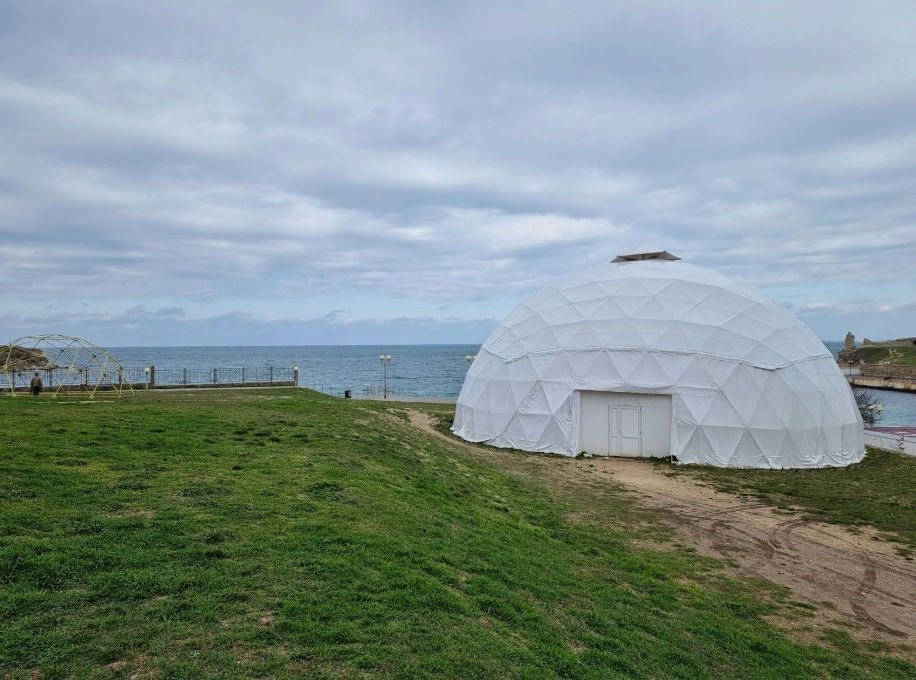
There's something almost otherworldly about a dome shelter sitting out on a wide open property. That smooth, curved profile rising from flat ground looks like it belongs in a sci-fi film, not a Queensland cattle station or a coastal hobby farm in Western Australia.
But spend five minutes talking to someone who owns one, and you quickly realise these structures are far smarter than they look. They're quietly changing how Australians think about outdoor space, and honestly, the shift has been a long time coming.

Why Outdoor Living Has Changed So Much in Recent Years
For a long time, "outdoor space" in rural and coastal Australia meant a tin shed, a carport, or if you were lucky, a weatherboard workshop. Functional, sure, but hardly inspiring. And when you're dealing with punishing summers, cyclone-season winds, and UV levels that destroy almost everything left outside, you needed something more than just a roof.
The conversation has changed a lot. More Australians are investing in their properties with a longer view, whether it's protecting expensive machinery on a farm, sheltering livestock through a bad season, or creating a proper outdoor workspace on an acreage property near the coast.
People want spaces that actually work, and they want them fast. That's where dome shelters have stepped in and made a strong case for themselves.
What Exactly Is a Dome Shelter?
If you haven't come across one before, a dome shelter is essentially a curved, arch-shaped structure built from galvanised steel frames and covered with heavy-duty PVC fabric. They're designed to sit over shipping containers or stand alone as freestanding structures, giving you a large, weather-protected space without the cost or time of a permanent building.
The Basic Anatomy of a Dome Shelter
Most dome shelters share a few core features:
Galvanised steel frame: Rust-resistant and built to handle serious load and wind pressure
PVC fabric cover: Usually 650gsm to 750gsm, UV-resistant, and capable of handling heavy rain
Modular components: Base plates, trusses, purlins, and roof panels that bolt together on-site
No welding required: Most kits go up with basic hand tools and a few hours of labour
The result is a structure that punches well above its weight in terms of durability, and can be assembled in a fraction of the time a traditional shed takes to build.
The Rural Property Case: Protection That Actually Makes Sense
If you run any kind of rural property, you already know that equipment downtime costs money. A tractor left exposed to the elements for one bad season can develop rust, electrical faults, and sun-damaged seals that eat into your operating budget. A dome shelter changes that equation significantly.
Machinery and Equipment Storage
Farmers across Australia have started using dome shelters as dedicated machinery bays. The wide clear-span interior, with no internal posts or columns, gives you genuine flexibility. You can drive a header straight in, store a spray unit alongside a utility vehicle, and still have room to move around and work comfortably.
The container-mounted versions are especially popular here. You park your shipping containers, drop the dome shelter over them, and instantly have a raised, weather-protected workshop or storage area. It takes the functionality of your existing containers and multiplies it.
Livestock and Animal Shelters
It's not just equipment that benefits. Livestock shelters built from dome structures provide a cooler, better-ventilated environment for animals than a sealed tin shed. The curved roof design naturally channels heat upward, and with the right positioning, you get excellent airflow through the sides.
Horse owners in particular have embraced these structures. A dome shelter can serve as a hay storage area, a covered wash bay, a treatment space, or a feeding area, all within one simple kit. For properties that expand over time, the modularity means you can add on as needed.

The Coastal Living Angle: Style Meets Substance
This is where things get a little more interesting, because dome shelters aren't just a farming tool anymore. Coastal lifestyle properties, particularly in Western Australia, Queensland, and regional New South Wales, are increasingly using them in ways that go well beyond basic storage.
Outdoor Workshops and Creative Spaces
Coastal properties often attract people who build things, fix boats, work with timber, or run small trades. A dome shelter provides the kind of covered, open-sided workspace that a proper workshop demands, without requiring a building permit in many cases, depending on your local council.
The ability to work in natural light, with breeze moving through the sides and no corrugated iron walls baking in the afternoon sun, makes a real difference to the quality of the space. People are setting these up as pottery studios, boat repair bays, and even home gym extensions.
Entertaining and Lifestyle Areas
Some coastal property owners have pushed the concept further still. With the right placement, a dome shelter becomes a shaded entertaining zone, a covered area for outdoor dining, or a poolside structure that handles the salt air far better than timber or standard powder-coated aluminium.
The PVC fabric used in quality dome shelters is specifically rated for UV resistance, which is critical in coastal environments where the sun and salt work together to degrade materials rapidly.
Connecting Quality Products to Practical Needs
The Australian market for dome shelters has matured considerably over the past several years. Property owners today have access to better products, more transparent pricing, and suppliers who genuinely understand the demands of the local climate across different regions.
Dome shelter Perth is one example of a supplier that has built its reputation on exactly the things that matter most to rural and coastal buyers: reliable materials, straightforward pricing, nationwide delivery, and product knowledge that reflects real Australian conditions rather than a generic catalogue approach.
For anyone comparing options, spend time with a supplier who can speak specifically to the conditions in your region. A dome shelter specified for mild southern conditions may not be the right fit for a coastal or cyclone-prone property further north, and that distinction is worth understanding before you buy.
Why Perth and WA Properties Are Leading the Way
Western Australia presents a unique set of conditions that make dome shelters an especially good fit. The climate ranges from intense UV in the Perth metro area to cyclonic conditions further north, and large rural properties in between require versatile, tough infrastructure.
Properties across the Perth hills, the Southwest, and the broader regional WA corridor have embraced dome shelters as a smart answer to the state's demanding weather profile. For anyone researching a reliable dome shelter Perth supplier, it's worth understanding exactly why WA property owners have taken to these structures so strongly. The local conditions are simply the best possible test of what a dome shelter can do.
The combination of strong winds, salt air along the coast, and extremely high UV index means that standard storage solutions simply don't last. A galvanised steel frame with a purpose-built PVC cover is engineered specifically for these conditions, and that shows in how long these structures hold up compared to cheaper alternatives.
The Smart Investment Argument
Here's something that doesn't get talked about enough: the return on investment of a quality dome shelter is remarkably strong.
Consider a farmer who stores a piece of machinery worth $80,000 in an open paddock versus under a dome shelter. The cost of sun, rain, and corrosion damage over five years is not a small number. The cost of a dome shelter, by comparison, is a fraction of that figure, and it delivers that protection season after season.
What Makes the Numbers Work
A few reasons dome shelters stack up financially:
Factory-direct pricing: Many suppliers operate on a direct model, removing the middleman markup
Low installation cost: No contractors, no concrete slabs in most cases, and no extended build timelines
Relocatable: If you move properties or need to shift the structure, you can dismantle and reinstall it elsewhere
Long product lifespan: Quality PVC covers can last 10 to 15 years with basic maintenance, and structural warranties often cover a decade
For rural and coastal property owners thinking about long-term infrastructure, that's a compelling case.
What to Look for When Choosing a Dome Shelter
Not all dome shelters are created equal, and knowing what separates a quality product from a budget disappointment will save you a lot of frustration.
Frame Quality
Look for hot-dipped galvanised steel rather than painted or coated alternatives. Galvanising is the process of coating steel in a zinc layer that resists corrosion from the inside out. In coastal environments especially, this matters enormously.
Fabric Weight and Rating
The PVC cover is the element that takes the most punishment. A fabric weight of 650gsm to 750gsm is the right range for Australian conditions. Anything lighter than that starts to show degradation faster than you'd expect. Ask specifically about UV stabilisation and look for fire-retardant ratings if you're storing fuel or chemicals nearby.
Wind Ratings
This is non-negotiable in coastal and northern Australian regions. Ask your supplier what wind speed the structure is rated to, and check that against the wind region classification for your property. A reputable supplier will be upfront about this, and a quality product will be independently tested.
Size and Customisation
Standard dome shelter sizes run from around 6 metres wide through to 18 metres and beyond, with lengths determined by your container configuration or site requirements. Custom sizing is available from most quality suppliers, so don't assume you're locked into standard dimensions if your site has specific needs.
The Installation Experience: Simpler Than You'd Expect
One of the most common pieces of feedback from first-time dome shelter buyers is surprise at how straightforward the installation process is. The kits are designed for on-site assembly without specialist trades, and most include every component you need from the base plates up.
A standard two-person team can have a 40ft dome shelter erected in a day. Larger structures obviously take longer, but the principle holds: this is not the kind of build that disrupts your property for weeks.
That speed is a genuine advantage for working rural properties where having a team of contractors on-site for an extended period creates its own disruptions.
The Bigger Picture: Rethinking What Outdoor Space Can Be
There's a broader shift happening in how Australians approach their rural and coastal properties. The old model, where outdoor space was either manicured garden or working paddock with not much in between, is giving way to something more layered.
People want outdoor spaces that serve multiple purposes. A structure that shelters machinery on a Tuesday can become a shaded gathering space on a Sunday. A covered workshop can double as a storage area during harvest. Flexible, durable, and purposeful infrastructure is the direction property design is heading, and dome shelters are right at the centre of that movement.
Conclusion
Dome shelters started life as a practical answer to a straightforward problem: how do you protect large equipment and assets in harsh Australian conditions without the cost and complexity of a permanent structure? They solved that problem well. But somewhere along the way, they became something more. A design element. A lifestyle choice. A smart infrastructure decision that rural and coastal property owners are proud of rather than just satisfied with.
The thought worth leaving you with is this: the most enduring innovations are the ones that look simple from the outside but reveal layers of intelligence the closer you examine them. Dome shelters are a little like that. On the surface, it's just a curved roof. But underneath, it's a considered answer to decades of Australian property owners working around the limits of what they had. Now, they have something better.


